
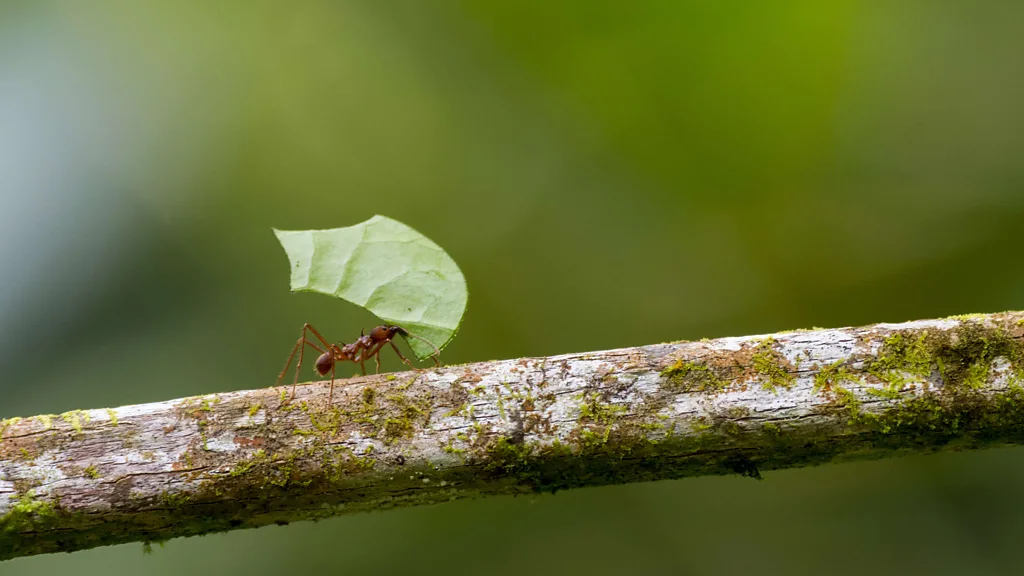
Humans often believe our ability to think deeply makes us superior decision-makers. But despite having tiny brains, insects have developed surprisingly effective ways to solve problems, choose between options and adapt to changing situations.
From ants that find efficient routes to cockroaches that respond quickly to threats, the insect world offers several useful lessons that can be applied to everyday decision-making.
Why Insects Are Surprisingly Good at Making Decisions
People often spend a great deal of time analysing choices, particularly when there are too many options available.
This can lead to choice overload, where having more possibilities makes it harder rather than easier to decide.
Insects face many of the same challenges, but their simple decision-making systems can produce remarkably efficient results.
Researchers have even used insect behaviour as inspiration for algorithms designed to solve complex problems in areas such as logistics, transportation and computing.
Here are five lessons we can learn from the insect world.
1. Learn From Optimising Ants
Ant colonies are remarkably efficient at deciding how to move between locations and find resources.
Individual ants do not need a complete picture of the problem. Instead, they follow relatively simple rules and respond to information from other members of the colony.
As ants explore different routes, successful paths become more strongly reinforced. Over time, the colony can converge on efficient routes to food or other destinations.
This behaviour has inspired ant colony optimisation, a computational technique used to solve difficult routing and scheduling problems.
The lesson for humans
You don’t always need to analyse every possible option before making a decision.
Instead, try a simple approach, observe the results and strengthen the choices that consistently work.
2. Don’t Overthink Every Choice
Insects demonstrate that complicated problems do not always require complicated decision-making.
A collection of simple rules can sometimes produce an effective result when applied consistently.
For humans, this can mean creating straightforward rules for recurring decisions.
For example, rather than reconsidering every purchase from scratch, you could establish a simple budget rule. Instead of repeatedly debating when to exercise, you could choose fixed days and times.
Reducing unnecessary decisions can leave more mental energy for genuinely important choices.
3. Use Collective Intelligence
Ant colonies also demonstrate the power of collective decision-making.
No single ant controls the entire colony. Instead, individuals communicate information through chemical signals and behaviour.
The resulting decision can be more effective than anything one individual could achieve alone.
Humans can apply a similar principle by gathering opinions from people with different experiences and perspectives.
The key is not simply asking more people. It is making sure the people providing information have useful knowledge and that their opinions are evaluated carefully.
4. Adapt When Conditions Change
The insect world also shows the importance of flexibility.
A strategy that works in one environment may become ineffective when circumstances change.
Rather than becoming attached to an earlier decision simply because time and effort have already been invested in it, humans can reassess their choices when new information appears.
Good decision-making is therefore not always about making the perfect choice immediately. It is also about recognising when a decision needs to change.
5. Keep Decisions Simple When Possible
One of the biggest lessons from insects is that effective behaviour does not necessarily require complicated thinking.
Humans can sometimes make decisions harder than they need to be by considering every possible scenario.
Breaking a complicated problem into smaller questions can make it easier to manage.
Instead of asking, “What is the perfect choice?”, consider:
- What is the most important goal?
- What information do I already have?
- Which options are realistically available?
- What is the biggest risk?
- Can I test the decision before fully committing?
These questions can help reduce uncertainty without becoming trapped in endless analysis.
What Insects Can Teach Us About Better Decisions
From optimising ants to adaptable insects, the natural world provides plenty of examples of efficient problem-solving.
The biggest lesson may be that better decisions do not always come from thinking more.
Sometimes they come from using simple rules, learning from experience, adapting to new information and knowing when enough analysis is enough.
For creatures with brains far smaller than ours, insects have developed surprisingly sophisticated ways of navigating difficult choices. Perhaps humans can learn something from them.

0 Comments