
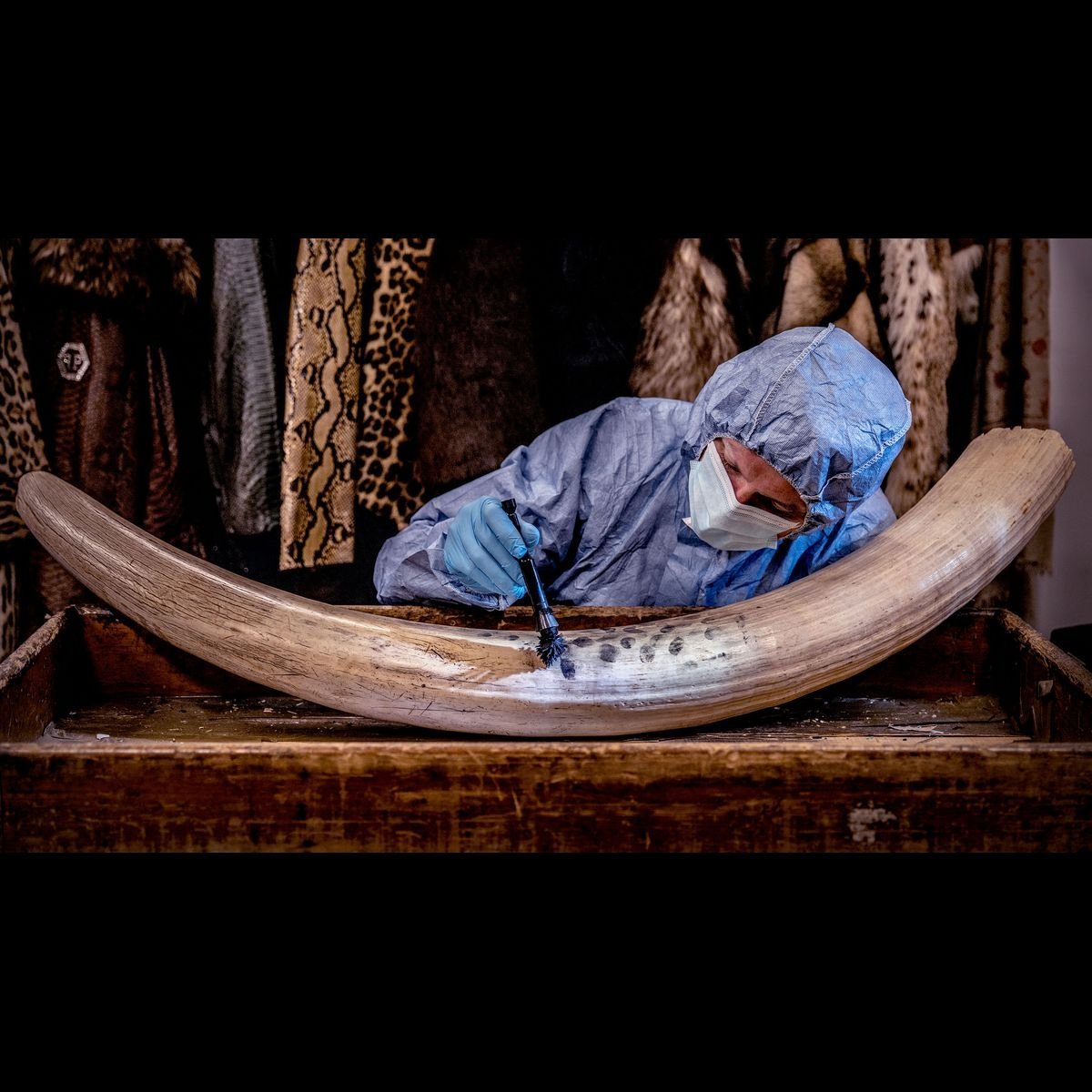
Tiny details left behind by criminals are helping investigators fight one of the world’s biggest threats to wildlife.
A simple handprint on a sea turtle shell and fingerprints on an elephant tusk may appear insignificant, but these traces can provide valuable forensic evidence linking suspects to the illegal wildlife trade.
The striking images were captured by photographer Britta Jaschinski, who worked alongside border enforcement teams and wildlife crime investigators to document evidence connected to poaching operations.
The photographs, showing confiscated wildlife items at London Heathrow Airport, won first prize in the 2026 Earth Photo Award.
Turning Wildlife Crime Into a Forensic Investigation
Wildlife trafficking is often a highly organised criminal activity, involving illegal networks that transport endangered animals and animal products across international borders.
By applying forensic methods commonly used in criminal investigations, experts can collect evidence from seized materials and help identify those responsible.
Techniques such as fingerprint analysis, DNA testing, and detailed photographic documentation are becoming increasingly important tools in protecting endangered species.
A Global Illegal Trade
The illegal wildlife trade is estimated to be worth around $23 billion per year, making it one of the most profitable forms of organised crime.
Animals targeted by traffickers include elephants, sea turtles, rhinos, and many other threatened species.
Investigators say that every piece of evidence recovered from illegal shipments can help build stronger cases against poachers and traffickers.
Using Science to Protect Wildlife
The work of wildlife forensic experts shows how science can play a crucial role in conservation.
Images like Jaschinski’s reveal the hidden evidence behind wildlife crimes and highlight the importance of international cooperation between scientists, conservation groups, and law enforcement agencies.
Even the smallest trace can help uncover the people behind some of the world’s most damaging crimes against nature.

0 Comments