
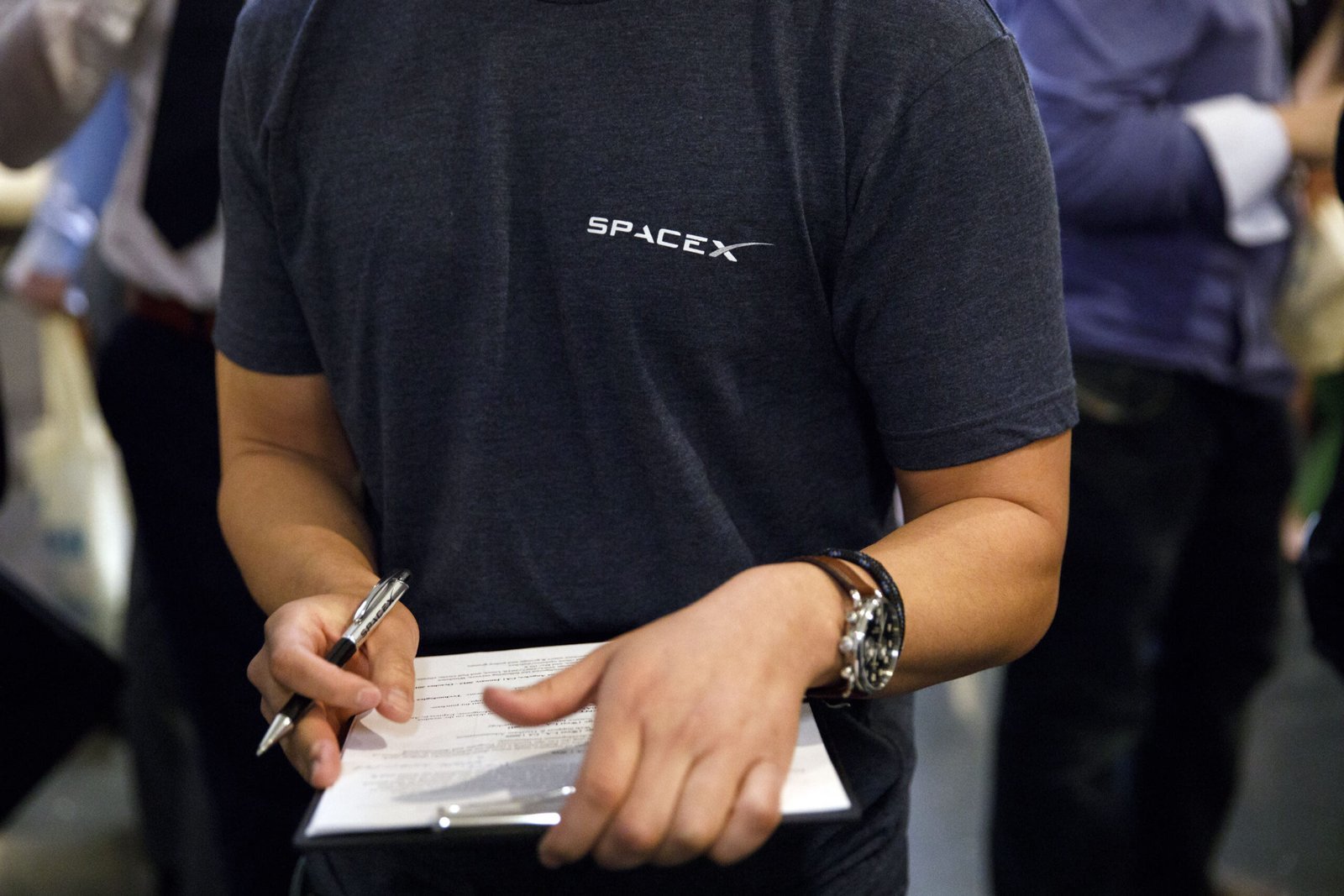
While SpaceX stock has cooled following its historic surge, the broader space economy continues to show strong momentum, particularly in job creation and hiring demand across the United States.
The space sector has become one of the fastest-growing parts of the global economy, driven by advances in satellite technology, launch services, and space-based infrastructure. According to the World Economic Forum, the industry is expanding at an estimated annual rate of 9% worldwide.
In the United States, the space economy has seen significant long-term growth. Data from the Space Foundation indicates that the sector’s total value reached a record $613 billion in Q2 2025, while gross output increased by approximately $51.5 billion between 2012 and 2023.
Rising Employment Across the Space Sector
Job creation has been a key feature of this expansion. Estimates from the U.S. Department of Commerce Bureau of Economic Analysis suggest that more than 373,000 workers are currently employed in private-sector space-related roles.
Although this remains a relatively small share of the overall U.S. workforce, the sector’s growth rate has outpaced broader labor market trends. Space-sector employment increased by 27% over the past decade, compared with 14% growth across the wider private sector, with acceleration in more recent years.
From 2019 to 2024 alone, employment in the space economy rose by 18%, reflecting sustained demand for talent across aerospace engineering, satellite communications, defense technologies, and related fields.
Younger Workers Driving Growth
A notable trend in the industry is the rising participation of younger workers. According to the U.S. Census Bureau, nearly half of new jobs in the space economy are filled by workers under the age of 35. This has increased the share of younger employees in the sector by around 3% between 2014 and 2024.
Unlike many other industries tracked by census data—including professional services and media—the space economy has continued to attract and retain younger talent, bucking broader demographic trends in the labor market.
Hiring Demand Outpacing the Broader Economy
Recent labor market research also highlights strong hiring momentum. Dean Boerner, a lead data scientist at Revelio Labs, found that job postings across space-related companies have risen sharply compared to the broader market.
“Active postings by companies operating within the space economy are up more than 40% year-over-year,” Boerner noted, adding that overall U.S. job postings have declined by about 5% over the same period.
This divergence suggests that while some sectors of the economy are cooling, the space industry continues to expand its workforce and create new career opportunities at a faster rate than the broader labor market.
Outlook
Despite fluctuations in high-profile companies like SpaceX, analysts say the underlying space economy remains in a strong growth phase. With continued investment in satellite networks, defense systems, and commercial space exploration, the sector is expected to remain a significant source of high-skilled employment in the coming years.

0 Comments