
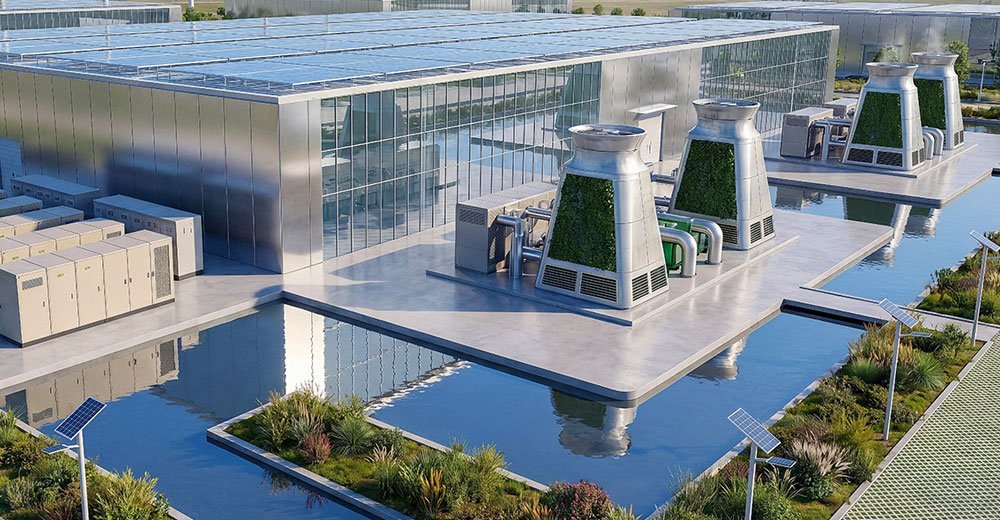
A new report is urging states to take the lead in managing the impact of growing data center operations on local water supplies, arguing that blanket bans and federal mandates are not the best solutions.
The report, released by the Information Technology & Innovation Foundation’s Center for Clean Energy Innovation, suggests that existing technology and policy tools can support a more effective state-led approach to water management for data centers and other large industrial users.
Research director Robin Gaster said that the main challenges are not a lack of solutions, but rather poor coordination, unclear regulations, and the absence of consistent measurement standards.
“What’s missing is institutional coordination, regulatory specificity, and a set of standardized mechanisms and metrics,” Gaster said.
Need for Better Water Measurement
Experts say one of the biggest issues is the lack of consistent data on water consumption across different regions. Without accurate measurements, regulators and communities struggle to understand how much water large facilities are using and what impact they may have on local resources.
Stuart Lacey, founder and CEO of Labrynth, said that water consumption is not currently tracked in a consistent way across state or federal levels.
He explained that without reliable data, officials, regulators, and communities are often left uncertain about storage capacity and actual water usage.
Balancing Technology Growth and Resources
The rapid expansion of artificial intelligence and cloud computing has increased demand for new data centers, which often require significant amounts of water for cooling systems.
The report suggests that instead of restricting growth through broad moratoriums, governments should establish clearer rules, reporting requirements, and standardized systems to ensure responsible resource management.
As data center development continues worldwide, policymakers are increasingly focused on finding a balance between technological progress and protecting essential resources such as water.

0 Comments