
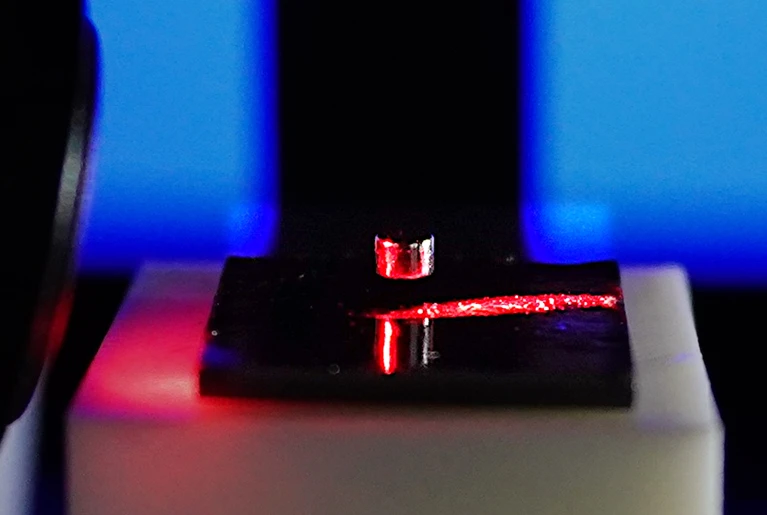
Scientists have developed a new type of magnetometer that uses a levitating magnet to detect extremely weak magnetic fields, including signals produced by electrical activity in the human brain.
The approach could offer a simpler alternative to some of the highly sensitive magnetometers currently used in neuroscience and other scientific applications.
A New Way to Measure Magnetic Fields
Magnetometers are instruments designed to detect and measure magnetic fields.
Researchers have now demonstrated a system in which a tiny magnet is levitated and used to sense changes in surrounding magnetic fields.
The technology is sensitive enough to detect the very weak magnetic signals associated with activity in the brain.
The findings, reported in Science, could eventually contribute to new approaches for studying brain function.
Why Existing Magnetometers Are Complicated
Some of today’s most sensitive magnetic sensors rely on superconducting quantum interference devices, commonly known as SQUIDs.
SQUID magnetometers can detect incredibly weak magnetic fields, but they must operate at temperatures extremely close to absolute zero.
Maintaining such temperatures requires sophisticated cryogenic equipment, making the systems complex and expensive.
Another advanced technology is the spin-exchange relaxation-free (SERF) magnetometer.
SERF devices can also provide extremely sensitive measurements, but they require near-perfect shielding from external magnetic interference.
Bringing the Sensor Closer to the Source
The requirements of existing technologies can increase the physical distance between the object being measured and the magnetometer itself.
That distance matters when scientists are trying to detect exceptionally weak signals.
A sensor based on a levitating magnet could potentially simplify the measurement process while allowing sensitive detection close to the source of the magnetic field.
For neuroscience, this could be particularly valuable because the magnetic signals produced by brain activity are extremely faint.
Potential for Brain Research
Electrical activity in the brain produces tiny magnetic fields that can provide information about how different regions of the brain function.
More accessible and simpler magnetic sensors could potentially make it easier to study these signals.
The technology is still at the research stage, but its sensitivity demonstrates the possibility of using levitating magnetic systems for highly precise measurements.
If the approach can be developed into practical instruments, it could provide scientists with another tool for investigating the electrical activity of the brain and other extremely weak magnetic phenomena.

0 Comments