
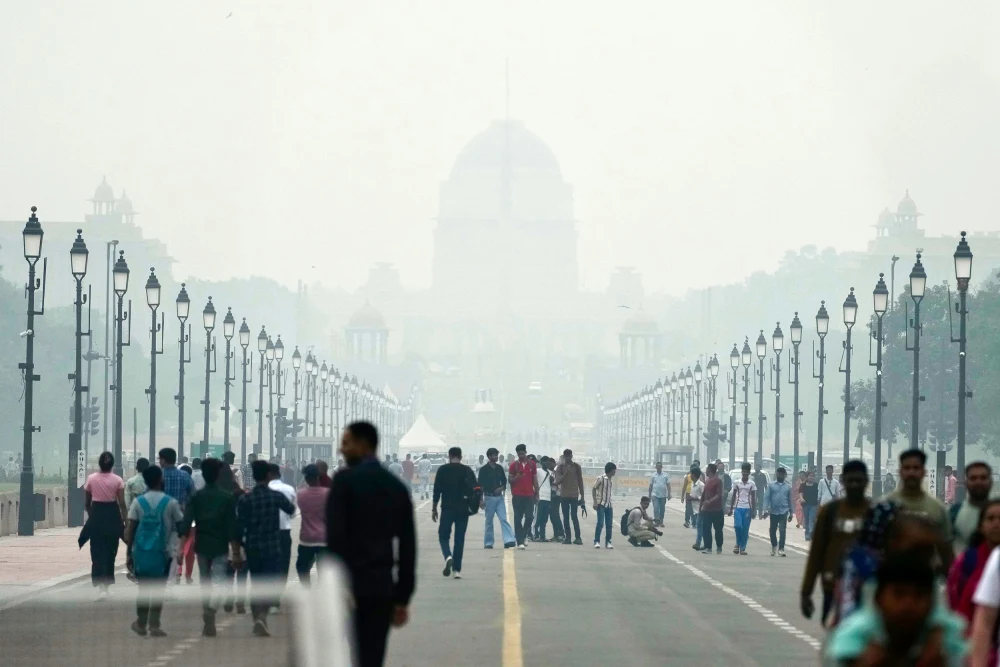
Indian authorities have begun a cloud‑seeding trial over New Delhi in an effort to tackle the city’s persistent air pollution. The experiment, coordinated with the Indian Institute of Technology Kanpur (IIT Kanpur), involved spraying chemicals into clouds to encourage rainfall. Officials hope the rain will wash out airborne pollutants and improve air quality.
New Delhi, home to over 30 million people, experiences hazardous levels of smog each winter. Cold weather traps vehicle emissions, industrial pollution, and smoke from agricultural fires in nearby states. Despite cloud-seeding flights, air quality during the trial remained “very poor,” highlighting the challenge of relying on weather modification alone.
Authorities emphasized that this initiative is a temporary measure and part of broader efforts to study potential interventions for reducing winter smog. The project also represents the city’s first trial using this technique on a large scale.
Cloud seeding has been used in other countries, but success depends on suitable cloud cover and moisture. Experts caution that rainfall triggered by artificial means may only provide short-term relief. The Indian Institute of Technology and other scientists have noted that cloud seeding cannot replace long-term emissions reduction strategies.
🌍 Effectiveness, Challenges, and Long-Term Impact
While cloud seeding could bring temporary relief, experts stress that it is not a permanent solution. Conditions must be right for rainfall to occur, and any improvement in air quality may be short-lived if pollution sources continue unchecked. Environmental analysts warn that the city’s smog problem requires substantial cuts to emissions from vehicles, factories, and crop burning.
Officials acknowledged that the trial is expensive and that induced rainfall may not always materialize. A scientist involved in the project noted, “Cloud seeding is not really a cure… whenever the cloud cover is there, one has to repeat the process.” This highlights the logistical and financial challenges of relying solely on artificial weather modification.
Authorities describe the trial as a learning experience that could guide future strategies for improving air quality. Data from the experiment will help researchers determine how effective cloud seeding might be under varying weather conditions and whether it could complement existing pollution control measures.
Critics argue that relying on cloud seeding risks diverting attention from more effective solutions, such as stricter vehicle emission standards, industrial regulations, and better management of crop residue burning. Nevertheless, city officials remain optimistic that short-term rainfall could ease pollution levels temporarily while broader environmental policies are strengthened.
The trial underscores the growing interest in technological solutions to address urban air pollution. However, experts agree that real progress will only come from addressing the sources of pollution directly rather than attempting to manage its effects through weather interventions.

0 Comments