
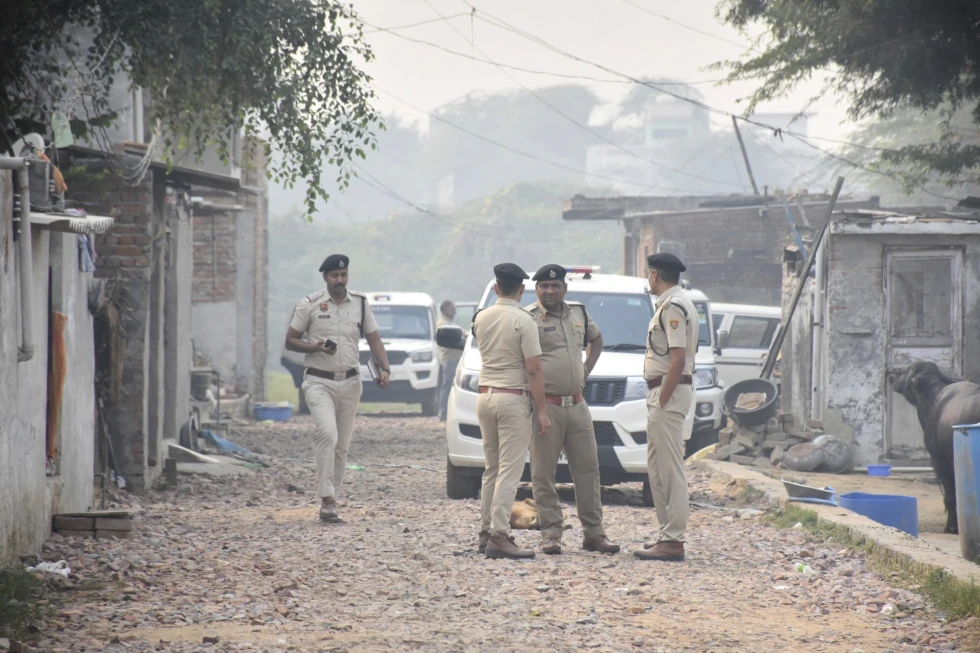
India’s national anti-terror agency said it has arrested a major suspect in connection with a car blast outside New Delhi’s historic Red Fort that killed at least 10 people. The arrest marks a significant development in the investigation of what officials are treating as a terror attack.
The suspect, identified as Amir Rashid Ali, is from Indian-administered Kashmir. Authorities say the vehicle used in the explosion was registered in his name. They allege that Ali travelled to New Delhi specifically to facilitate the purchase of the car used in the blast. The suspected suicide bomber has been identified as Umar Un Nabi, a medical college professor from Kashmir’s Pulwama district now believed to have carried out the attack.
🚨 Blast, Investigation and Arrest
On the evening of November 10, the car exploded near the Red Fort—one of India’s most symbolic landmarks—engulfing surrounding vehicles and causing widespread casualties. Authorities responded swiftly, labeling the incident as “heinous” and declaring it a terrorist act orchestrated by “anti-national forces”. In the hours that followed, security forces conducted raids in Kashmir and detained several individuals believed linked to a militant cell. Reports suggest the group was engaged in bomb-manufacturing and cross-border planning.
The National Investigation Agency (NIA) has interrogated dozens of witnesses, including many of the wounded. Officials say they also seized another vehicle believed to be connected to the attack and are analysing its contents for explosives or other evidence of planning. The investigation is unfolding against the backdrop of heightened alert in the region, given its history of militant activity and cross-border tension with Pakistan.
🔍 Implications and Wider Context
The arrest of Ali reflects both the complexity and the urgency of the situation. The blast not only exposed security gaps in the Indian capital but also highlighted the ongoing threat of terrorist cells operating across state and regional lines. Experts note that the involvement of a university professor and complex logistics signals a shift in how extremist networks may deploy professionals and exploit infrastructure.
For India’s government and security agencies, this case carries the risk of escalation. A terror attack in New Delhi—so close to the seat of power—raises pressure on officials to swiftly identify and neutralise remaining threats. Relations with neighbouring Pakistan may also suffer additional strain if evidence emerges of cross-border coordination.
At the local level, many families of the victims demand quick justice and stronger protections for public spaces. Meanwhile, investigators are racing to piece together the full chain of planning, funding and execution behind the blast.
In the end, this incident stands as a harsh reminder that even well-guarded urban centres remain vulnerable. The efforts now underway in New Delhi could shape India’s counter-terror strategy for years to come.

0 Comments