
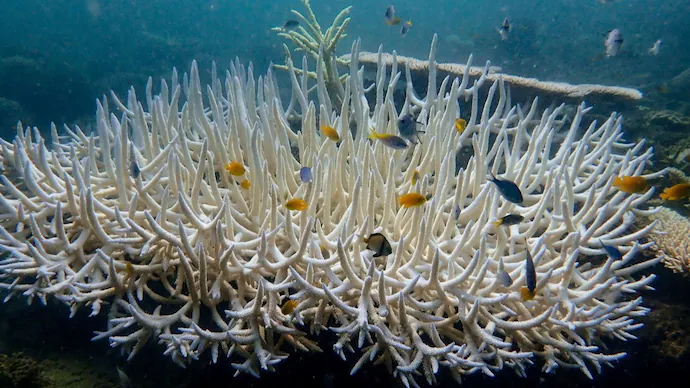
A record-breaking marine heat wave in 2023 has left two of Florida’s most ecologically important coral species “functionally extinct,” according to a new scientific study released Thursday. The findings underscore the escalating impact of climate change on the world’s oceans and marine biodiversity.
The two species — Elkhorn (Acropora palmata) and Staghorn (Acropora cervicornis) corals — were once the primary “reef builders” across Florida’s Coral Reef and much of the Caribbean. Their fast-growing, antler-like structures provided shelter, breeding grounds, and coastal protection for countless marine species.
However, researchers found that the extreme ocean temperatures during the 2023 marine heat wave caused widespread coral bleaching and mortality. Scientists describe the event as the most severe in Florida’s recorded history, with prolonged exposure to high temperatures leaving reefs unable to recover.
“Functionally extinct” means that while a few individual corals may survive, they are no longer reproducing or sustaining their ecological role in the ecosystem. The loss of these species could have far-reaching consequences for biodiversity, fisheries, and shoreline stability.
Marine biologists warn that unless global greenhouse gas emissions are dramatically reduced, similar mass die-offs will continue to devastate reefs around the world. Florida’s reef — part of the only living coral barrier reef in the continental United States — now stands as a stark example of how rising ocean temperatures are transforming underwater life.
Experts are calling for urgent action, including reef restoration programs, coral nurseries, and large-scale reductions in carbon emissions to prevent further ecological collapse.

0 Comments