
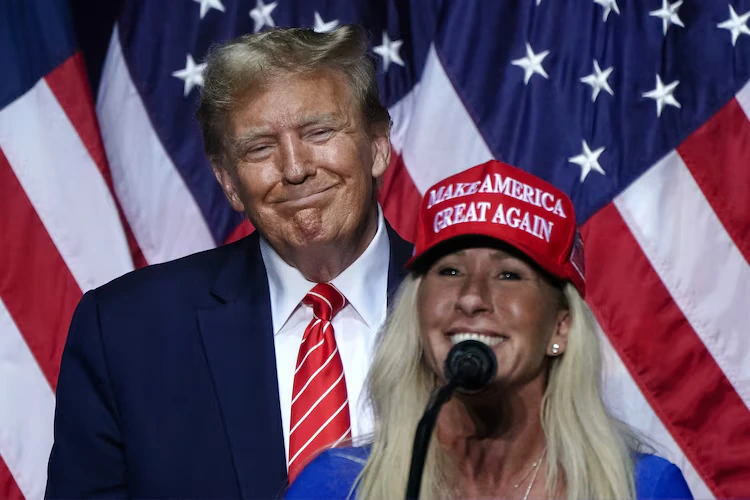
In a surprising reversal, President Donald Trump publicly encouraged House Republicans to vote for the release of files connected to convicted sex offender Jeffrey Epstein. Until recently, Trump had opposed efforts to open the case records, but he posted on social media that House Republicans should support the move because the party “has nothing to hide.”
The change in tone comes ahead of a key vote in the House on legislation that would force the Department of Justice to disclose all documents, emails and communications tied to Epstein’s investigations. Leading Republicans like Thomas Massie (R-KY) and Ro Khanna (D-CA) are driving the push, with Massie predicting a significant number of GOP lawmakers will support the measure.
📄 Why the Turnaround Matters
Just last week, Trump and House Speaker Mike Johnson worked to block a petition that would force the vote. Now, the president’s public change in position signals that he may believe the bill has enough support to pass anyway. His message: Republicans should back transparency rather than resist a popular move. Some analysts say this is the first major issue in which Trump has stepped aside and allowed GOP lawmakers to chart their own course.
By describing the release as a matter of principle—“we have nothing to hide”—Trump is attempting to frame the move as a victory for openness rather than a defeat. Yet he also dismissed the broader Epstein focus as a “Democrat Hoax.” Despite the rhetoric, the vote’s outcome may mark one of the most notable breaks within the Republican Party under his leadership.
🔍 Broader Implications and Divisions
For Republicans, the issue creates a split between loyalty to Trump and the push for disclosure. Massie warned that lawmakers who vote against releasing the files could face long-term consequences. He said the record of this vote will last far beyond Trump’s presidency.
On the other side, some lawmakers argue the documents include sensitive information, such as witness identities or ongoing investigations, that require protection. They worry that full transparency may compromise victims or investigations. Still, the growing bipartisan support suggests a shift in political winds.
For Trump, the move may be strategic—allowing him to evade being painted as the obstructionist while maintaining his “nothing to hide” stance. The real test now moves to the Senate, where passage is far from certain. If the bill succeeds in the House, it must still clear the Senate and avoid a potential presidential veto.
The decision to back the file release is more than political maneuvering. It touches on issues of trust, transparency and the intersection of power and scandal. As the House prepares to vote, the question remains: will Republicans truly follow through and force full disclosure, or will the effort stall under pressure?

0 Comments