
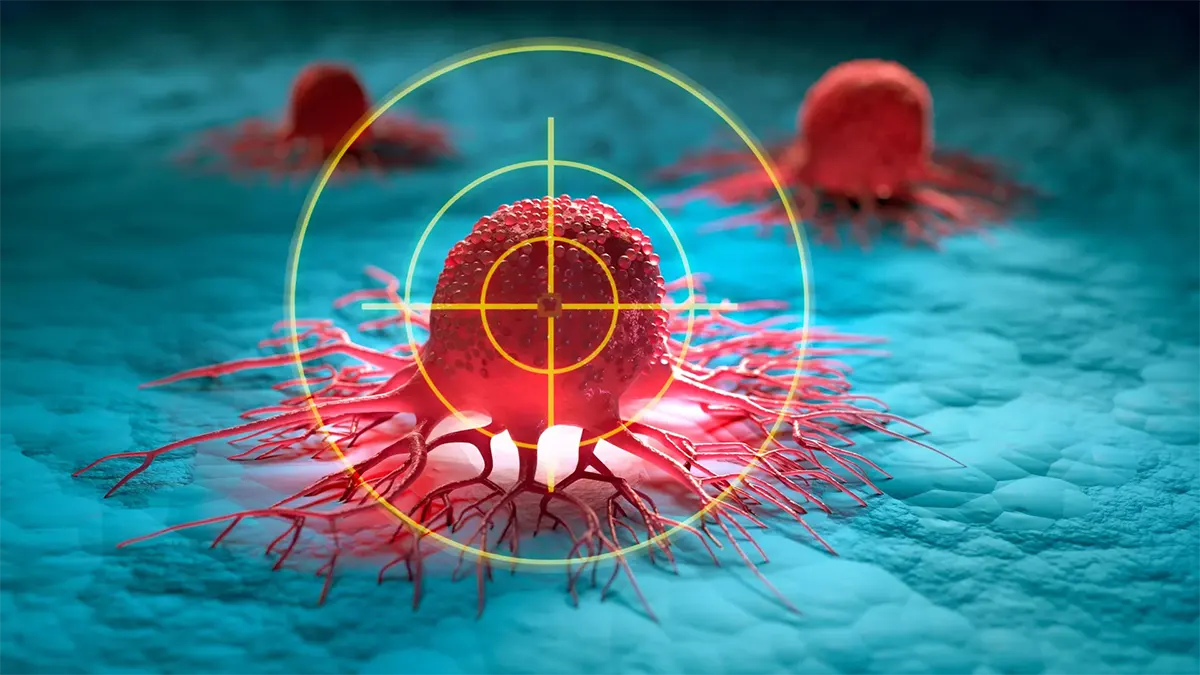
Researchers at the University of Geneva (UNIGE) have developed a “smart” DNA-based drug that can target cancer cells with extreme precision. The system uses synthetic DNA strands to identify tumor cells and release treatment only where needed.
This approach aims to solve a major challenge in cancer treatment. Traditional therapies often damage healthy cells along with tumors. Therefore, scientists are focusing on methods that act only on diseased cells.
The system acts like a mini computer inside the body.
⚙️ How the DNA Drug Works
The drug is designed to behave like a programmable system. It activates only when it detects a specific combination of tumor markers on cancer cells.
This mechanism works like a “two-key” system. Both biological signals must be present before the drug activates. Therefore, it avoids harming healthy cells that do not carry these markers.
Meanwhile, once activated, the DNA system releases powerful therapeutic agents directly into the tumor. As a result, treatment becomes more targeted and efficient.
📊 Advantages Over Existing Treatments
Current targeted therapies, such as antibody-drug conjugates (ADCs), already improve precision. However, they have limitations. Their larger size can reduce their ability to penetrate tumors, and they can carry only limited drug quantities.
In contrast, the DNA-based system is much smaller. Therefore, it can move more easily through tumor tissue. In addition, it can carry multiple components, increasing its effectiveness.
Meanwhile, this flexibility allows researchers to design drugs that deliver higher concentrations directly to cancer cells. Consequently, treatment outcomes may improve.
🧬 Programmable and Responsive Medicine
One of the most significant aspects of this research is its programmability. Scientists can design the DNA strands to respond to different biological signals.
Therefore, the drug behaves like a responsive system rather than a fixed treatment. It activates only under the right conditions, ensuring precision.
At the same time, the system can potentially deliver multiple drugs simultaneously. This feature could help overcome resistance that often develops in cancer treatment.
🌍 Step Toward Future Smart Therapies
The research points toward a future where medicines function more like intelligent systems inside the body. Instead of acting broadly, they respond to specific biological environments.
Meanwhile, this approach could reduce side effects and improve patient outcomes. Therefore, it represents a major step forward in precision medicine.
However, the technology is still in the research phase. Consequently, further studies are required before clinical use.
🔍 Future Potential in Cancer Treatment
Scientists believe this technology could transform how cancer is treated. By combining targeting accuracy, programmability, and adaptability, it offers a new direction for therapy.
Meanwhile, researchers are continuing to refine the system. Therefore, future versions may become even more precise and effective.
As a result, this development highlights the growing role of synthetic biology and DNA engineering in medicine.

0 Comments