
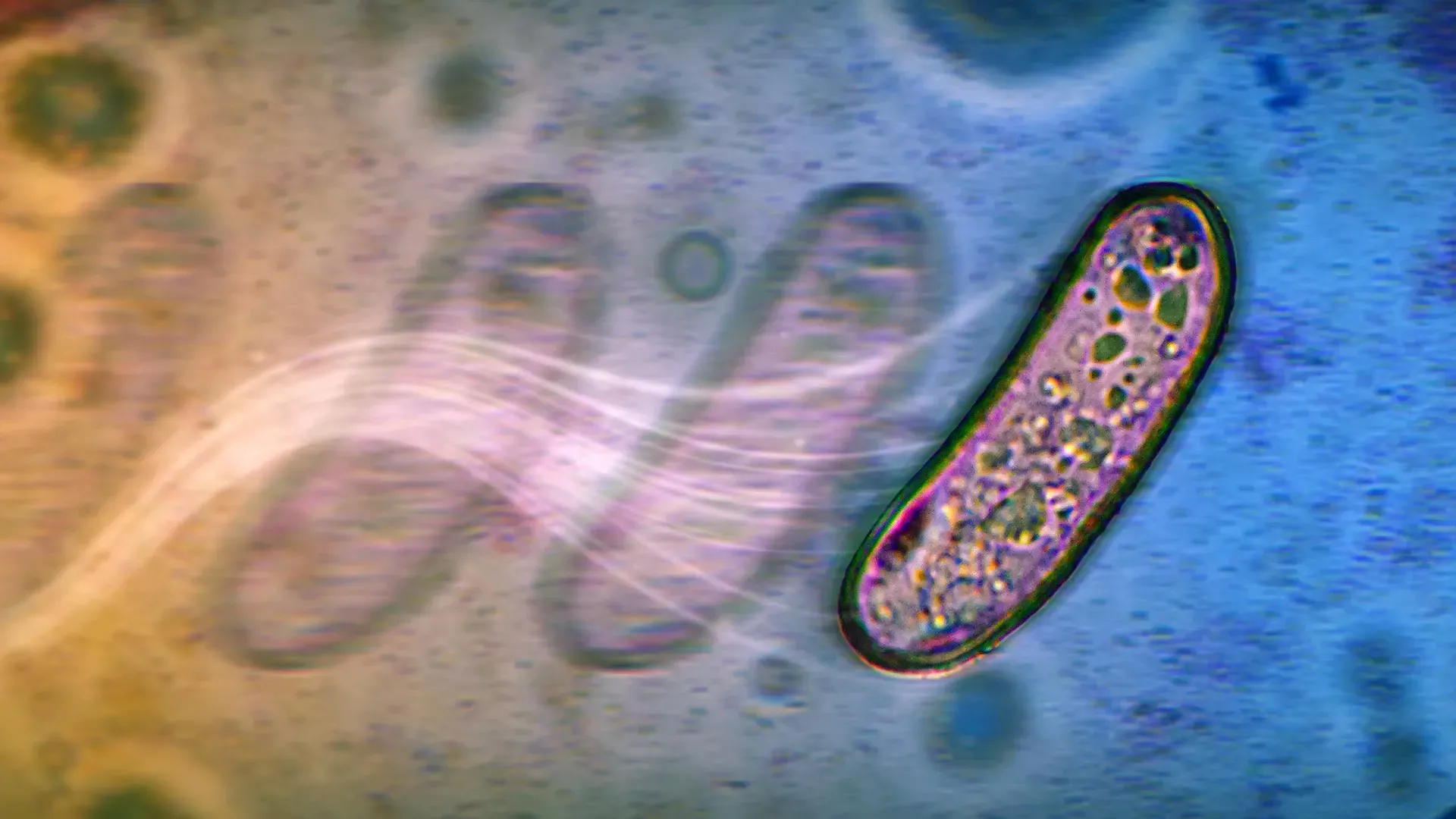
Scientists have discovered that bacteria can spread in surprising ways even without their usual propeller-like structures called flagella. The findings reveal previously unknown mechanisms that allow microbes to travel across surfaces.
Researchers from Arizona State University reported the discoveries in two separate studies. Both studies show that bacteria possess alternative strategies to move and spread when their normal propulsion system fails.
Movement plays a crucial role in bacterial survival. It allows microbes to explore new environments, form communities and escape harmful conditions. Therefore, understanding how bacteria move may help scientists design better strategies to prevent infections.
🌊 Bacteria Can “Surf” on Tiny Fluid Currents
In the first study, researchers examined E. coli and Salmonella bacteria that had lost their flagella. Surprisingly, the microbes still managed to spread across moist surfaces.
The team discovered that the bacteria move by fermenting sugars. During fermentation, they release acidic by-products that draw water toward the colony. This process creates tiny outward-flowing currents that slowly push the bacteria across the surface.
Scientists named this newly observed movement “swashing.” The process resembles leaves drifting along a shallow stream. Even though the bacteria cannot swim, the currents carry them outward as the colony expands.
Researchers also found that the movement only occurs when fermentable sugars are present. Without these sugars, the bacteria cannot generate the fluid flows required for swashing.
⚙️ Molecular “Gearbox” Controls Bacterial Direction
A second study focused on flavobacteria, which move across surfaces using a specialised system known as the type 9 secretion system (T9SS).
This system acts like a microscopic conveyor belt on the cell surface. The belt moves adhesive proteins around the bacterium, allowing it to glide along surfaces in a motion similar to a snowmobile.
Scientists discovered that a protein called GldJ works like a gear shifter in this system. When a small portion of the protein changes, the motor reverses direction. As a result, the bacterium can switch its movement direction.
This molecular gear mechanism helps bacteria adapt to complex environments and navigate surfaces more effectively.
🧬 Findings Could Help Prevent Infections
The discoveries provide new insight into how bacteria colonise surfaces.
For example, microbes may spread across medical devices, wounds or hospital equipment even when their flagella do not function. Because of this, simply blocking flagella might not stop bacterial movement.
Instead, scientists suggest targeting the metabolic processes that generate fluid currents or the molecular systems that control bacterial motion.
The research also highlights the importance of environmental conditions such as sugar levels, pH and surface chemistry in controlling microbial spread.
🔬 Discovery Expands Understanding of Microbial Behavior
Although the two mechanisms differ, both discoveries demonstrate the remarkable adaptability of microbes.
Bacteria have evolved multiple strategies to move and survive in different environments. Consequently, they can spread even when traditional movement systems fail.
Understanding these mechanisms may help researchers develop new approaches to control infections, prevent biofilm formation and improve sanitation strategies.
As scientists continue studying microbial movement, the findings could also inspire new bioengineering technologies and medical applications.

0 Comments