
The San Antonio Museum of Art (SAMA) has repatriated nine ancient antiquities to Italy under a formal cultural cooperation agreement with the Italian Ministry of Culture. This San Antonio repatriation reflects ongoing efforts to resolve provenance issues and support responsible museum practices.
The returned objects date mainly to the 4th and 3rd centuries BC. Most originated in Athens and southern Italy. While Italy has reclaimed ownership of all nine pieces, eight will remain on public display in San Antonio under a long-term loan arrangement. One object has been fully returned to Italian authorities.
Objects Included in the Repatriation
The group includes Greek and South Italian ceramics and sculpture. These works entered the museum’s collection over several decades through purchases and donations.
The antiquities remaining on long-term loan include:
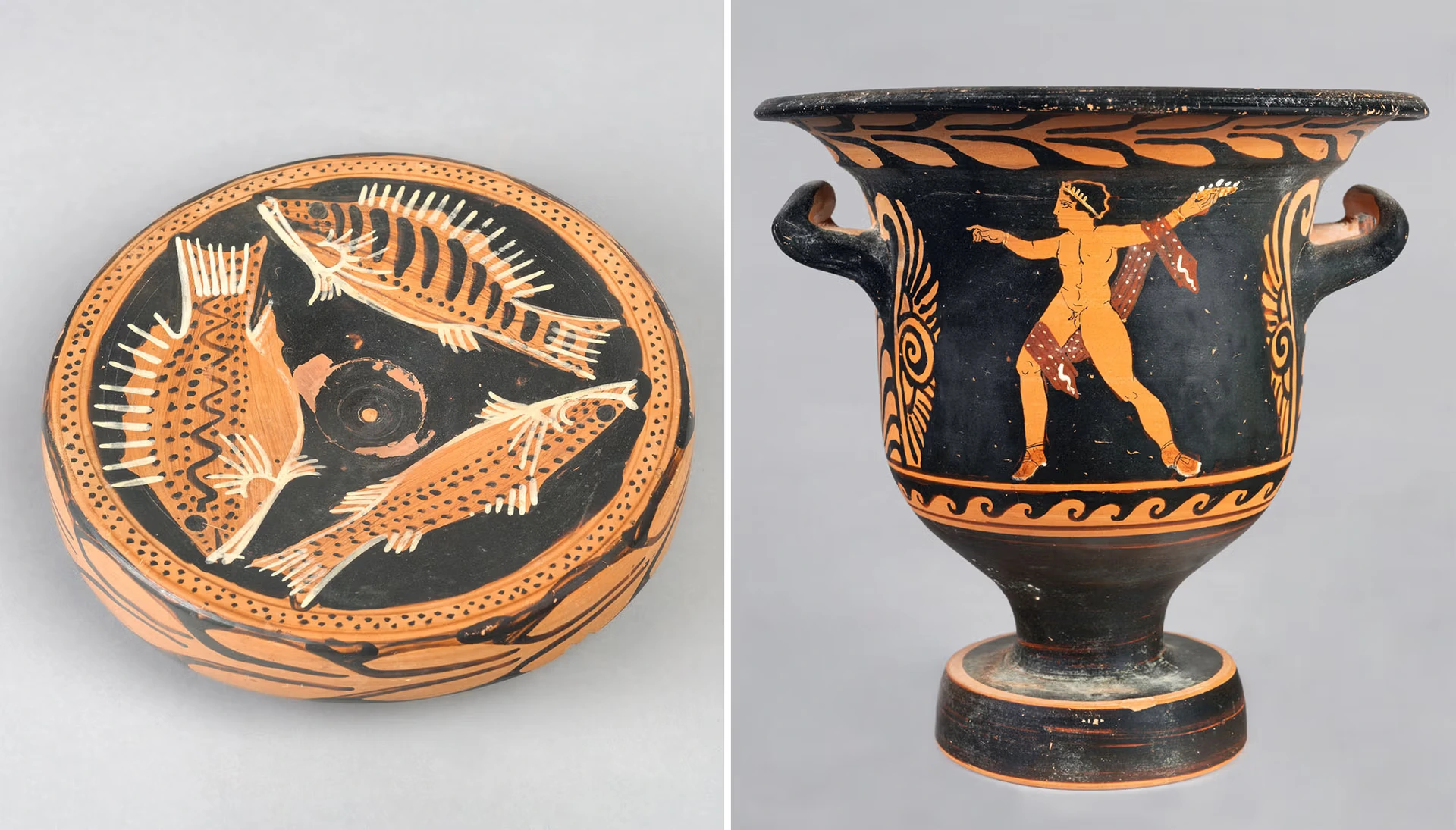
- A terracotta plate decorated with fish, dated to around 340 BC
- Two loop-handled jugs, produced in the late 4th century BC
- A nearly three-foot terracotta statue of a female figure from the 4th to 3rd century BC
- A red-figure krater, showing a nude youth and a seated woman, dated to about 330 BC
Before arriving in San Antonio, these objects passed through auction houses and dealers in New York and London. However, later research raised concerns about their excavation and export history.
The ninth object, a marble head of Hermes from the 2nd century AD, followed a different path. Italian authorities requested its return after confirming its origin. As a result, the museum transferred the piece back to Italy without a loan arrangement.
Provenance Research and Identification
Researchers identified eight of the nine antiquities through archival photographs linked to convicted antiquities dealer Giacomo Medici. These images helped confirm that the objects had circulated through the illicit antiquities market.
In contrast, scholars traced the Hermes head to excavations on Rome’s Caelian Hill carried out in the late 19th century. Although it later entered the U.S. art market, documentation did not support a lawful export. After reviewing the evidence, SAMA contacted Italian authorities and agreed to return the sculpture.
This research process played a central role in shaping the final agreement. It also guided decisions about which objects could remain on loan.
Long-Term Cultural Collaboration
The repatriation forms part of a cultural collaboration agreement signed in 2023 between SAMA and Italy’s Ministry of Culture. Under this framework, Italy retains ownership while allowing continued public access in the United States.
Under the agreement:
- Eight antiquities will stay at SAMA on long-term loan
- Italy may later provide comparable works once the loan period ends
This arrangement allows the museum to maintain educational displays. At the same time, it acknowledges Italy’s legal and cultural claims.
Overall, the San Antonio repatriation aligns with wider international efforts to address the movement of ancient artifacts. Increasingly, museums are reviewing their collections and working with source countries to resolve ownership concerns while keeping cultural heritage accessible to the public.

0 Comments