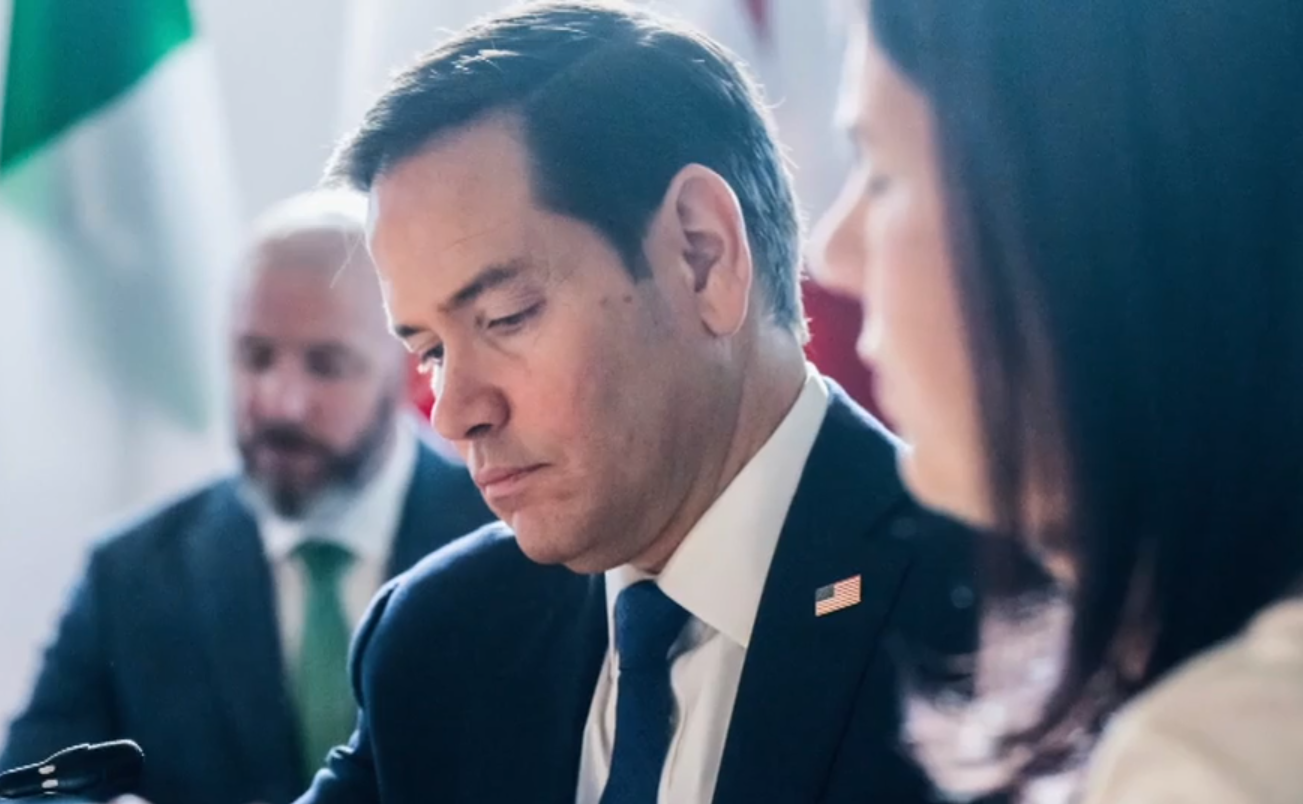
Charlevoix, Quebec — U.S. Secretary of State Marco Rubio defended President Donald Trump’s repeated claims that Canada should become the 51st U.S. state, describing it as an economic argument that “stands for itself.” Rubio’s remarks came during a press conference at the conclusion of the G7 foreign ministers’ summit in Charlevoix, Quebec, where he faced repeated questions about Trump’s rhetoric.
Trump’s Annexation Remarks Under Scrutiny
Rubio insisted that the subject was not officially discussed at the G7 summit but acknowledged that the idea originated from a meeting between Trump and then-Prime Minister Justin Trudeau in December 2024. According to Rubio, the conversation arose when Trudeau expressed concerns that U.S. tariffs on Canada would have severe economic consequences, prompting Trump to suggest statehood as a solution.
“[Trump] made an argument for why Canada would be better off joining the United States from an economic standpoint,” Rubio explained. “He says he loves Canada and has made that argument repeatedly.”
Trump has since escalated his remarks, calling the Canada-U.S. border an “artificial line” and claiming Canada “only works as a state” during a recent Oval Office meeting with NATO Secretary-General Mark Rutte.
Canadian Leaders Reject Annexation Idea
While Trump’s remarks were initially dismissed as a joke, Trudeau later warned that the U.S. president was serious. “We actually have to acknowledge that he has said repeatedly that he wants to see a total collapse of the Canadian economy because that would make annexation easier,” Trudeau stated in early March after the U.S. imposed tariffs on Canada.
Newly sworn-in Prime Minister Mark Carney strongly rejected Trump’s comments, asserting, “We will never, ever, in any way, shape, or form, be part of the United States. America is not Canada.”
Foreign Minister Mélanie Joly echoed this sentiment, saying that she had raised concerns with G7 counterparts about what she termed “economic coercion” by the U.S. and discussed expanding trade partnerships outside of North America. “The reaction from my European colleagues was disbelief,” she said. “I told them, ‘This is not a joke. Canadians are anxious. We are a sovereign country, and this is not up for discussion.’”
International Reactions to U.S. Remarks
The annexation rhetoric has drawn international concern, with German Foreign Minister Annalena Baerbock reaffirming the G7’s commitment to Canada’s sovereignty. “Canada’s unity inspires us,” she posted on social media, tagging Joly and European Union foreign affairs representative Kaja Kallas.
Meanwhile, Italian Foreign Minister Antonio Tajani downplayed the controversy, stating, “For me, Canada will be Canada. The most important message today is unity.”
Diplomatic Tensions Amid Trade Dispute
As tensions between the U.S. and Canada continue to rise over trade tariffs and economic policy, some analysts fear Trump’s rhetoric could further damage relations between the two historic allies.
Despite this, Pete Hoekstra, Trump’s nominee for U.S. ambassador to Canada, affirmed during a Senate confirmation hearing that “Canada is a sovereign state” and that stronger economic ties would benefit both nations.
With growing resistance from Canadian leadership and allies, Trump’s vision of a U.S.-Canada union appears unlikely. However, the ongoing trade dispute and annexation rhetoric continue to strain diplomatic ties, leaving Canada to navigate an increasingly uncertain relationship with its southern neighbor.

0 Comments