
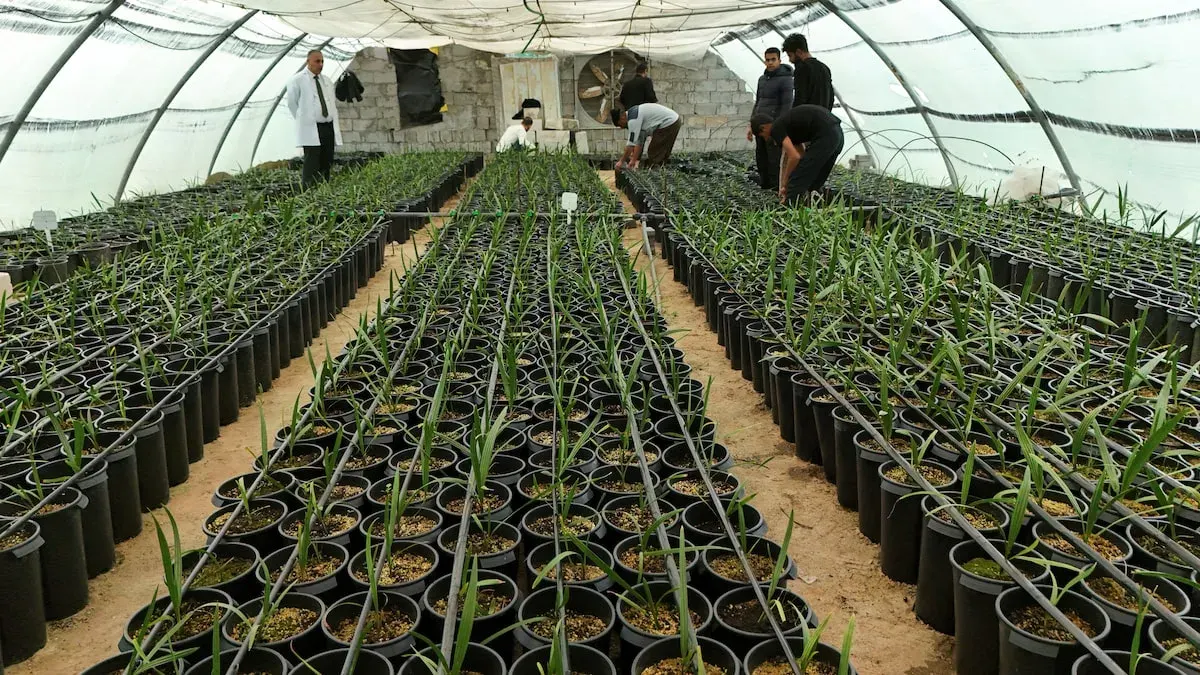
Farmers in Basra, southern Iraq, are facing mounting pressure from rising temperatures and increasing soil salinity. These changes have begun to threaten traditional date palm farming, which has supported the region for generations. As a result, scientists and agricultural authorities are turning to laboratory-grown date palms to protect production.
Basra has long relied on its date palm groves. However, climate stress now makes open-field cultivation more difficult. Therefore, researchers have begun developing palm seedlings in controlled laboratory conditions. This approach helps protect young plants from heat, salinity, and water shortages.
Agricultural specialists say climate conditions have changed faster than traditional farming methods can adapt.
🌡️ Heat and Salinity Create Growing Challenges
In recent years, Basra has experienced record summer temperatures and repeated heatwaves. At the same time, salt levels in soil and irrigation water have increased. These conditions weaken palm trees and reduce yields.
Moreover, reduced freshwater flow into southern Iraq has worsened salinity levels. Consequently, farmers struggle to maintain healthy groves using older techniques. Many palms fail to survive early growth stages under current conditions.
Because of these pressures, authorities now view laboratory propagation as a practical solution. The method allows scientists to select stronger plant material before moving palms to open land.
🧪 How Laboratory Cultivation Works
In Basra, specialists grow date palms using tissue culture techniques. Scientists extract plant material from selected parent palms and grow it in sterile laboratory environments. This process ensures uniform quality and higher survival rates.
Key advantages of lab-grown palms include:
- Stronger resistance to salinity
- Better tolerance to extreme heat
- Faster and more reliable growth cycles
After initial development, technicians transfer young palms to nurseries. From there, farmers can plant them in the field once conditions allow. Therefore, laboratory work acts as a protective first stage rather than a full replacement for farming.
🌴 Preserving a Vital Crop
Date palms play a crucial role in Iraq’s agriculture and food supply. They also hold cultural and economic importance, especially in southern regions. However, climate change now threatens that legacy.
Officials say laboratory cultivation supports long-term sustainability. Meanwhile, farmers see it as a way to safeguard livelihoods. Although the approach costs more than traditional methods, many consider it necessary under current conditions.
At the same time, experts stress that lab cultivation alone cannot solve broader environmental problems. Water management, river flow restoration, and climate adaptation policies remain essential.
🔄 Adapting to a Changing Environment
Basra’s shift toward laboratory-grown palms reflects a wider adaptation trend. Across the region, farmers and researchers are adjusting practices as climate risks increase.
For now, laboratory cultivation offers hope. It allows continued date production despite harsh conditions. As climate pressures persist, such methods may become more common across Iraq’s agricultural sector.
Researchers say innovation is now critical to protecting crops once grown naturally for centuries.

0 Comments