
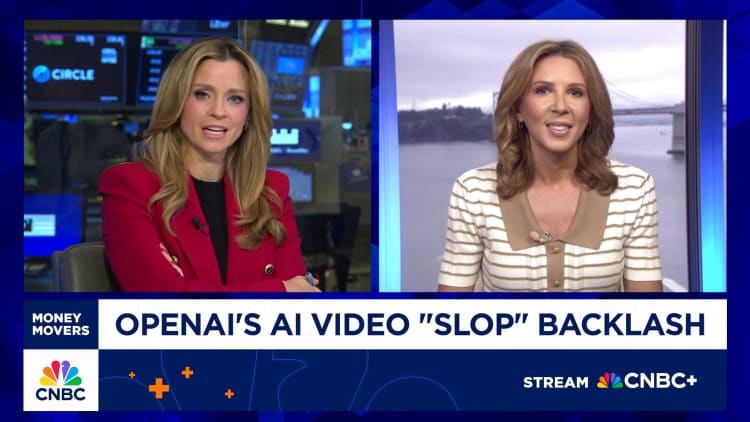
OpenAI’s new TikTok-style video app, Sora 2, is going viral following a $6.6 billion share sale that made the company the world’s most valuable private firm. Powered by its latest AI model, Sora 2 allows users to generate stunningly realistic videos, including deepfakes and creative clips featuring public figures and popular characters.
Despite its invite-only release, the app has already climbed to number three on Apple’s App Store, fueled by viral videos like CEO Sam Altman shoplifting GPUs — some authorized, others raising ethical and safety concerns.
The launch has reignited an internal debate at OpenAI over balancing safety with creative freedom. While leadership emphasizes strict guardrails, including prompt filtering, output moderation, and watermarks, some users have already found ways to bypass restrictions. Sora 2 bans explicit content, terrorist propaganda, self-harm material, and unauthorized likeness impersonation, yet the system’s realism has drawn criticism that the app is moving faster than the safeguards can handle.
“Sora is as much about transparency — showing the public what the technology can do — as it is about building commercial momentum,” said Altman on X.
OpenAI’s fast rollout strategy reflects its Silicon Valley roots, often shipping ahead of competitors and adapting in real time. The company’s growth from a scrappy research lab to a structured organization allows cross-functional teams to accelerate development cycles for products like Sora.
The push into video generation is part of a broader AI trend. Experts like Professor Hao Li say visual and audio data are crucial for training AI toward general intelligence, mimicking how humans learn from the world. AI-generated video can simulate reality, improving models’ reasoning and performance.
Competition is intensifying. Meta recently launched Vibes, Google has Veo 3, and ByteDance and Alibaba have their own short-form AI video tools. Meanwhile, OpenAI has committed $850 billion to expand infrastructure and next-generation models.
Former OpenAI executive Zack Kass emphasizes that releasing powerful technology early carries risks but ultimately accelerates public understanding and societal adaptation:
“There are two alternatives to building in the open: Not building at all, or building privately. Both are worse.”
Sora 2’s launch underscores the delicate balance between innovation, user engagement, and responsible AI deployment — a challenge that will shape the future of synthetic media and OpenAI’s ambitions in artificial general intelligence.

0 Comments