
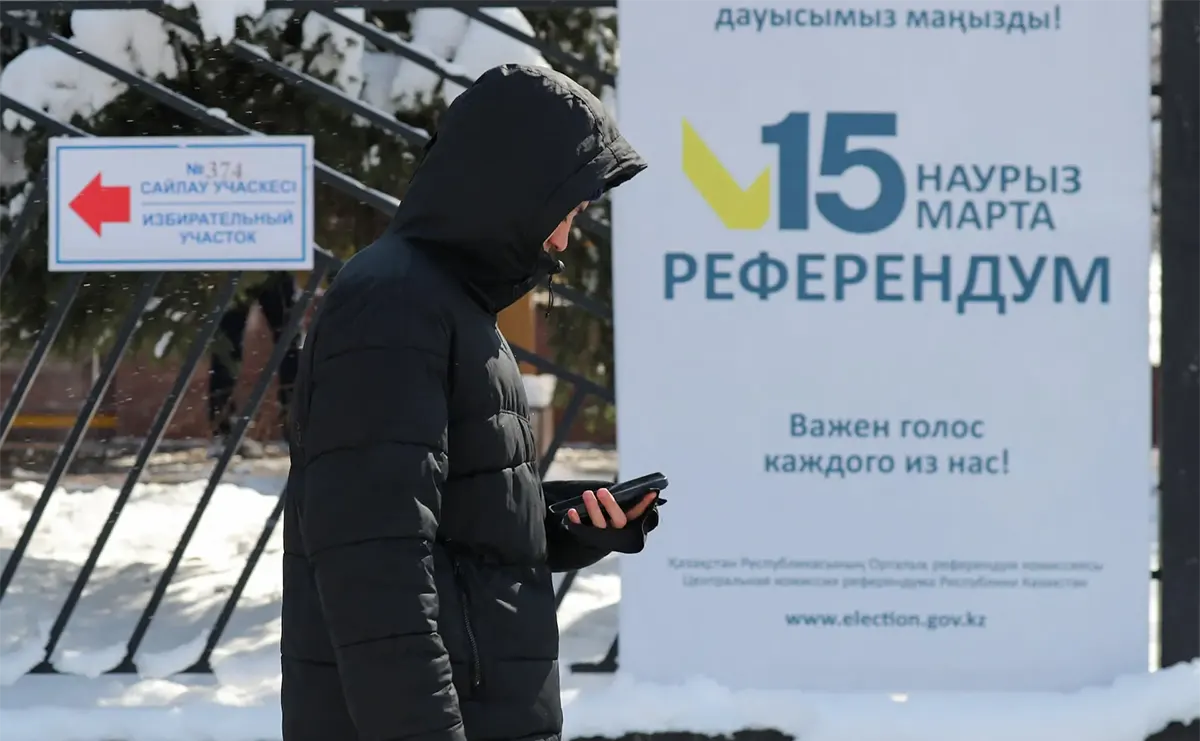
Kazakhstan is set to hold a nationwide referendum on a new constitution on Sunday. The vote could reshape the political structure of the Central Asian nation.
President Kassym-Jomart Tokayev described the referendum as a “historic moment” for the country. He said the changes aim to move Kazakhstan away from a “super-presidential” system and strengthen the separation of powers.
However, some analysts and critics question whether the reforms will actually limit presidential authority. Instead, they warn that the proposed constitution could still leave significant power with the head of state.
The referendum comes as Kazakhstan seeks to modernize its political system while managing economic and geopolitical challenges.
⚖️ Proposed Changes to Government Structure
The draft constitution includes several major political reforms. One proposal would merge Kazakhstan’s bicameral parliament into a single chamber, reducing the number of legislative bodies in the national government. Another measure would restore the position of vice-president, a role that the country abolished in 1996.
Under the proposal, the president would appoint the vice-president, raising questions among critics about the level of checks and balances within the political system.
Supporters argue that these reforms could simplify governance and improve the functioning of state institutions.
🏛️ Debate Over Presidential Power
Kazakhstan currently limits presidents to a single seven-year term. President Tokayev introduced that rule in 2022 as part of earlier political reforms.
Tokayev has said he intends to step down in 2029, when his current term ends. However, some political observers say the new constitution could reset the presidential term count, potentially allowing him to remain in power longer.
Analysts note that similar constitutional changes have occurred in several former Soviet states.
Political analyst Dosym Satpayev argued that the draft constitution still gives the president extensive authority and does not create sufficient checks on executive power.
🌐 Rumours About Possible UN Role
Some political speculation also surrounds Tokayev’s future plans. Observers in Kazakhstan have discussed rumours that Tokayev could seek the role of United Nations secretary-general. According to analysts, restoring the vice-presidency might allow him to designate a successor if he leaves office early.
However, Tokayev has publicly stated that he does not plan to return to the United Nations.
📊 Economic Pressures Shape Public Mood
The referendum comes during a challenging economic period for Kazakhstan. The country’s economy remains closely connected to Russia, which has faced international sanctions due to the war in Ukraine. These conditions have affected Kazakhstan’s economy through trade disruptions and financial pressures.
Meanwhile, inflation reached about 11.7% in February, while interest rates climbed to 18%, the highest level on record.
Although state-approved polls suggest strong public support for the proposed constitution, some citizens express concerns about rising prices and economic pressure.
🏪 Everyday Concerns Among Citizens
Some residents say daily economic challenges dominate their concerns. A vendor in Almaty, Kazakhstan’s commercial capital, explained that traders often absorb rising costs rather than raising prices for customers.
“We’re kind of afraid,” she said. “If we raise prices, it will be difficult for our regular customers.”
The vendor also said she had not yet decided whether she would participate in the referendum.
For many citizens, economic pressures remain as significant as political reforms.

0 Comments