
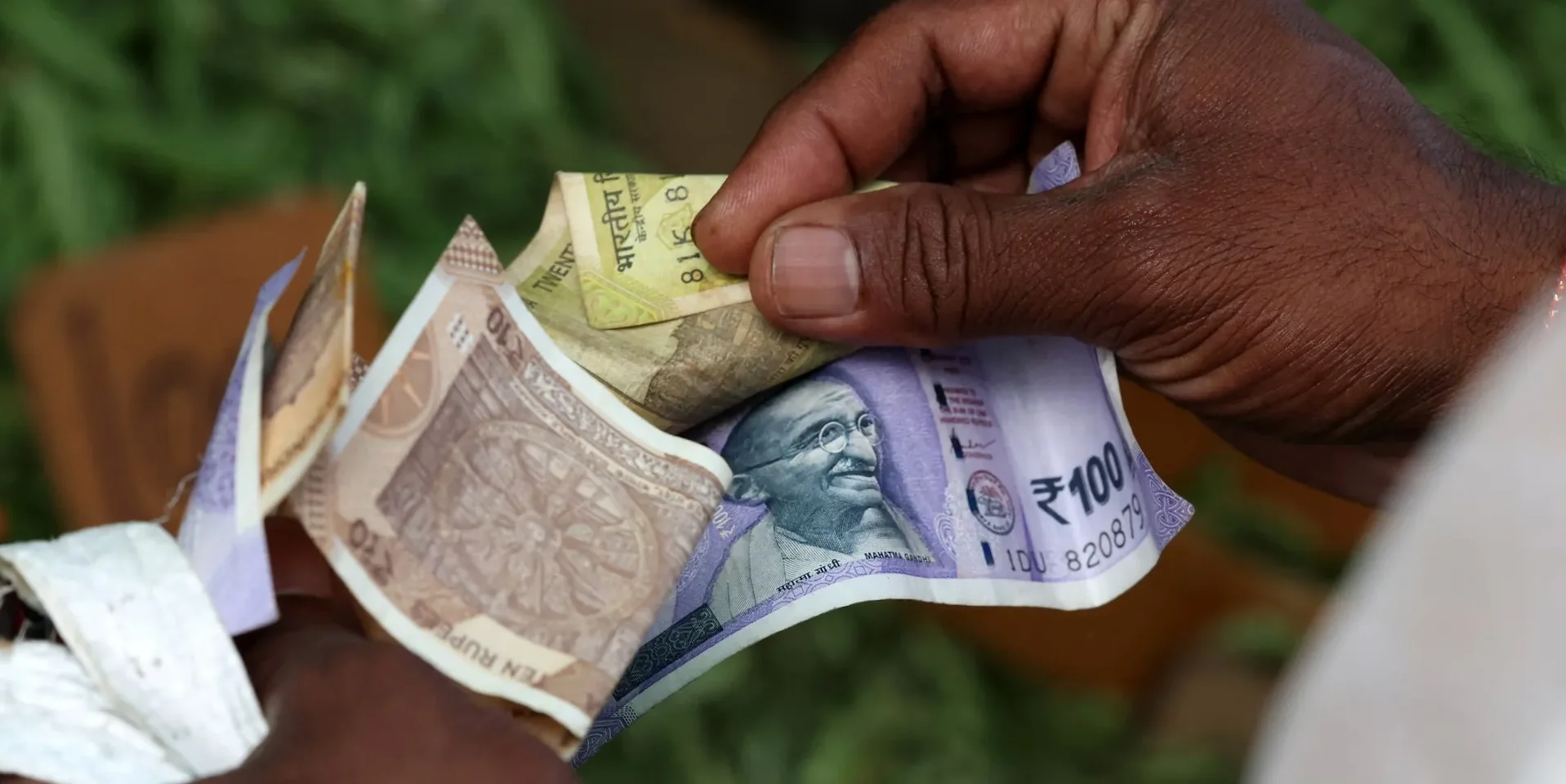
The Indian rupee slid to a lifetime low on Friday as pressure from local equity sell-offs combined with ongoing demand for dollars increased strain on the currency. Traders said the move reflected continued foreign outflows and strong importer demand that kept the rupee under sustained downward pressure, highlighting persistent vulnerabilities in currency flows.
Officials and market participants noted that the rupee’s weakness came even as the broader stock market declined sharply this week. This combination reinforced bearish sentiment and made the currency’s recent slide more pronounced.
📊 Pressure From Equity Outflows
Foreign investors withdrew roughly $3.5 billion from Indian equities so far this month, contributing to significant selling in equity markets. As a result, the benchmark stock index in Mumbai fell sharply over recent sessions.
Market watchers said strong outflows from Indian stocks added to demand for dollars as investors sought to shift capital abroad. Therefore, this dynamic contributed to continued downward pressure on the rupee’s value even as other economic indicators showed resilience.
📌 Factors Driving Currency Weakness
Analysts cited several forces that have kept the rupee weak against the dollar, including:
- Persistent importer demand for dollars to settle overseas payments
- Speculative dollar buying by offshore market participants
- Renewed capital outflows from equity markets
- Elevated demand for safe-haven assets amid wider market uncertainty
These combined pressures have kept the currency near record lows despite efforts by authorities to stabilise the market.
💹 Role of Reserve Bank of India
The Reserve Bank of India has intervened repeatedly to support the rupee and curb the pace of its decline. Market participants said the central bank sold dollars aggressively on at least two occasions this week. However, traders noted that these interventions have slowed the decline only temporarily, and have not reversed the broader trend of depreciation.
Officials have maintained a cautious stance, balancing efforts to support the currency while avoiding sharply draining foreign exchange reserves. As a result, the RBI’s approach has focused on managing volatility rather than defending a fixed exchange rate level.
🌍 Broader Market Sentiment
Economists said persistent capital flow weaknesses remain a key vulnerability for the Indian currency. Portfolio equity outflows hit record levels last year, and inflows through external commercial borrowing have remained muted. This has weighed on overall investor sentiment and contributed to a bearish outlook for the rupee.
Meanwhile, broader global conditions, including demand for safe-haven assets and shifts in investor risk appetite, have also influenced currency valuations. As international markets react to mixed economic signals, emerging market currencies like the rupee have experienced heightened pressure.
🔍 What Comes Next
Many analysts said the rupee’s path in the near term will depend on the balance between foreign capital flows, importer demand, and central bank intervention. They also noted that developments in equity markets and global investor sentiment will be key factors shaping the currency’s performance over the coming weeks.

0 Comments