
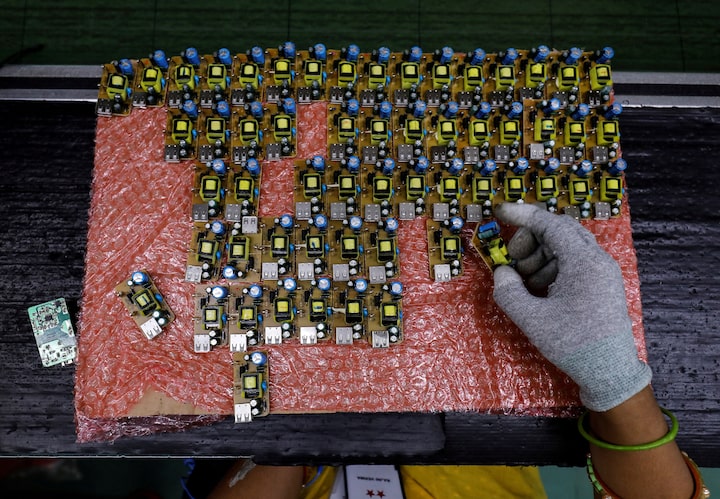
India’s government has approved electronics component manufacturing projects valued at 418.63 billion rupees ($4.64 billion) under its Electronics Component Manufacturing Scheme (ECMS), Reuters reported. The approved initiatives aim to boost the country’s domestic production capabilities, reduce import dependence, and strengthen supply chains across multiple sectors.
The projects span eight Indian states, including Andhra Pradesh, Karnataka, Maharashtra, Tamil Nadu, and Uttar Pradesh. Together, they are expected to produce components worth about 2.58 trillion rupees ($28.62 billion) and generate around 34,000 jobs as manufacturing activity expands.
🏭 Companies and Manufacturing Scope
Several major firms received approvals under the scheme. These include Samsung Electronics, Tata Electronics, and Foxconn.
The approved projects will manufacture parts such as mobile phone enclosures, camera modules, connectors, and sub-assemblies. These components serve consumer electronics, telecom equipment, and industrial systems.
📈 Electronics Sector Growth Strategy
India’s electronics sector has expanded rapidly in recent years. In the fiscal year ending March 2025, production reached about $125 billion.
The government now aims to raise output to $500 billion by fiscal 2031. Policymakers believe local component manufacturing is critical to meeting that goal.
By producing more parts domestically, India hopes to capture greater value within the technology supply chain.
📈 Impacts on Jobs and Investment
The planned projects will create job opportunities across manufacturing, engineering, logistics, and related support functions. Authorities say these investments will also help develop high-skill labour pools and foster innovation in component design and production.
In addition, local suppliers and smaller firms may benefit through subcontracting and supply relationships, supporting a wider ecosystem that can compete globally. Observers say that India’s push into electronics components aligns with broader goals of technology leadership and industrial diversification.
🌐 Broader Policy Context
India’s approach mirrors similar strategies in other regions seeking to strengthen domestic tech supply chains. By combining financial incentives with coordinated policy support, the government hopes to elevate its position in global electronics manufacturing.
Analysts say achieving the ambitious production target will require continued investment, infrastructure improvements, and skilled workforce development. The approved projects mark a significant step forward, but long-term success will depend on implementation and market dynamics.

0 Comments