
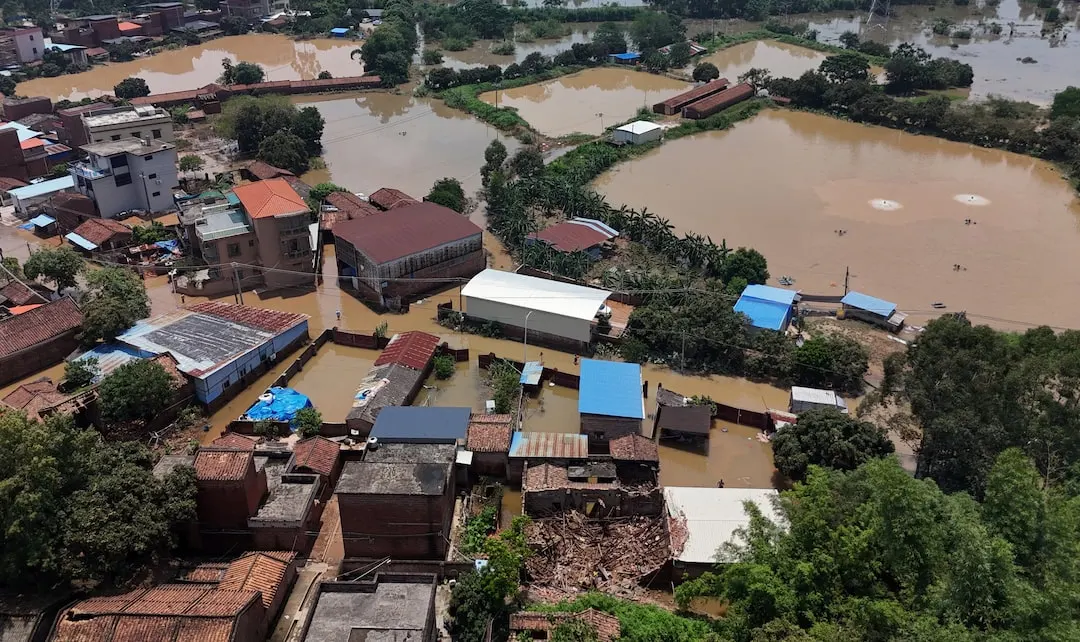
China is likely to face severe flooding and drought across multiple regions in 2026, according to the Ministry of Water Resources. Officials shared the outlook through state broadcaster China Central Television.
Authorities expect extreme and uneven weather patterns. Therefore, different regions will experience sharply contrasting conditions. This situation increases pressure on national disaster planning and water management systems.
Officials warned that both floods and drought will pose serious challenges this year.
🌊 Flood Risks Expected Across Northern and Coastal Regions
The flood season officially began on April 1, marking the start of heightened risk. Officials expect northern China, which usually receives less rainfall, to face more severe flooding this year.
Meanwhile, several key regions may also experience dangerous water levels. These include the Pearl River basin, Fujian, Zhejiang, and parts of the Yangtze River basin. Authorities said water levels in these areas could exceed warning thresholds during April and May.
In addition, officials expect typhoons to track further north than usual. Therefore, regions that typically avoid such storms may now face higher risks. As a result, emergency preparedness efforts have increased.
☀️ Drought Expected in Southwestern China
At the same time, southwestern regions are likely to experience periods of drought. This creates a sharp contrast with flood-prone areas. Therefore, China must manage both water shortages and excess rainfall simultaneously.
Drought conditions may affect agriculture, drinking water supply, and local economies. Meanwhile, farmers in affected regions may face reduced crop yields.
As a result, authorities must balance water distribution and storage carefully. This highlights ongoing structural challenges in water resource management.
⚠️ Rising Pressure on Water Systems and Infrastructure
The combination of floods and drought increases pressure on infrastructure. Reservoirs, dams, and drainage systems must handle extreme conditions. Therefore, officials continue to monitor water levels and weather patterns closely.
In addition, emergency response systems must remain ready for rapid changes. Authorities are focusing on early warnings and coordinated action. Consequently, preparedness remains a key priority.
At the same time, officials recognise that regional imbalances complicate planning. Managing excess water in one region while addressing shortages in another requires coordinated national efforts.
🌍 Ongoing Climate and Weather Challenges
China has experienced more frequent extreme weather events in recent years. Floods and droughts have affected large populations and disrupted economic activity. Therefore, the 2026 forecast reflects a continuing trend.
Officials emphasised the importance of early monitoring and prevention measures. Meanwhile, authorities aim to reduce risks through improved forecasting and infrastructure planning.
As a result, the outlook for 2026 highlights significant environmental challenges. However, it also underscores the need for long-term adaptation strategies.

0 Comments