
Several Canadian snowbirds say they were taken by surprise after being fingerprinted and photographed by U.S. Customs and Border Protection (CBP) officials while registering for their winter stay. The CBP confirmed to CBC News that the new biometric process is now standard procedure for travellers staying in the United States longer than 29 days.
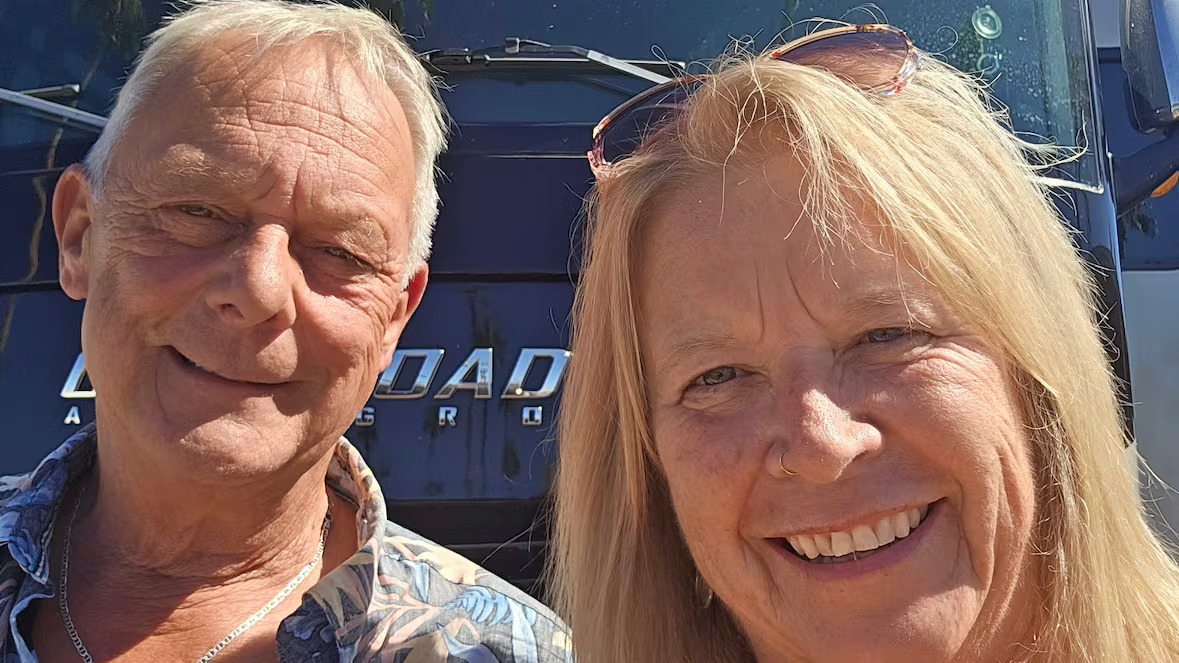
Jacquie and Steve Ree from Ladysmith, B.C., encountered the new system at the Peace Arch Border Crossing between Surrey, B.C., and Blaine, Washington, on October 9. Expecting a simple registration, the couple was directed to secondary inspection, where their motorhome was thoroughly searched.
“We were shocked watching them open every hatch,” said Jacquie Ree. “They went through our whole RV.”
After waiting in line for more than 90 minutes, the couple was told by one officer they couldn’t register at the border — only for another to later process their registration, including photographing and fingerprinting them. The Rees were charged a $60 US fee for the procedure.
“I thought it was a bit of a money grab,” Ree admitted, noting that officers appeared confused about the new policy. “They didn’t really know what they were doing.”
The confusion stems from a new requirement introduced earlier this year under an executive order signed by U.S. President Donald Trump. It mandates that most foreign visitors staying 30 days or longer register with the U.S. government, or risk fines of up to $5,000 US or even jail time.
Although the rule took effect in April, this is the first major wave of Canadian snowbirds encountering the policy as they head south for the winter — and many say they’re frustrated by the lack of clear information and consistency at the border.

0 Comments