
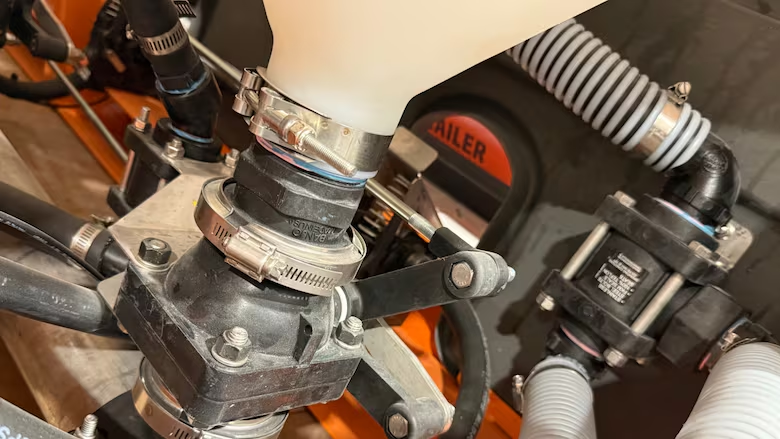
A temporary relief program introduced by Ottawa to help Canadian businesses grappling with high counter-tariffs may not provide sufficient protection for some manufacturers, according to industry experts. One company in rural Manitoba, PhiBer Manufacturing, is already feeling the financial strain.
Since the U.S.-Canada trade war escalated last month, PhiBer has been incurring “tens of thousands of dollars a week” in tariffs. These tariffs apply to materials the company imports from the U.S. to produce its farm and crop care equipment, including essential components like large plastic water tanks.
Derek Friesen, the CEO of PhiBer Manufacturing, which is located in Crystal City, Manitoba—about 200 kilometers southwest of Winnipeg—explained that the tariffs have put significant pressure on the company. “It’s not something you can switch very quickly,” Friesen stated, highlighting that while many of their parts are sourced from Canadian suppliers, critical materials remain dependent on U.S. imports.
Despite Ottawa’s announcement of temporary relief measures for some sectors, Friesen remains concerned that the tariffs will continue to impact his operations in the long run. His company faces a unique challenge because it has no feasible Canadian or non-U.S. alternatives for some of the key parts it needs to build its equipment.
With no immediate solutions in sight, PhiBer Manufacturing is caught in a tough position. The trade war has placed additional financial burdens on the company, and without more time or a more sustainable solution, the long-term effects could be severe for businesses like PhiBer. Friesen is urging for more comprehensive relief to help manufacturers navigate the complexities of cross-border trade.
As the situation develops, Canadian businesses will continue to weigh the impact of these tariffs on their financial stability, with many looking to the government for further support in dealing with the ongoing trade tensions with the U.S.

0 Comments