
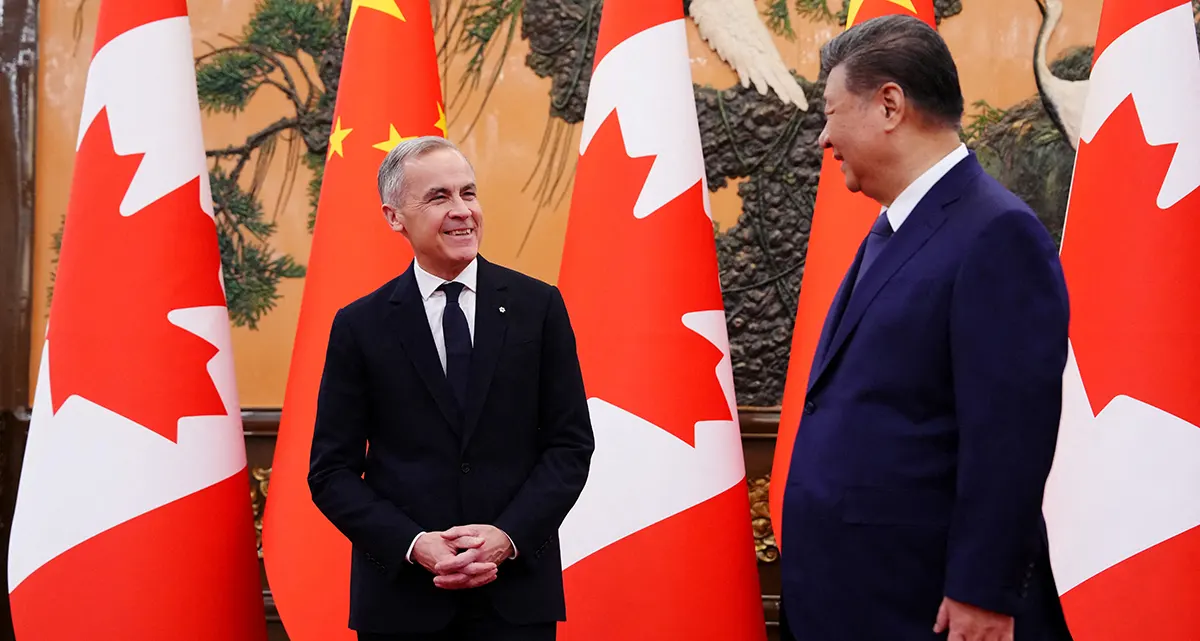
Canada and China are forming a new strategic partnership that could bring historic gains for both nations, Prime Minister Mark Carney said on 16 January 2026 in Beijing. Carney met with Chinese President Xi Jinping to outline areas where the two countries expect closer cooperation.
Carney said the partnership will leverage the strengths of both economies to drive progress in several key sectors. He highlighted agriculture and agri-food, energy, and finance as areas with strong potential for immediate and sustained improvements.
🌾 Focus on Agriculture and Industry
Carney said Canada and China share complementary interests in farming and food production. Therefore, he believes the two countries can expand agricultural exports and food-related trade. Meanwhile, he noted that increased cooperation could boost market access and bring benefits to farmers and producers on both sides.
In energy, Carney pointed to opportunities in cleaner power generation and shared technologies. He said closer work could help both nations transition to low-carbon energy systems while securing energy reliability. Consequently, officials could explore joint ventures and technology transfer initiatives.
💼 Finance and Broader Cooperation
Carney also cited finance as a potential area for growth, especially related to cross-border investment and financial services. He said global economic conditions are shifting, therefore Canada must strengthen ties with partners beyond traditional markets. Meanwhile, China remains Canada’s second-largest trading partner, and deeper financial cooperation could support both countries’ economic resilience.
Carney underscored that the visit represents the first trip by a Canadian prime minister to China since 2017, reflecting efforts to reset paused diplomatic relations and expand trade engagement. He said this step follows months of diplomatic work to turn the page on previous tensions and conflicts between the two nations.
🚗 Building on Recent Trade Deals
The strategic partnership follows a recent initial trade agreement between Canada and China. As part of that deal, Canada will allow up to 49,000 Chinese electric vehicles (EVs) into its market at a lower tariff rate, and China will reduce tariffs on Canadian goods such as canola. Carney described that arrangement as part of the broader effort to strengthen bilateral economic ties.
Carney said these tariff changes reflect a mutual commitment to rebuild trust and cooperation after earlier trade disputes. At the same time, he acknowledged that broader global trade dynamics remain complex, and this partnership does not replace Canada’s longstanding alliance with the United States.
🧠 Looking Ahead
Carney said the strategic partnership is a pragmatic step toward diversification and reducing reliance on any single market. He also said officials will continue talks on areas such as energy cooperation, technology exchange, and trade facilitation. Meanwhile, both countries committed to maintaining open communication to address economic and geopolitical challenges.

0 Comments