
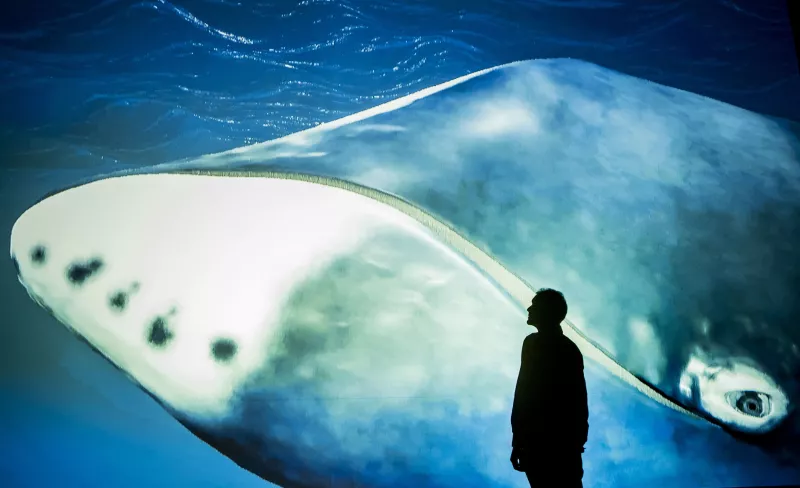
Scientists exploring new ways to prevent cancer have made a promising discovery inside the cells of the bowhead whale, one of the world’s longest-living mammals. The study, published in Nature, reveals how these whales avoid cancer despite their huge size and exceptionally long lifespans. This research adds important insight to a growing field that examines how long-lived animals protect themselves from disease.
🧬 A Biological Puzzle
In cancer biology, Peto’s paradox highlights a major scientific mystery. Larger animals have more cells, and long-lived species have more time to accumulate mutations. In theory, that should increase cancer risk. However, many big animals rarely develop cancer, which suggests they evolved special protective systems.
Vera Gorbunova, a biologist at the University of Rochester, explains it simply: “These animals must have developed extra defenses.” She and her team believe the bowhead whale is one of the clearest examples of this idea.
🔍 What Makes Bowhead Whales Unique
Bowheads can live for more than 200 years. Inuit communities in Alaska have long observed their impressive longevity, and scientists later confirmed it by examining old harpoons embedded in whale blubber and studying proteins in their eye lenses. Despite this extreme lifespan, researchers have never documented a malignant tumor in these whales.
To understand why, Gorbunova partnered with Iñupiaq whaling communities, who harvest a small number of bowheads through traditional subsistence methods. Their cooperation allowed scientists to study small tissue samples and uncover crucial insights.
🛡️ A Protein That Protects Cells
The team expected bowheads to have extra copies of tumor-suppressor genes, similar to elephants, which carry around 20 copies of the p53 gene. Instead, they discovered something different — a highly efficient DNA-repair mechanism.
Bowhead cells produce large amounts of a protein called CIRBP (cold-inducible RNA-binding protein). This protein helps cells repair DNA breaks quickly and accurately. While humans repair DNA fairly well, bowheads do it two to three times better, reducing the chance that harmful mutations will accumulate.
Gorbunova describes it as a simple strategy: instead of destroying damaged cells, bowheads invest heavily in maintenance and repair. This prevents mutations from forming in the first place.
🧪 Testing the Idea in the Lab
When scientists increased CIRBP levels in human cells, those cells repaired DNA more efficiently. In experiments with fruit flies, boosting CIRBP also extended their lifespan and strengthened their resistance to DNA damage. These tests suggest that learning from bowheads could help scientists design future treatments that improve cellular repair in humans.
According to evolutionary biologist Vincent Lynch, the findings offer hope but require caution. Translating whale biology directly into human medicine is complex, yet he believes such research opens important doors.
🌍 Wider Lessons From Nature
Other animals, such as elephants, bats and naked mole rats, also show strong cancer resistance. This emerging field — comparative oncology — studies why these species stay healthy and how their biology might inspire medical advances for humans.
Researchers emphasize that long-lived animals also reinforce the value of conservation. Protecting species like bowhead whales not only preserves ecosystems but may also help us better understand aging, disease and long-term survival.
🔭 What Comes Next
Scientists believe today’s findings are only the beginning. Many more natural mechanisms remain undiscovered in large or long-lived animals. As Lynch puts it, “We’ve uncovered only a handful of the mechanisms behind their resistance. There is much more to learn.”
Gorbunova agrees. Studying long-lived animals, she says, gives us a chance to uncover powerful biological strategies that traditional lab animals simply do not possess. These lessons could one day help extend healthy human lifespan and improve cancer-prevention strategies worldwide.

0 Comments