
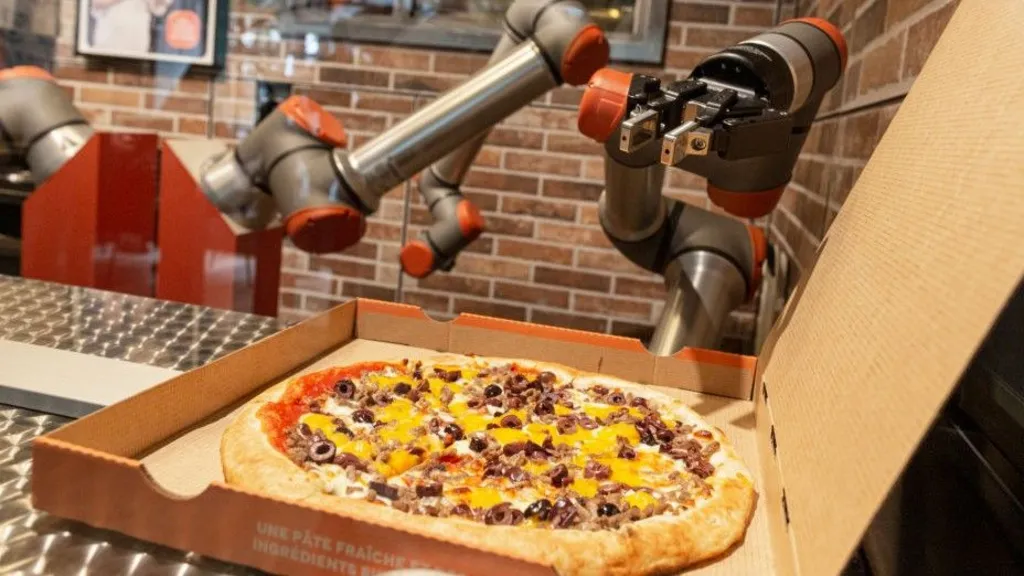
Robotic pizza-making technology once promised to transform restaurant kitchens by automating repetitive tasks, but the collapse of some technology suppliers is raising questions about whether expensive pizza robots are worth the investment.
At a Moto Pizza restaurant in Seattle, two machines designed to automate pizza preparation are now sitting unused. The systems included equipment for feeding dough, applying sauce and cheese, and even distributing pepperoni.
The robots were supplied by Picnic, a food automation company that abruptly shut down in May. When the company closed, technical support for its machines also disappeared, leaving restaurant operators with equipment they could no longer properly maintain or operate.
Lee Kindell, founder and chief executive of Moto Pizza, said the two machines became “basically useless” after Picnic ceased operations.
Moto Pizza had invested around $160,000 in the cabinet-sized robotic systems, making their sudden loss of functionality a significant setback for the business.
The experience has also made Kindell question whether he would enter another partnership involving similar restaurant automation technology.
Robotic kitchen systems are designed to help restaurants reduce repetitive manual work, improve consistency and potentially address staffing pressures. However, their usefulness can depend heavily on continued software updates, maintenance and technical support from the companies that manufacture them.
When a robotics supplier fails, restaurants can be left with costly specialised equipment that may be difficult to repair or adapt without the original company’s support.
Moto Pizza’s experience highlights a broader challenge for restaurant automation: businesses are not only investing in the machines themselves but also relying on the long-term survival and support of the technology companies behind them.

0 Comments