
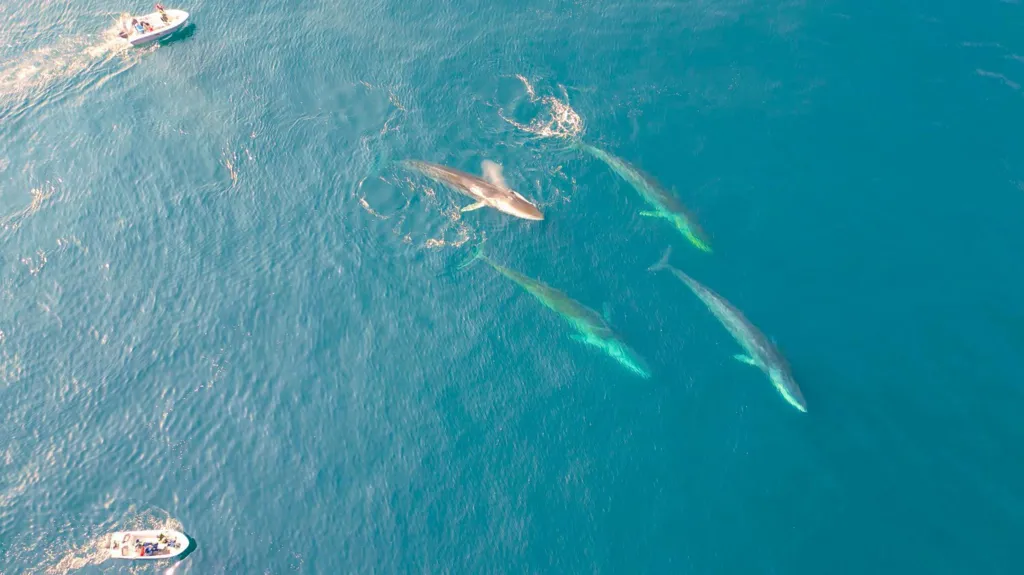
Giant whales are moving into previously inaccessible waters along Greenland’s east coast as rising temperatures cause sea ice to disappear, according to a decades-long scientific study.
Researchers have recorded and filmed hundreds of large whales, including humpbacks, minke whales and fin whales, feeding in ice-free coastal waters during the summer.
These marine mammals were historically unable to reach the area because thick sea ice blocked access to the coastal waters. As climate change warms the ocean and causes the ice to retreat, the whales have been able to expand their range and take advantage of newly accessible feeding grounds.
Scientists describe the changes as seasonal Arctic “feeding frenzies”, with large numbers of whales gathering in the newly ice-free waters.
The findings point to a major shift in the marine environment around East Greenland. While the disappearance of sea ice is creating new opportunities for some marine species, scientists say the broader ecological consequences of a rapidly warming Arctic remain significant.

0 Comments