
A new era is taking shape at Newcastle United, with the club changing its approach to recruitment, player development and squad building following the departure of Eddie Howe.
Howe’s exit came after a 4-1 pre-season defeat by Bristol City. Even during the journey home, the manager was reviewing parts of the match in an attempt to understand what had gone wrong.
The following morning, it became public that Howe had stepped down. He had informed Newcastle’s hierarchy of his decision several weeks earlier but agreed to remain in charge until the club could appoint his successor, Matthias Jaissle.
By then, however, Newcastle’s next cycle was already beginning.
Newcastle Shifts Towards a New Model
Following a difficult transfer window last summer and a disappointing domestic campaign, Newcastle have begun reshaping their footballing model.
The club is now focusing more heavily on younger players from Europe, strengthening its data and recruitment operations and adopting a trading model designed to create greater financial flexibility.
The changes have also been driven by restrictions resulting from Newcastle’s breach of Uefa’s financial regulations.
Sporting director Ross Wilson says the club needs to build a sustainable model capable of competing at the highest level without repeatedly being forced to sell important players.
“We have to build a model here that can compete, can win,” Wilson said.
“But also one that works for us and doesn’t lead us to have to sell players we don’t want to sell and lead to Uefa sanctions.”
Painful Player Departures
The transition has already involved difficult decisions.
The departures of Sandro Tonali and Anthony Gordon to Tottenham Hotspur and Barcelona respectively were viewed as necessary to give Newcastle greater room to reinvest.
However, the expected departure of captain Bruno Guimaraes to Arsenal was never part of the original plan.
Newcastle have also missed out on several promising targets. Spain winger Victor Munoz chose Liverpool, while Switzerland midfielder Johan Manzambi joined Aston Villa.
Despite those setbacks, the club has made five intriguing signings this summer.
Goalkeepers Lukas Hornicek and Ewen Jaouen, midfielders Aladji Bamba and Sean Steur, and forward Bazoumana Toure have all arrived as Newcastle look toward the future.
Jaissle Brings a Youth Development Focus
The appointment of Matthias Jaissle is central to the new project.
The 38-year-old previously developed young players during his time with Red Bull Salzburg, experience that fits Newcastle’s evolving recruitment strategy.
There are also similarities between Jaissle and Howe, something the German discovered while researching the club and during Newcastle’s own assessment of him during the interview process.
However, the speed of the transition has created an immediate challenge.
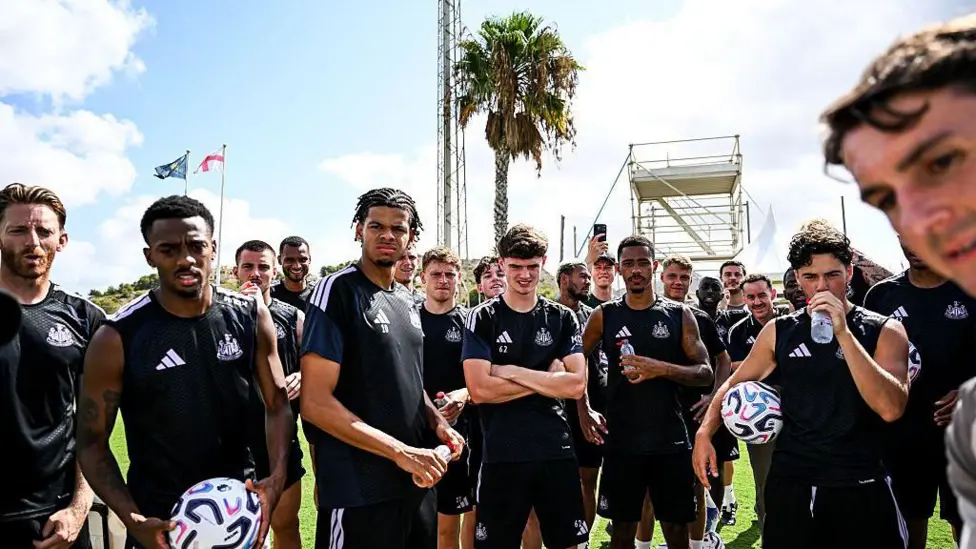
Newcastle’s Premier League opener against Liverpool on 23 August was approaching quickly when Jaissle left Saudi Pro League side Al-Ahli and joined the club’s pre-season camp in Spain.
A Race Against Time
Performance director James Bunce compared Jaissle’s first days at Newcastle to “speed dating”, because every moment matters.
The new manager’s first week has therefore been about rapidly understanding his squad, implementing his ideas and preparing for the season ahead.
That process continues with a friendly against Valencia at Mestalla, as Newcastle attempt to establish the foundations of what the club hopes will become its next competitive model.
Newcastle 2.0 is therefore about more than simply replacing Eddie Howe. It represents a broader attempt to create a sustainable football operation — one capable of developing young talent, making smarter recruitment decisions and competing without repeatedly falling foul of financial restrictions.

0 Comments