
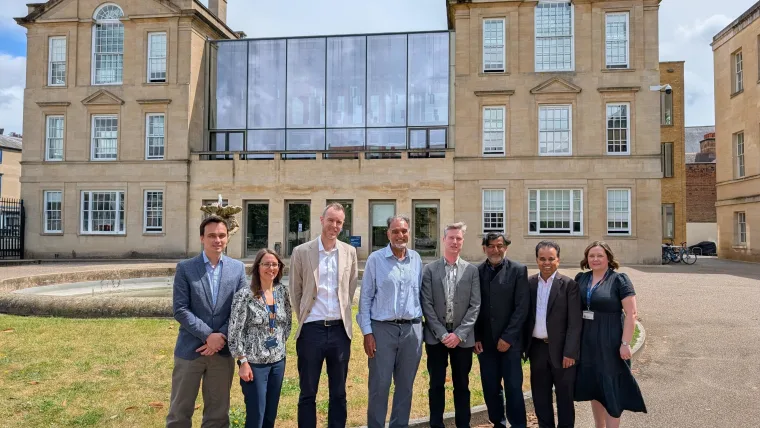
The Oxford healthy sustainable diets programme has been launched following a £5 million philanthropic gift from the Chellaram Foundation. The new initiative will bring together experts from several Oxford departments to study how healthier and more sustainable diets can be achieved at a population level. Researchers also hope to provide evidence that helps policymakers, healthcare professionals, and communities make informed decisions about food systems.
The programme combines expertise from the Nuffield Department of Primary Care Health Sciences, the Oxford Martin School, the Department of Biology, and the School of Geography and the Environment. By encouraging collaboration across disciplines, the initiative aims to address complex issues that affect public health, environmental sustainability, and food production. Researchers believe these challenges require solutions that draw on knowledge from multiple academic fields.
The programme arrives at a time when governments and researchers are paying greater attention to the links between diet, chronic disease, climate change, biodiversity loss, and animal welfare. Although evidence suggests that more plant-rich diets may provide benefits in these areas, important questions remain about how such changes can be introduced in ways that are practical, fair, and widely accepted by the public.
Oxford Healthy Sustainable Diets Research Will Cover Multiple Areas
The Oxford healthy sustainable diets programme will investigate several important topics related to food systems and health. Researchers plan to study the health effects of plant-based protein alternatives, the environmental impact of food production, and the relationship between farming practices and animal welfare. In addition, the team will examine how social media, online information, and everyday food environments influence dietary choices.
Another part of the programme will focus on policy modelling. Researchers will develop evidence that helps governments and decision-makers assess how different policies could affect public health, the environment, and animal welfare. Consequently, policymakers may gain better information when designing future food strategies and public health initiatives.
The initiative also includes the Chellaram Scholars Programme, which will provide support for doctoral students and early-career researchers. Oxford officials say developing the next generation of researchers will strengthen long-term work in nutrition, sustainability, and public health. Furthermore, the programme includes a dedicated public engagement effort to share research findings with industry leaders, healthcare professionals, policymakers, civil society organizations, and the wider public.
Programme Seeks Practical Solutions for Global Challenges
Researchers leading the initiative say healthier diets could help address several global challenges at the same time. Improvements in nutrition may reduce the risk of chronic diseases while also lowering the environmental impact of food production. At the same time, better evidence could support farming practices that improve animal welfare and promote more sustainable food systems.
University leaders believe Oxford’s interdisciplinary approach places the institution in a strong position to study these connected issues. They hope the programme will generate practical evidence that informs policy, supports public debate, and encourages healthier food choices across different communities. The collaboration also reflects growing international interest in research that combines health, environmental science, and sustainable development.
The new programme represents a significant investment in research that could influence future food policies around the world. As studies begin over the coming months, researchers will work closely with public institutions and other stakeholders to translate scientific findings into practical recommendations. Oxford expects the programme to contribute valuable evidence that supports healthier populations, more sustainable food systems, and long-term environmental protection.

0 Comments