
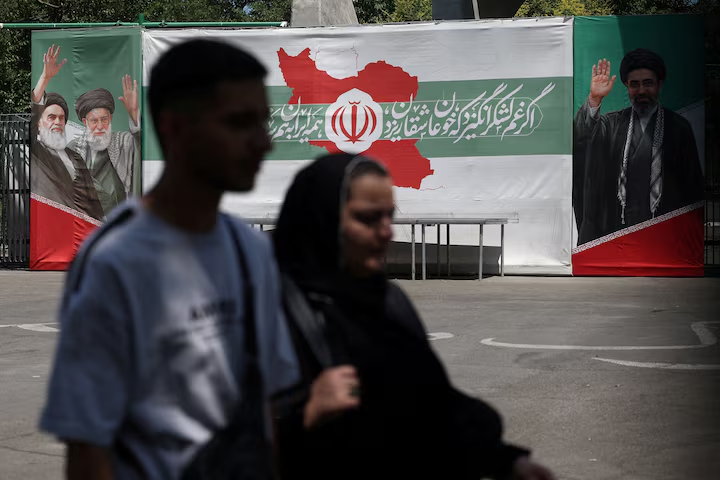
Emerging details of a possible agreement between the United States and Iran aimed at ending hostilities have highlighted a complex dilemma for Washington and its allies. Analysts suggest that easing sanctions to encourage Iran’s compliance could significantly benefit the economic network controlled by Iran’s Revolutionary Guards.
Over the years, the Islamic Revolutionary Guard Corps (IRGC) has expanded its influence beyond military affairs, building a vast business empire that spans key sectors of Iran’s economy. Its interests reportedly include oil production, construction, shipping, telecommunications, ports, and other strategic industries.
The Revolutionary Guards have largely prospered under decades of international sanctions, often filling economic gaps created by restrictions imposed on Iran. As a result, some experts argue that sanctions relief could provide the organization with increased access to investment opportunities, foreign trade, and additional revenue streams.
For the United States and several Western governments, the prospect presents a difficult policy challenge. The IRGC has long been viewed by Washington and its allies as a destabilizing force in the Middle East, and the organization remains subject to various sanctions and designations related to terrorism and regional security concerns.
Supporters of diplomatic engagement contend that sanctions relief may be necessary to secure Iranian commitments and reduce tensions, while critics warn that economic incentives could unintentionally strengthen an entity that Western governments have sought to isolate for years.
As negotiations continue, policymakers face the challenge of balancing efforts to promote regional stability with concerns about the potential economic gains that could accrue to one of Iran’s most powerful institutions. The outcome of any future agreement is likely to have significant implications for both Iran’s economy and broader geopolitical dynamics in the Middle East.

0 Comments