
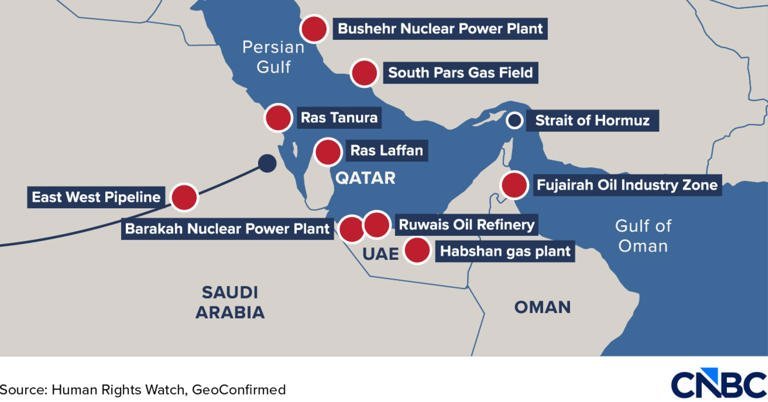
Sunday marks 100 days since the outbreak of the Iran war, a conflict that has significantly influenced global financial markets, energy prices, and economic sentiment worldwide. While a fragile ceasefire remains in effect, uncertainty surrounding negotiations between the United States and Iran continues to create volatility across major asset classes.
Since the conflict began, investors have closely monitored developments in the Middle East, a region that plays a critical role in global energy supplies and international trade. The ongoing tensions have repeatedly triggered sharp market reactions as traders assess the risks of escalation and disruptions to key economic routes.
Energy Markets Under Pressure
One of the most immediate consequences of the conflict has been its impact on energy markets. Concerns over potential supply disruptions have pushed oil prices higher and increased volatility in crude trading.
Particular attention has focused on the Strait of Hormuz, one of the world’s most important energy transit corridors. The waterway handles a significant portion of global seaborne oil and liquefied natural gas shipments, making any threat to its operation a major concern for global markets.
Energy-importing countries have faced higher costs, while oil-producing nations have benefited from elevated prices.
Stock Markets React to Geopolitical Risk
Global equity markets have experienced periods of sharp swings over the past 100 days. Investors typically move away from riskier assets during times of geopolitical uncertainty, leading to declines in major stock indices whenever tensions intensify.
Technology stocks, industrial companies, airlines, and sectors heavily dependent on stable global trade have been particularly sensitive to developments in the conflict.
However, defense-related companies and some energy producers have generally outperformed broader markets as governments increase military spending and energy prices remain elevated.
Safe-Haven Assets Gain Attention
The war has boosted demand for traditional safe-haven investments. Gold prices have attracted increased investor interest as market participants seek protection from geopolitical and economic uncertainty.
Government bonds issued by major economies have also benefited during periods of heightened tension, reflecting a broader flight to safety among investors.
Currency markets have similarly reacted, with traders favoring stable reserve currencies during episodes of increased uncertainty.
Economic Growth Concerns
Beyond financial markets, economists warn that prolonged instability could weigh on global economic growth. Higher energy prices often increase costs for businesses and consumers, potentially reducing spending and slowing economic activity.
Inflation concerns have also resurfaced in several regions, complicating efforts by central banks to balance economic growth with price stability.
For countries heavily reliant on imported energy, rising fuel costs have placed additional pressure on households and industries.
Peace Talks Remain Uncertain
Diplomatic efforts between the United States and Iran have produced mixed signals. While a ceasefire has reduced the intensity of military operations, negotiations have progressed slowly, and both sides have exchanged conflicting messages regarding the status of peace discussions.
Periodic military incidents and renewed threats have continued to influence investor sentiment, making markets highly responsive to political developments.
Outlook for Markets
As the conflict enters its fourth month, investors remain focused on whether diplomatic efforts can deliver a lasting resolution. A comprehensive peace agreement could help stabilize energy markets, reduce geopolitical risk premiums, and improve global economic confidence.
Conversely, any significant escalation could trigger renewed volatility across oil, stocks, commodities, and currencies.
One hundred days after the conflict began, the Iran war remains a major factor shaping financial markets and economic expectations worldwide. Until a durable settlement is achieved, uncertainty is likely to continue influencing investment decisions and global growth prospects.

0 Comments