
U.S. President Donald Trump has announced plans to meet with leaders from some of America’s largest artificial intelligence companies to discuss the possibility of the federal government taking financial stakes in the rapidly growing AI sector.
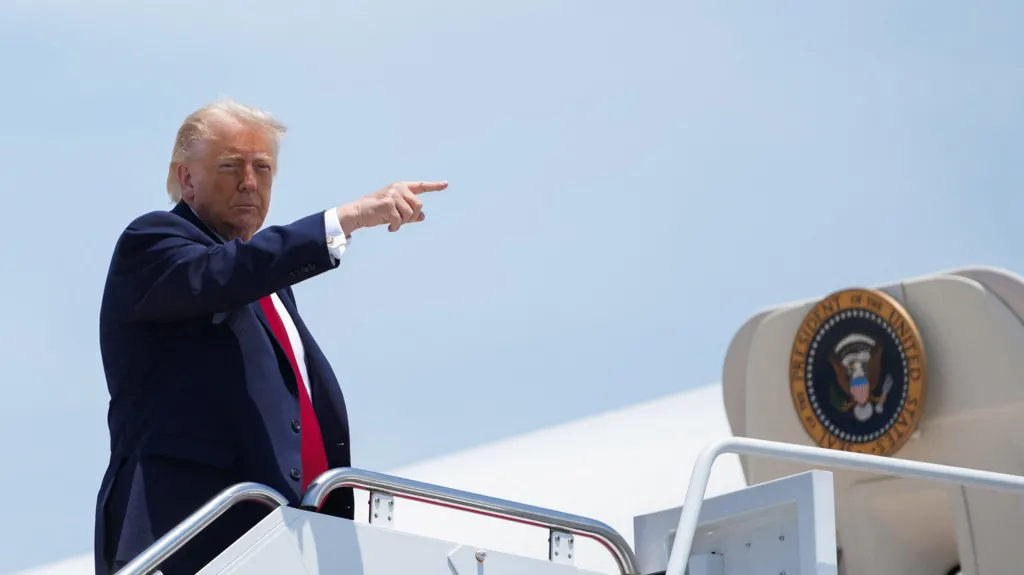
Speaking aboard Air Force One, Trump said the idea is aimed at creating what he described as a partnership between AI companies and the American public, allowing citizens to potentially benefit from the industry’s future success.
According to the president, discussions with AI executives could take place at the White House as early as next week. While Trump did not identify specific companies expected to participate, major players in the U.S. artificial intelligence industry include OpenAI, Microsoft, Google, SpaceX, and Anthropic.
The proposal reflects the growing strategic importance of artificial intelligence to the U.S. economy and national competitiveness. AI has become one of the most heavily funded and rapidly expanding sectors in technology, attracting billions of dollars in private and public investment worldwide.
Trump compared the concept to the U.S. government’s previous investment in chipmaker Intel, claiming that the government had already benefited financially from holding a stake in the company.
Under the proposed approach, the government could potentially invest directly in AI firms, creating a model where public funds share in the financial gains generated by future technological breakthroughs and commercial success.
Beyond financial returns, Trump suggested that public investment could help improve Americans’ perception of artificial intelligence. Public opinion surveys have shown growing concerns about AI’s impact on employment, privacy, misinformation, and societal change.
The president indicated that one objective of the discussions is to ensure that ordinary Americans see tangible benefits from the AI industry’s expansion. By linking public interests to the success of AI companies, the administration hopes to build broader support for continued technological development.
Artificial intelligence has become a central focus of economic and policy discussions across the globe. Governments are increasingly viewing AI as a critical technology with implications for productivity, national security, healthcare, education, and scientific research.
At the same time, policymakers continue to debate how best to regulate and oversee the industry while maintaining innovation and global competitiveness.
The possibility of direct government investment in private AI companies would represent a notable shift in how the United States supports emerging technologies. Traditionally, government involvement has focused on research funding, tax incentives, infrastructure development, and regulatory frameworks rather than direct equity ownership.
Industry observers will be closely watching the upcoming meetings for further details regarding how such investments might be structured, which companies could be involved, and what role the government would play as a stakeholder.
The discussions also come as competition in artificial intelligence intensifies globally, with the United States, China, and other nations investing heavily to secure leadership positions in the technology.
While no formal proposals have been announced, the planned White House meetings signal that artificial intelligence remains a top priority for the administration and could play an increasingly important role in future economic and technology policy decisions.
As AI continues reshaping industries and influencing daily life, any move toward direct government investment would likely spark significant debate among lawmakers, technology leaders, investors, and the public alike.

0 Comments