
Russia’s flagship economic gathering, the St. Petersburg International Economic Forum (SPIEF), was overshadowed this year by Ukrainian drone attacks that brought security concerns to the forefront of an event designed to showcase the country’s economic resilience.
Held annually in Saint Petersburg, SPIEF is one of Russia’s most important business and investment forums, attracting government officials, corporate leaders, investors, and international delegates. The event is often used by the Kremlin to promote economic opportunities and demonstrate confidence in the country’s financial outlook.
However, this year’s forum was marked by a series of Ukrainian drone attacks targeting the St. Petersburg region. The strikes occurred on both the opening and closing days of the event, drawing attention away from economic discussions and toward Russia’s ongoing conflict with Ukraine.
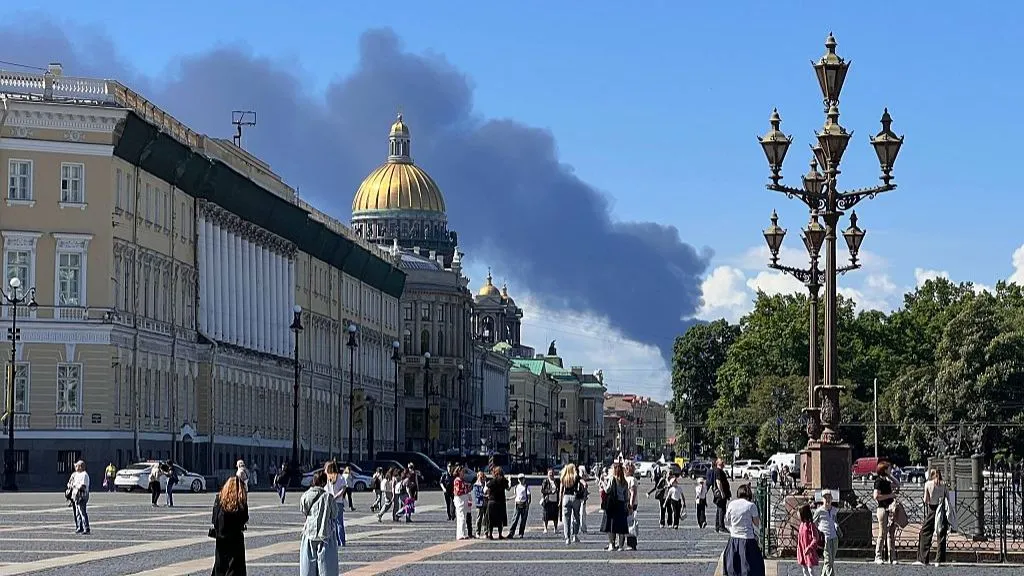
One of the most striking images from the forum emerged when a large plume of black smoke rose over the city skyline. Delegates arriving at the exhibition center reportedly witnessed the aftermath as smoke remained visible across parts of the city.
Local authorities acknowledged that drone attacks had damaged infrastructure but did not provide detailed information regarding the exact targets. The limited disclosure fueled speculation while reinforcing concerns about the growing reach of Ukrainian drone operations inside Russian territory.
The attacks served as a reminder that even major economic and political events are increasingly affected by the broader security environment created by the war.
SPIEF has traditionally been portrayed as Russia’s answer to leading international economic conferences, offering a platform for investment announcements, trade discussions, and strategic policy debates. In recent years, however, Western sanctions and geopolitical tensions have altered the forum’s international profile.
Despite efforts to focus attention on business opportunities and economic development, the drone incidents became one of the most discussed aspects of the gathering.
The contrast between the forum’s carefully managed atmosphere and the security disruptions was evident throughout the event. Cultural performances, business exhibitions, and promotional activities continued, but the visible signs of conflict nearby underscored the challenges facing Russia as the war enters another year.
Observers noted that the attacks demonstrated Ukraine’s ability to project military pressure far beyond the front lines. Such operations have increasingly targeted infrastructure, military facilities, and strategic locations deep inside Russian territory.
For Russian officials, maintaining confidence among investors and business leaders remains a key objective. However, incidents such as the St. Petersburg drone strikes highlight the difficulty of separating economic messaging from the realities of an ongoing conflict.
The forum nevertheless proceeded with its scheduled program, featuring discussions on economic growth, technology, trade, and international cooperation. Russian authorities sought to emphasize stability and resilience despite the security concerns.
As delegates departed St. Petersburg, the images most likely to endure were not only those of conference halls and investment presentations, but also the dramatic smoke rising above the city skyline. The drone attacks served as a powerful reminder that geopolitical tensions continue to influence every aspect of Russia’s economic and political landscape.
While SPIEF remains an important platform for Russia’s economic ambitions, this year’s event illustrated how the war’s impact increasingly extends beyond the battlefield and into the country’s most prominent public and business gatherings.

0 Comments