
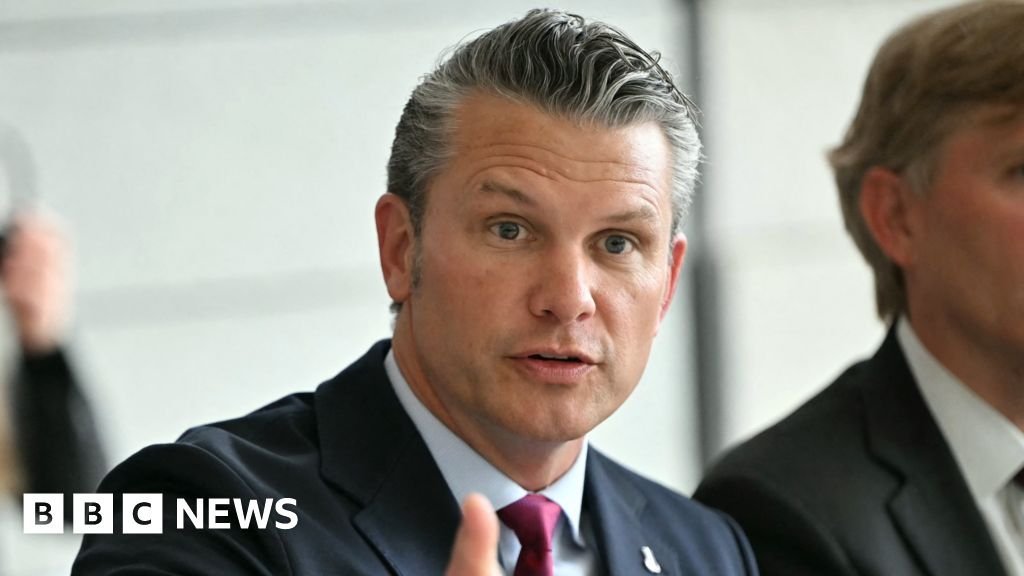
U.S. Defense Secretary Pete Hegseth has sparked debate after using a speech commemorating the 82nd anniversary of D-Day to criticize European migration policies, describing migrant arrivals on European shores as an “invasion.”
Hegseth delivered his remarks in Normandy, France, where Allied forces landed on June 6, 1944, in one of the most significant military operations of World War II. The annual commemoration honors the soldiers who participated in the liberation of Nazi-occupied Europe.
During the ceremony, Hegseth drew comparisons between historical threats faced by Europe and contemporary migration challenges. He argued that several European nations have failed to adequately address irregular migration across the Mediterranean and other entry points into the continent.
Referring to countries including Spain, Italy, Greece, and Bulgaria, Hegseth questioned when European governments would take stronger action to address migrant arrivals, characterizing the situation as an invasion of European shores.
The comments come at a time when immigration remains one of the most divisive political issues across Europe. Several countries have experienced growing public debate over border security, asylum policies, and migration management, with political parties advocating stricter immigration controls gaining support in many national elections.
The remarks also reflect the broader immigration stance of the administration of Donald Trump, which has made immigration enforcement a central component of its domestic policy agenda. The administration has sought increased funding for border security and immigration enforcement measures.
Hegseth’s comments are the latest in a series of statements from senior U.S. officials criticizing European migration policies. They have drawn attention because they were delivered during a ceremony primarily intended to honor the sacrifices of Allied troops during World War II.
The migration debate intensified further after remarks made by U.S. Vice President JD Vance regarding the fatal stabbing of British student Henry Nowak in Southampton last year. Vance linked the incident to broader migration issues, prompting criticism from political leaders in the United Kingdom.
In response, officials at Downing Street cautioned against external political figures using domestic tragedies to influence political debates. British officials also referenced statements from the victim’s family, who reportedly expressed a desire that the incident not be used to deepen social or political divisions.
Migration continues to be a major challenge for European policymakers as governments attempt to balance humanitarian responsibilities, border security concerns, labor market needs, and public opinion. The issue has become increasingly prominent across European elections and policy discussions in recent years.
Supporters of stricter immigration controls argue that stronger measures are necessary to protect national security, maintain social cohesion, and manage public resources. Critics, meanwhile, contend that inflammatory language can contribute to polarization and oversimplify a complex issue involving international conflicts, economic conditions, and humanitarian crises.
Hegseth’s remarks are likely to fuel further debate on both sides of the Atlantic as discussions over migration policy remain at the forefront of political agendas in the United States and Europe.
The controversy highlights how immigration continues to shape international political discourse, even during events intended to commemorate historic moments of unity and cooperation among Western allies.

0 Comments