
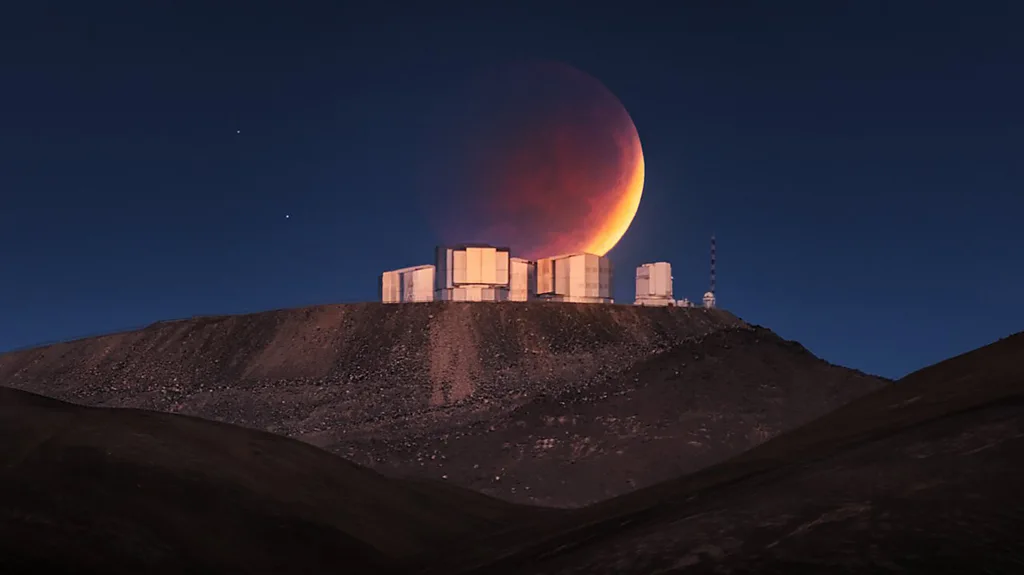
The Atacama Desert has long been celebrated as one of the darkest places on Earth, attracting astronomers and stargazers from around the world. However, experts are increasingly warning that the gradual spread of artificial light is beginning to threaten the region’s uniquely clear and dark skies.
Stretching across northern Chile, the Atacama Desert offers some of the best conditions for astronomical observation anywhere on the planet. Its high altitude, dry climate, minimal cloud cover, and remote location combine to create an environment where stars, planets, and distant galaxies can be observed with remarkable clarity.
For visitors, the experience can be extraordinary. Far from major cities and urban development, the desert’s nighttime darkness reveals a sky densely packed with stars, providing a view that has become increasingly rare in the modern world.
According to Itziar de Gregorio-Monsalvo, there are very few places on Earth that offer conditions comparable to those found in the Atacama Desert. As a senior astrophysicist with the European Southern Observatory, she is among the many scientists who travel to the region to conduct cutting-edge astronomical research.
The desert is home to some of the world’s most advanced observatories, including facilities that study everything from nearby planets to the earliest stages of the universe. These observatories depend heavily on dark skies to capture faint signals from distant cosmic objects.
However, the expansion of human activity is beginning to create challenges. As nearby communities grow and infrastructure projects expand, artificial lighting is gradually increasing across parts of the region. Even relatively small amounts of additional light can affect astronomical observations by brightening the night sky and reducing visibility.
Scientists warn that light pollution is becoming a global problem. Urban development, industrial projects, highways, and poorly designed outdoor lighting systems are making naturally dark skies increasingly difficult to find. The effects extend beyond astronomy, impacting wildlife, ecosystems, and even human health.
The situation in the Atacama Desert serves as a reminder that few places remain untouched by modern development. What was once considered one of the world’s most isolated and pristine astronomical environments is now facing pressures that reflect broader global trends.
Researchers and environmental advocates are calling for stronger measures to protect the region’s dark skies. Proposed solutions include stricter lighting regulations, the use of shielded lighting systems, and greater awareness of the importance of preserving natural darkness.
Protecting the Atacama’s night skies is seen as crucial not only for scientific discovery but also for maintaining a unique natural resource that connects people to the cosmos. For astronomers, every unnecessary light source reduces the ability to explore the universe. For visitors, it diminishes one of the most awe-inspiring views available on Earth.
As artificial light continues to spread across the globe, the challenge of preserving truly dark skies is becoming increasingly urgent. The Atacama Desert now stands at the forefront of that effort, highlighting the need to balance development with the protection of one of humanity’s most valuable windows into space.

0 Comments