
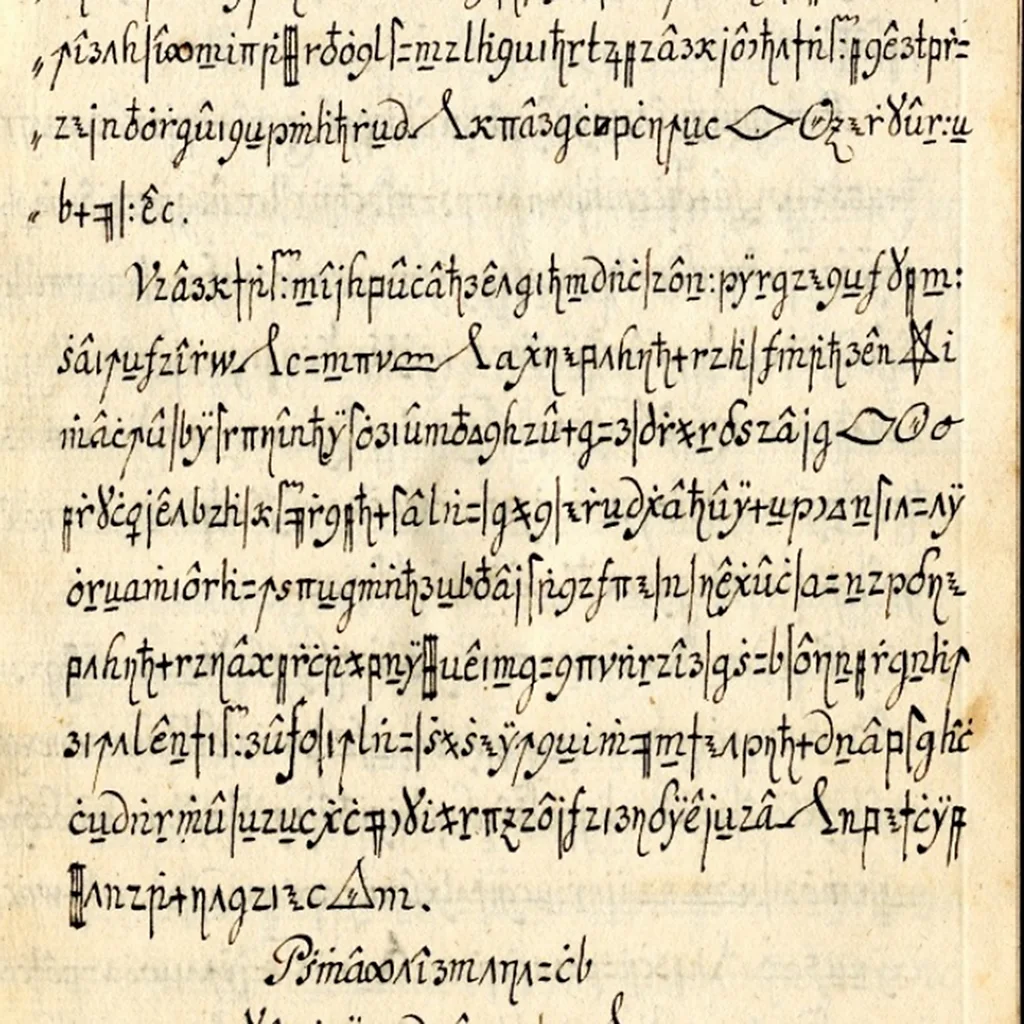
Artificial intelligence is helping researchers uncover forgotten chapters of history by decoding mysterious manuscripts that have remained unread for centuries. Among the most remarkable recent breakthroughs is the deciphering of the enigmatic Borg cipher, a centuries-old coded manuscript preserved within the archives of the Vatican Library.
The Borg cipher is a 408-page handwritten document filled with unusual symbols, cryptic markings, and coded text that had puzzled scholars for more than 400 years. Written primarily using 34 obscure symbols, alongside a handful of Roman letters and an Arabic title page, the manuscript contained no known key that could reveal its meaning.
Adding to the challenge, parts of the manuscript have suffered damage over time, making sections difficult to interpret even after the code itself was partially understood.
Researchers turned to machine learning, a branch of artificial intelligence capable of identifying complex patterns in large amounts of data. By combining AI-driven analysis with traditional linguistic expertise, scholars were able to gradually unlock the manuscript’s secrets.
The decoded text revealed a collection of medical remedies and treatments that reflected the beliefs and practices of the period. Some of the recommendations appear unusual by modern standards, including drinking several glasses of high-quality red wine or fermenting nutmeg in dough to treat dysentery and other ailments.
Experts believe many of these remedies were deliberately concealed because medical knowledge and healing practices could attract suspicion during the era. Individuals associated with unconventional treatments sometimes faced accusations of witchcraft or heresy, creating strong incentives to keep such information hidden.
According to researchers involved in the project, deciphering the manuscript required a combination of advanced technology and painstaking human investigation. While AI accelerated the identification of patterns and possible translations, scholars still needed to verify interpretations and reconstruct missing pieces of the text.
Professor Beáta Megyesi, a member of the research team, described the process as a form of detective work, where every symbol and pattern offers clues to a lost historical world.
The successful decoding of the Borg cipher demonstrates how artificial intelligence is transforming historical research. Beyond medical texts, AI is increasingly being used to analyze ancient letters, legal records, literary works, and encrypted documents that have long resisted traditional methods of interpretation.
Historians believe these technologies could unlock countless hidden stories preserved in archives, libraries, and private collections around the world. From political intrigues and personal correspondence to scientific discoveries and everyday life, many aspects of the past remain trapped within undeciphered manuscripts.
As AI tools continue to improve, researchers expect more historical mysteries to be solved, offering unprecedented insights into societies that existed centuries ago. The decoding of the Borg cipher serves as a powerful example of how modern technology can bridge the gap between the present and the distant past, revealing voices and knowledge that history nearly lost forever.

0 Comments