
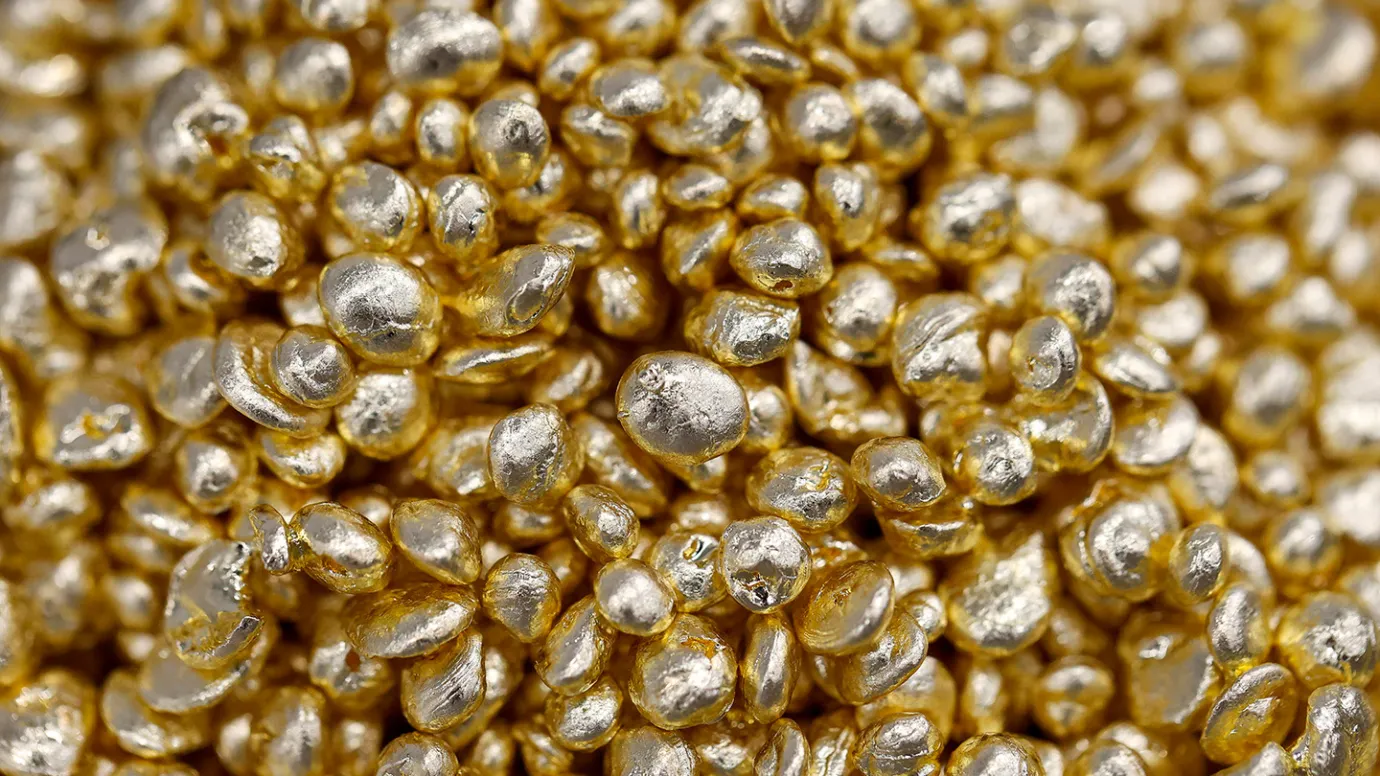
Unlike metals such as steel and copper, gold has long fascinated scientists for its remarkable resistance to rust and corrosion. Now, new research has uncovered another reason why Oxidation affects gold so slowly.
Researchers reported in the journal Physical Review Letters that atoms on gold’s surface naturally rearrange themselves into structures that make oxidation far more difficult.
Normally, metals oxidize when oxygen molecules in the air split apart and chemically bond to the metal’s surface, leading to corrosion or tarnishing. However, scientists found that freshly exposed gold surfaces rapidly reorganize their atomic structure in a way that blocks this process.
This rearrangement, known as “surface reconstruction,” changes the geometry of gold atoms from square-like patterns into more stable hexagonal formations.
Using quantum mechanical calculations, researchers discovered that the original square arrangement was far more effective at splitting oxygen molecules — a necessary step for oxidation to occur. The hexagonal structure, by contrast, makes the reaction extremely difficult because it would first need to distort back into the unstable square form.
Scientists say this atomic reshaping dramatically slows oxidation, making gold between a billion and a trillion times more resistant to tarnishing.
The study was coauthored by Matthew Montemore of Tulane University, who said the scale of the effect surprised researchers.
Even under conditions where oxidation could occur, gold oxide itself is unstable and would likely only form an extremely thin layer before breaking down again.
Researchers believe the findings could help scientists develop improved industrial catalysts — materials designed to speed up chemical reactions — by better understanding how atomic surface structures influence chemical behavior.
The discovery also highlights how tiny shifts at the atomic level can dramatically alter the physical properties of materials, helping explain why gold has remained one of humanity’s most durable and valuable metals for thousands of years.

0 Comments