
Utah is pursuing an ambitious long-term nuclear energy strategy that supporters believe could transform the state into a major center for advanced nuclear technology and clean energy development.
The plan includes building workforce training centers, manufacturing facilities, research operations, fuel production sites, and eventually a fleet of small modular nuclear reactors, often referred to as SMRs.
Backers of the initiative say the project could strengthen energy security, create high-paying jobs, and position Utah as a leader in next-generation nuclear innovation.
However, critics and energy analysts question whether the vision is financially and technically realistic, especially given the high costs and regulatory hurdles historically associated with nuclear projects.
Small modular reactors are considered one of the nuclear industry’s most promising emerging technologies because they are designed to be smaller, more flexible, and potentially less expensive than traditional large-scale nuclear plants.
Unlike conventional reactors, SMRs are intended to be factory-built and assembled more efficiently, which supporters argue could reduce construction delays and overall costs.
The project’s early phases are expected to focus heavily on workforce development and industrial infrastructure before moving toward full reactor deployment.
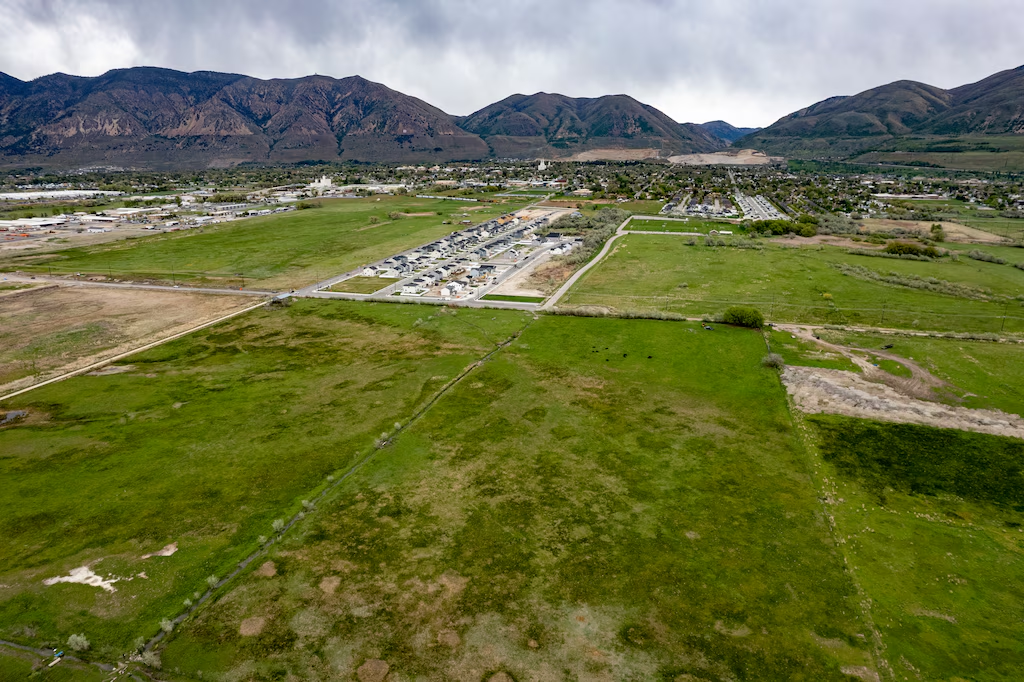
Officials and industry partners hope the initiative could attract technology companies, engineers, and energy investors to northern Utah, particularly around areas such as Brigham City.
Supporters also see nuclear energy as an important tool for reducing carbon emissions while meeting growing electricity demands from industries such as artificial intelligence, data centers, and advanced manufacturing.
Despite the optimism, experts caution that many small modular reactor projects around the world are still in developmental stages and have yet to prove large-scale commercial viability.
Questions also remain regarding long-term nuclear waste storage, financing, federal approvals, and public acceptance of expanded nuclear infrastructure.
Environmental groups remain divided on nuclear power, with some viewing it as a low-carbon energy source while others continue raising concerns over radioactive waste and safety risks.
Federal and state governments across the United States have recently increased interest in nuclear technology as part of broader efforts to strengthen domestic energy production and reduce reliance on fossil fuels.
Whether Utah’s nuclear ambitions become a model for future energy development or remain an overly optimistic vision may depend on technological progress, investor confidence, and long-term policy support.

0 Comments