
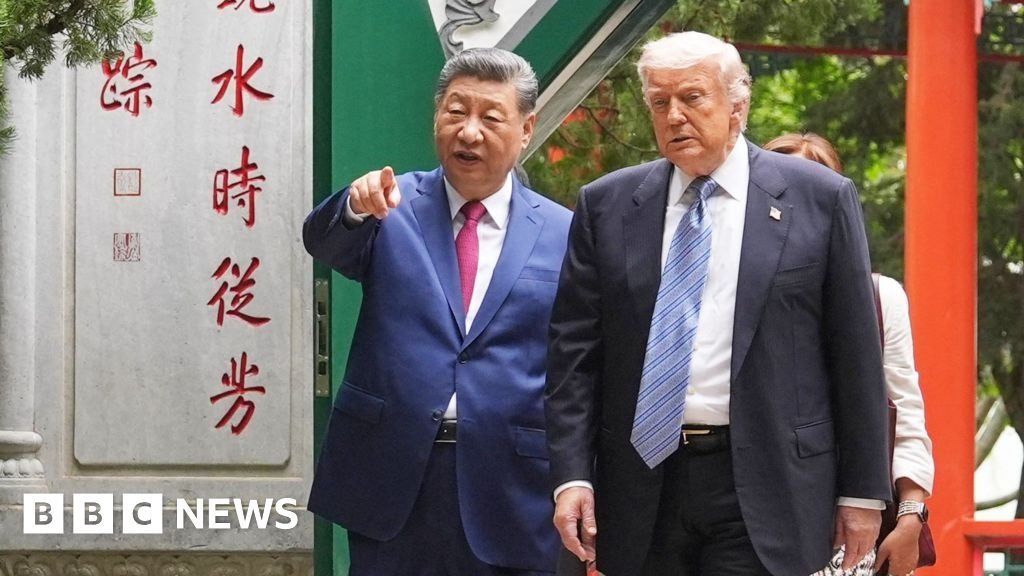
Donald Trump and Xi Jinping concluded a closely watched two-day summit in Beijing with both leaders praising the talks as highly successful, although few concrete agreements have been publicly confirmed.
Trump described the discussions as producing “fantastic trade deals” that would benefit both the United States and China, while Xi called the visit “historic and landmark.”
The summit focused heavily on trade and economic cooperation amid continuing geopolitical tensions, including concerns linked to the Iran conflict and broader global economic uncertainty.
Trump arrived in Beijing accompanied by a delegation of major American business executives representing industries such as agriculture, aviation, electric vehicles, and artificial intelligence technology.
Business leaders had hoped the meeting would lead to significant trade breakthroughs and possibly extend the temporary tariff truce between the two countries that is currently set to expire in November.
The visit was marked by strong diplomatic symbolism and ceremonial displays, including an honor guard, a state banquet, and a rare invitation for Trump to visit the exclusive leadership compound used by China’s Communist Party officials.
Following the meetings, Trump invited Xi to visit the White House in September, signaling continued efforts to stabilize relations between the world’s two largest economies.
Wang Yi later confirmed that Xi is expected to visit Washington during the autumn.
Despite the positive rhetoric, neither government has yet announced major policy breakthroughs or detailed trade agreements from the summit.
However, Trump stated aboard Air Force One that China had agreed to purchase 200 aircraft from Boeing, with discussions potentially involving an additional 750 planes in future commitments. Boeing later confirmed the agreement.
The aviation deal could provide a major boost to Boeing as the company continues recovering from recent production and regulatory challenges.
Analysts say the summit may have helped ease immediate tensions between Washington and Beijing, but uncertainty remains over tariffs, technology competition, and broader strategic rivalry between the two nations.
The outcome of future negotiations and Xi’s planned White House visit will likely play a key role in shaping US-China relations in the coming months.

0 Comments