
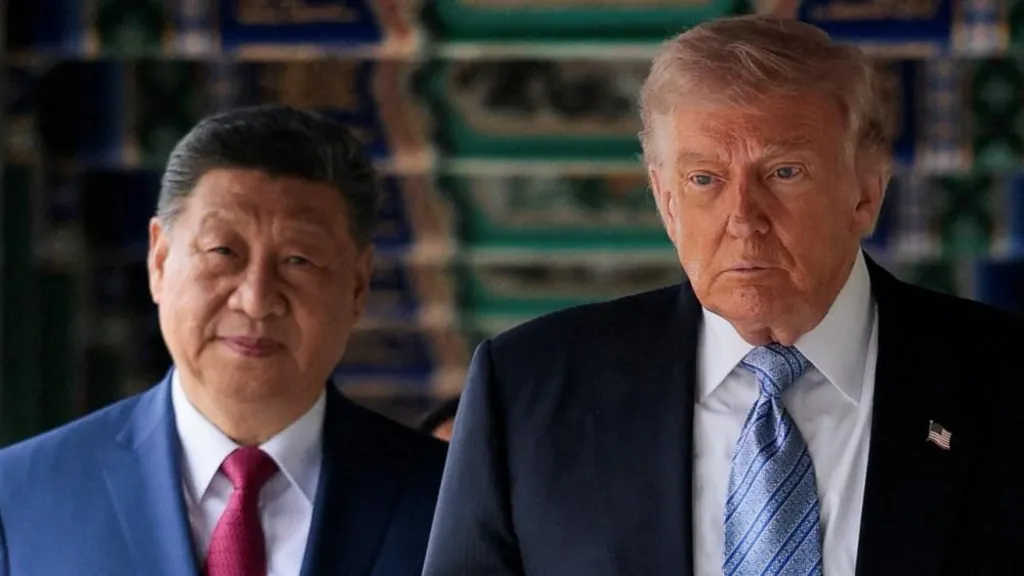
Donald Trump has warned Taiwan against formally declaring independence from China following a high-level summit with Chinese President Xi Jinping in Beijing.
Speaking to Fox News after the conclusion of the two-day meeting, Trump said he was not seeking a situation where Taiwan moves toward official independence from China.
“I’m not looking to have somebody go independent,” Trump stated while discussing the sensitive issue of cross-strait relations.
The remarks came shortly after Trump said he had “made no commitment either way” regarding Taiwan’s political future during discussions with Chinese officials.
Taiwan’s President Lai Ching-te has previously argued that Taiwan does not need to formally declare independence because the island already considers itself a sovereign nation with its own democratic government and institutions.
The United States has long maintained a delicate balance between supporting Taiwan’s self-defense capabilities while also preserving diplomatic relations with China under the “One China” policy.
Under American law, Washington remains obligated to provide Taiwan with means for self-defense, even though the U.S. officially recognizes Beijing as the sole legal government of China.
China views Taiwan as part of its territory and has repeatedly warned against any moves toward formal independence. Beijing has not ruled out the possibility of using force to bring the island under its control if necessary.
Chinese authorities have also been openly critical of Taiwanese President Lai Ching-te, previously labeling him a “troublemaker” and accusing him of damaging peace across the Taiwan Strait.
Despite ongoing tensions, opinion surveys in Taiwan have consistently shown that many residents prefer maintaining the current status quo — where Taiwan functions independently in practice without formally declaring independence or pursuing political unification with mainland China.
Trump’s latest comments are likely to draw attention internationally as tensions between China, Taiwan, and the United States continue to shape global geopolitical dynamics in the Indo-Pacific region.

0 Comments