
Flight is considered one of evolution’s most remarkable achievements, but some scientists now believe wings may not have originally evolved for flying at all.
According to zoologist Piotr Jablonski, the earliest wings may have first developed as visual tools used for hunting, communication, or display long before animals ever took to the skies.
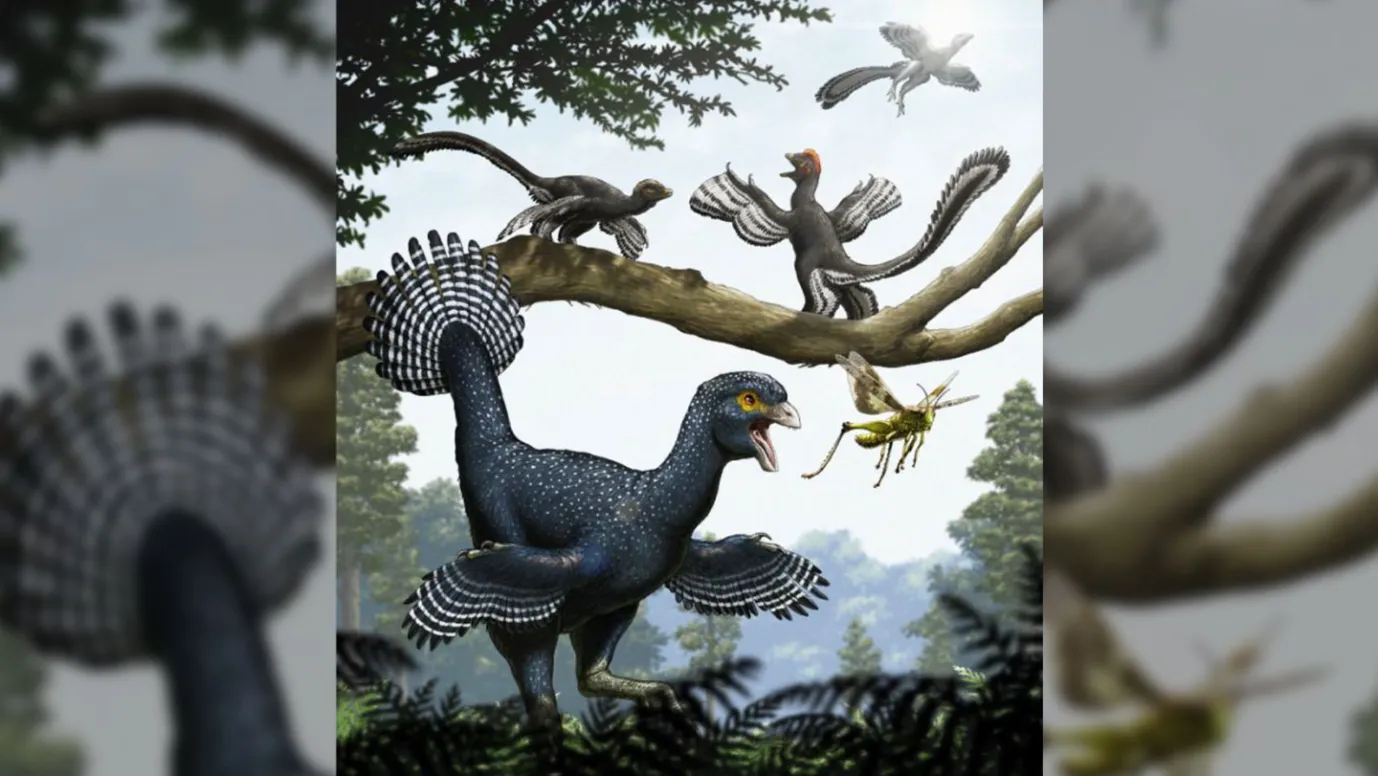
Jablonski’s theory emerged while studying bird behavior in the American West. During his observations, he noticed certain bird species spreading their wings or fanning out their tail feathers to startle insects and lure them into open areas where they could easily be captured and eaten.
The behavior led him to consider whether ancient feathered dinosaurs — believed to be the ancestors of modern birds — may have used primitive wings in a similar way.
Instead of functioning for flight, these early feathered limbs may initially have served as tools for visual signaling, hunting strategies, intimidation, mating displays, or communication between species members.
Scientists have long debated how wings first evolved, since developing the ability to fly requires complex anatomical changes including lightweight bones, specialized muscles, and aerodynamic feathers. One major evolutionary question has always been what advantage early partial wings provided before true powered flight became possible.
Jablonski’s hypothesis suggests that feathered appendages may have first offered survival benefits unrelated to flying. Over millions of years, those structures could then have gradually adapted for gliding and eventually powered flight.
Fossil evidence has shown that many dinosaur species possessed feathers long before birds evolved full flying abilities. Some paleontologists believe feathers may originally have evolved for warmth, camouflage, or courtship displays before later becoming useful for aerial movement.
The idea that wings first evolved for visual purposes adds another layer to scientists’ understanding of how complex traits can develop through evolution. Features that originally serve one purpose can later become adapted for entirely different functions over time.
Researchers continue studying both modern bird behavior and fossil records to better understand the evolutionary path that eventually allowed birds to dominate the skies.
The theory highlights how evolution often works through gradual changes, where structures initially evolved for simple survival advantages can later transform into groundbreaking biological innovations like flight.

0 Comments