
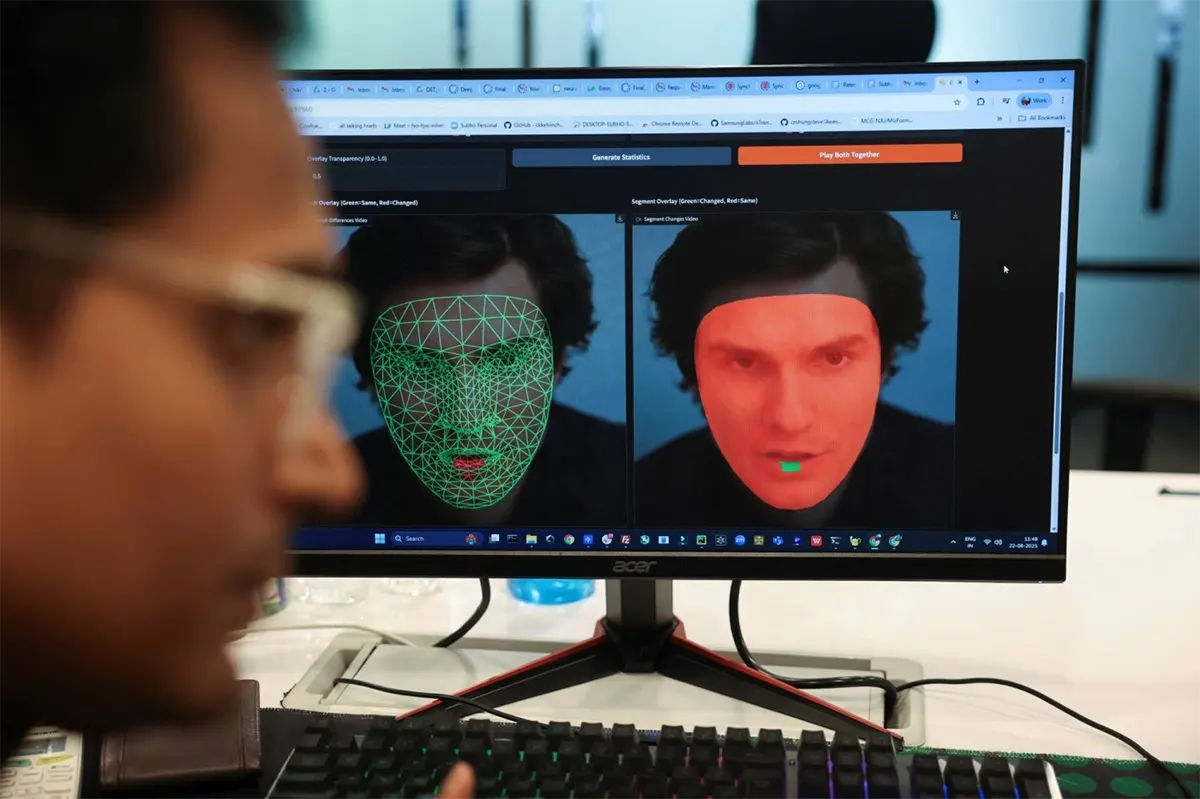
India’s film industry, the world’s largest by output, is undergoing a major transformation as artificial intelligence (AI) becomes more widely used in filmmaking. Studios are increasingly adopting AI tools to reduce costs and speed up production.
This shift comes as changing audience habits and the rise of streaming platforms place pressure on traditional budgets. Therefore, filmmakers are turning to AI to remain competitive and efficient.
Industry leaders say AI is rapidly changing how films are made.
📊 AI Cuts Costs and Production Time
AI tools are significantly reducing production costs and timelines. In some cases, studios report that costs have dropped to one-fifth of traditional filmmaking expenses, while production time has been cut sharply.
Therefore, studios can produce content faster and at lower cost. Meanwhile, AI allows filmmakers to generate scenes, edit footage, and even create full films with fewer resources.
At the same time, this efficiency is helping studios maintain profitability despite shrinking budgets.
🎥 New Storytelling Methods and Experiments
Filmmakers are experimenting with AI in multiple ways. Some studios are creating AI-generated films based on mythology, including stories from the Ramayana and Mahabharat.
In addition, AI has been used to alter endings of existing films. For example, a re-release of an older movie featured a modified ending created using AI.
Meanwhile, these experiments have drawn mixed reactions. Some audiences appreciate innovation, while others question the authenticity of AI-generated content.
🎧 AI Improves Dubbing and Accessibility
One of the most widely accepted uses of AI is in film dubbing. India has multiple languages, making dubbing essential for national distribution.
AI tools now enable accurate lip-sync and language adaptation, improving the viewing experience.
Therefore, films can reach wider audiences more effectively. At the same time, this technology preserves the original performance while adapting it to different languages.
⚠️ Concerns Over Creativity and Authenticity
Despite its benefits, AI has raised concerns among filmmakers and actors. Some critics argue that using AI to modify films can undermine artistic integrity.
For example, altering a film’s original ending sparked criticism from actors who felt it changed the story’s meaning. Therefore, debates around creative control continue.
Meanwhile, industry experts warn that overuse of AI could reduce originality. Consequently, the balance between innovation and authenticity remains a key issue.
🌍 Industry Adapts to Technological Shift
Studios and technology companies are investing heavily in AI-driven filmmaking tools. As a result, the industry is moving toward a more technology-focused production model.
Meanwhile, AI-generated content is gaining traction, even as debates continue. Therefore, the shift appears likely to continue.
At the same time, India’s rapid adoption of AI reflects a broader trend across industries. Consequently, the film sector is becoming a key example of how technology is reshaping creative fields.
🔍 Future of AI in Cinema
AI is expected to play an even larger role in filmmaking in the coming years. Studios are reviewing existing content libraries for potential AI-assisted adaptations.
Therefore, both new and old content may be transformed using AI tools. Meanwhile, audience response will shape how widely these methods are adopted.
As a result, the future of cinema may combine traditional storytelling with advanced technology.

0 Comments