
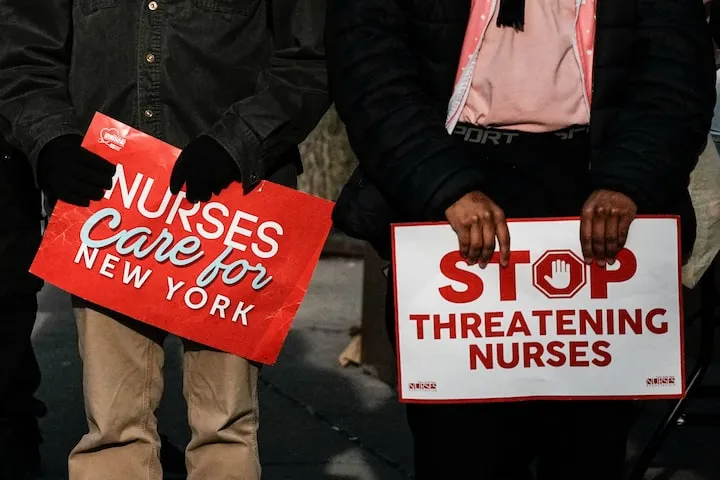
After six weeks on the picket line, the last group of striking nurses in New York City has reached a tentative agreement with their hospital, union leaders said on Friday. The deal could end the largest nursing work stoppage in the city’s history.
About 4,200 nurses at NewYork-Presbyterian Hospital will vote this weekend on a new contract. If they approve it, they could return to work as soon as next week.
🤝 Key Terms of the Tentative Deal
The proposed agreement includes more than a 12% salary increase over three years. It also protects health benefits and adds new safety measures, including safeguards around the use of artificial intelligence in patient care, the New York State Nurses Association (NYSNA) said.
Union leaders praised nurses for their persistence through the prolonged strike and bitter winter weather. Nancy Hagans, the NYSNA president, said nurses stood firm to protect patient care and secure contract terms that improve staffing safety.
A spokesperson for NewYork-Presbyterian said the settlement reflects respect for the nursing staff and the importance of their role in patient care.
🏥 Background on the Six-Week Walkout
The strike began on January 12 after about 15,000 nurses across three major health systems walked off the job to demand better pay and safer working conditions. Staffing shortages in emergency rooms and wards followed, prompting New York Governor Kathy Hochul to declare a state of emergency so out-of-state and foreign nurses could fill gap roles.
Earlier this month, nurses at Montefiore and Mount Sinai hospitals approved contracts and returned to work. The NewYork-Presbyterian nurses were the last group still striking.
💬 What Happens Next
Union members will cast votes on ratifying the tentative contract during the coming weekend. If the measure passes, nurses are expected back on the job soon. Because hospitals face staffing strain after weeks of reduced workforce, a swift resolution could help restore normal operations.
Healthcare labour leaders say the strike highlights ongoing tensions in care systems nationwide. They add that negotiations over pay, staffing and safety remain central to workforce retention. Meanwhile, hospital administrators say stable staff levels are critical for consistent patient outcomes.
📊 Wider Impact on Healthcare Workforce
The six-week strike placed significant pressure on New York’s healthcare system. During the walkout, hospitals relied on temporary replacement nurses to maintain essential services. However, union leaders argued that temporary staffing could not fully address long-term workforce shortages. They said the strike aimed not only to secure wage increases but also to enforce safer staffing ratios that protect both patients and nurses.
Healthcare analysts noted that similar labour disputes have emerged across the United States in recent years. Rising patient volumes, post-pandemic burnout and recruitment challenges have intensified negotiations between unions and hospital management. Therefore, the resolution of this strike may influence future healthcare labour talks nationwide.
If approved, the agreement could mark a turning point for hospital workforce stability in New York City.

0 Comments