
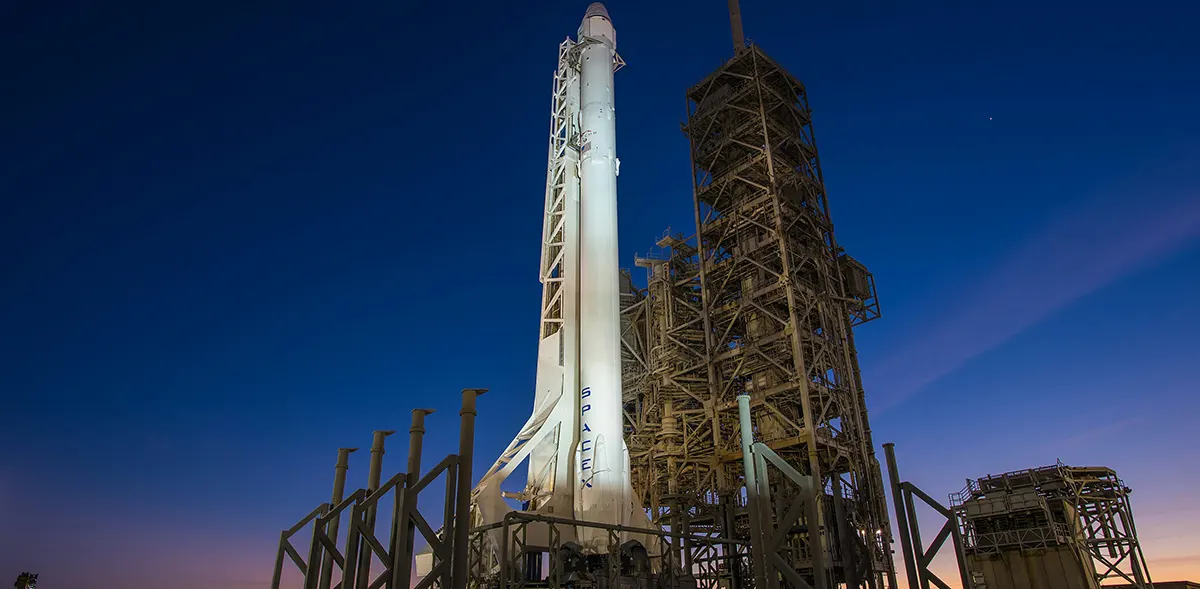
US private space companies are intensifying efforts to reach the Moon as competition with China’s lunar programme accelerates. The rivalry now places SpaceX and Blue Origin at the centre of a new global space race driven by government contracts and commercial ambition.
The push reflects growing urgency in Washington to maintain leadership in space exploration.
🚀 Private space companies step up lunar ambitions
SpaceX founder Elon Musk and Blue Origin founder Jeff Bezos have increased focus on lunar missions. Both companies aim to secure a major role in NASA’s Artemis programme, which plans to return astronauts to the Moon.
The programme represents the United States’ most significant lunar effort in decades. Meanwhile, China continues developing its own Moon missions.
US billionaires are intensifying efforts to reach the Moon.
NASA relies heavily on private companies to supply spacecraft, launch services, and infrastructure. As a result, competition between firms has intensified.
🌕 China’s progress raises urgency
China’s space programme has advanced rapidly in recent years. The country plans to send astronauts to the Moon before 2030 and expand its lunar exploration capabilities.
US officials now see lunar exploration as both a scientific and strategic priority. Consequently, American companies are racing to accelerate development timelines.
The growing competition has transformed the Moon into a new frontier of geopolitical rivalry.
🛰️ NASA partnerships drive the race
NASA awarded key contracts to private companies to support the Artemis missions. SpaceX secured a major contract to develop the Human Landing System, which will carry astronauts from lunar orbit to the Moon’s surface.
Blue Origin has also pursued lunar lander projects and continues investing heavily in spacecraft development.
The agency views commercial partnerships as essential. Therefore, private companies now play a central role in the US lunar strategy.
💰 Billionaire rivalry shapes space industry
The rivalry between Musk and Bezos has already shaped the commercial space sector. Both entrepreneurs have invested billions in reusable rockets, spacecraft and infrastructure.
Their companies compete for government contracts, technological leadership and long-term space markets. As a result, the Moon race has become both a business competition and a national priority.
Private investment is reshaping the future of space exploration.
The growing competition reflects the rising importance of the commercial space economy.
🌍 Strategic importance of lunar missions
The Moon holds scientific, economic and strategic value. Governments and companies see lunar exploration as a stepping stone to future missions to Mars.
In addition, lunar missions may support future research, resource exploration and long-term space infrastructure.
Therefore, countries and companies continue accelerating investment and development.
🔭 A new era of global space competition
The renewed lunar race signals a shift in space exploration. Private companies now work alongside governments to achieve major milestones.
The competition between the United States and China continues to shape the timeline of lunar missions. Meanwhile, SpaceX and Blue Origin remain central to the US strategy.
The coming years will likely define the next phase of human exploration beyond Earth.

0 Comments