
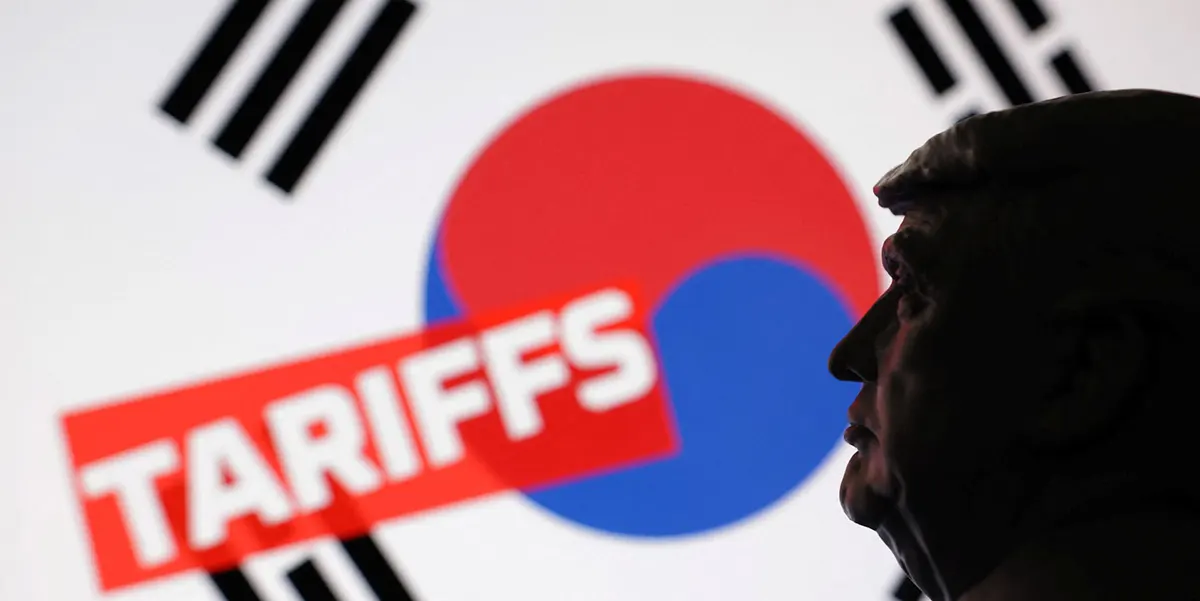
South Korea said on 17 January 2026 that a newly announced US tariff on advanced computing chips will have limited immediate impact on its semiconductor industry. Trade Minister Yeo Han-koo made the remarks after the United States imposed a 25% tariff on selected high-end processors.
According to the ministry, the tariff currently targets chips made by companies such as Nvidia and AMD. However, South Korea’s main exports focus on memory chips. Therefore, officials expect only minimal short-term disruption.
📊 Scope of the Tariff Measures
The United States introduced the tariff after completing a nine-month investigation under Section 232 of US trade law. The measure addresses national security concerns linked to advanced computing technologies.
President Donald Trump signed the proclamation, which applies mainly to processors used in artificial intelligence and advanced data applications. Meanwhile, the policy excludes memory chips, which account for a large share of South Korea’s exports.
As a result, the ministry said the first phase does not directly affect South Korean manufacturers.
🧠 Why the Immediate Impact Is Limited
Minister Yeo explained that South Korean firms specialise in memory products rather than AI processors. Consequently, companies such as Samsung Electronics and SK Hynix face little immediate exposure.
In addition, the tariff excludes chips imported for data centres, start-ups, industrial users, and public institutions. Therefore, several key markets remain unaffected under the current framework.
🤝 Government and Industry Monitoring
Despite the limited short-term impact, officials stressed the need for caution. Minister Yeo said it is “not yet time to feel reassured.” She warned that the tariff represents only an initial step.
The government plans to maintain close communication with semiconductor companies. At the same time, officials will track policy signals from Washington. If the US expands the tariff to other chip categories, the impact could grow.
🌐 Broader Trade Context
US officials have indicated that future tariff phases could include additional semiconductor products. In some cases, rates could rise sharply for firms that do not invest in US manufacturing facilities.
Meanwhile, South Korea continues discussions with regional and global partners to protect its export interests. As global demand for semiconductors remains strong, policymakers aim to balance trade risks with industry stability.
For now, South Korea says the tariff poses no immediate threat. However, authorities remain alert as trade policies evolve.

0 Comments