
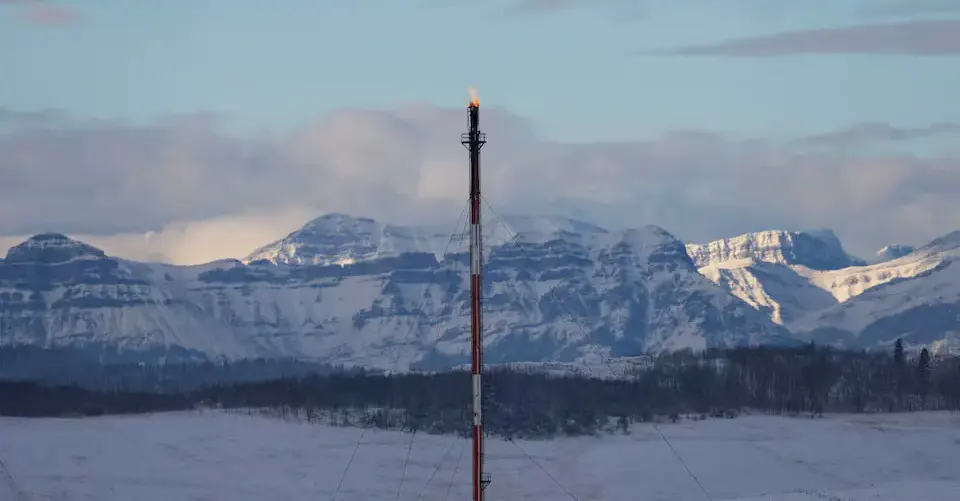
The Alberta Energy Regulator has stopped enforcing long-standing rules on natural-gas flaring after pressure from the provincial government and major oil producers. Internal documents show that officials asked the regulator to ease its approach and avoid strict enforcement. The shift happened even though multiple companies had already exceeded the old flaring cap.
Natural-gas flaring burns off excess gas that comes from oil extraction. Alberta previously limited how much gas companies could flare to control pollution and reduce carbon emissions. Removing those limits allows oil producers to burn larger volumes while increasing output.
Industry analysts say the decision marks a major policy shift. They also note that it gives producers more room to expand production without meeting earlier environmental requirements.
📈 Why the Change Matters for Emissions
Flaring restrictions existed to lower carbon emissions and reduce air pollution. Without those limits, Alberta is now likely to see a rise in the amount of gas burned at oil sites. Environmental groups warn that this may undermine Canada’s climate goals.
Flaring still emits large amounts of carbon dioxide, even though it is sometimes described as safer than venting raw methane. Critics say the policy change weakens all efforts to cut emissions from the oil and gas sector. Communities near oilfields also worry about air quality, health impacts and rising pollution as flaring increases.
🏛️ Government Influence and Industry Pressure
Internal messages show that government officials encouraged the regulator to adopt a more “cooperative” approach toward industry. They pushed for a tone that avoided confrontation and limited enforcement. This approach represents a clear shift away from the regulator’s traditional role as an independent watchdog.
Oil producers argued that the flaring limits acted as a cap on production. They said the rules made it harder to operate during periods of high output. With enforcement now removed, companies can boost production more aggressively. This outcome aligns with the province’s goal to support economic growth in the energy sector.
Environmental advocates say the lack of public communication around the policy change is troubling. The cap was lifted quietly, without a formal announcement or clear explanation to the public.
🌍 National and Global Implications
Alberta is a central part of Canada’s oil and gas industry, so its policy shifts have national consequences. Ending enforcement of flaring limits complicates Canada’s broader climate strategy. The change comes at a time when Canada is facing pressure to reduce emissions from the energy sector and honour its international climate commitments.
Experts warn that higher flaring levels may draw criticism from global climate observers. They say the situation illustrates a growing tension between economic expansion and environmental responsibility. If emissions rise sharply, Canada may struggle to meet future climate targets and maintain credibility in international climate discussions.

0 Comments