
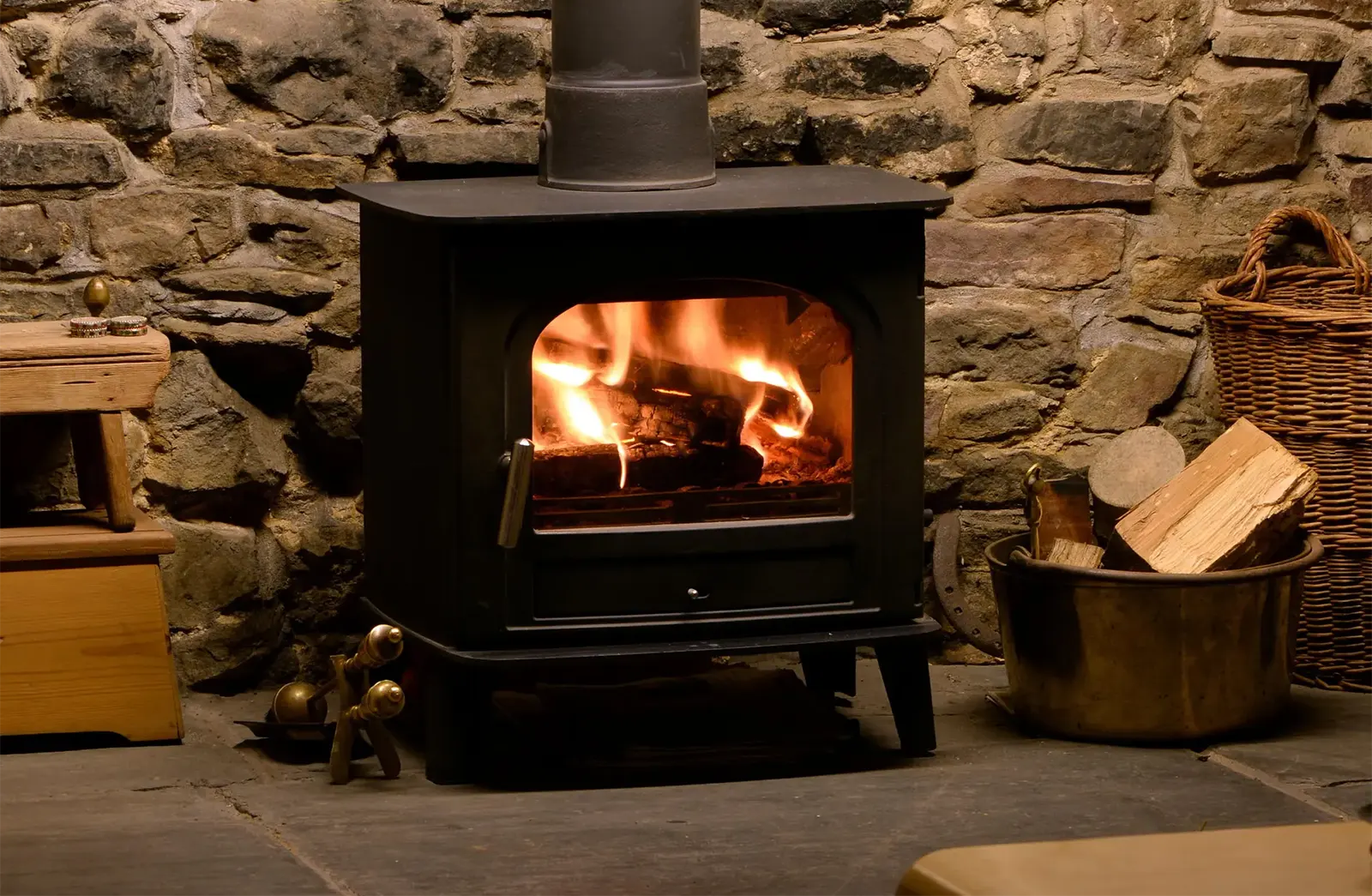
The government’s updated Environmental Improvement Plan (EIP) proposes stricter controls on home heating — including a potential partial ban on certain wood-burning stoves and fireplaces. The new rules would especially target older or high-emission models in smoke control areas.
Under the plan, only approved stoves or burners may be allowed. In some zones, use of any wood-burning stove might be prohibited entirely. This move comes as part of a broader strategy to reduce fine particulate pollution (PM2.5) from domestic combustion.
According to official estimates, domestic wood burning accounted for about 20% of PM2.5 emissions in 2023 — surpassing pollution contributions from traffic.
🏙️ Aligning with EU Standards and Health Goals
The revised EIP aims to align the UK’s air-quality targets with those adopted recently by the European Union. Under these targets, annual PM2.5 concentrations should reach 10 µg/m³ by 2030, down from the current 25 µg/m³ standard. There is also a long-term aspiration to meet the more stringent 5 µg/m³ benchmark recommended by the World Health Organization (WHO).
Experts warn that elevated PM2.5 levels are linked to serious health risks — including lung disease, heart conditions, stroke and cancer — underlining the urgency of reducing emissions from wood stoves.
The EIP may also introduce a formal consultation to define the precise measures. Restrictions could range from requiring approved appliances to outlawing wood burning altogether in high-pollution zones.
🌱 Broader Environmental & Nature Goals
The stove-related proposals are only part of a wider push under the EIP. The plan also includes a pledge to invest £500 million in landscape-recovery projects, aiming to restore or create 250,000 hectares of wildlife-rich habitats by 2030.
Other proposed measures target illegal waste dumping, contamination from persistent “forever chemicals” (PFAS), and ensuring that all households have access to green space or waterways within a 15-minute walk.
The government says these efforts mark a shift from what it described as the “piecemeal” nature of the previous environmental plan — promising instead a comprehensive, strategic approach to cleaner air, restored nature and sustainable development.
⚠️ What’s Next — And What It Means for Households
If adopted, the stove restrictions could affect many households, especially in regions designated as smoke control areas. Owners of older wood-burning stoves may need to upgrade to approved models or switch to alternative heating methods.
For policymakers and environmental groups, the measures signal a firm commitment to tackling air pollution and reducing health risks linked to PM2.5 exposure. Some say this could also encourage cleaner heating solutions and better long-term environmental outcomes.
Yet critics — including homeowners and small businesses reliant on wood burning — may resist, pointing to costs and disruption. The ultimate impact will depend on consultation outcomes, enforcement policies, and support for alternatives.

0 Comments