
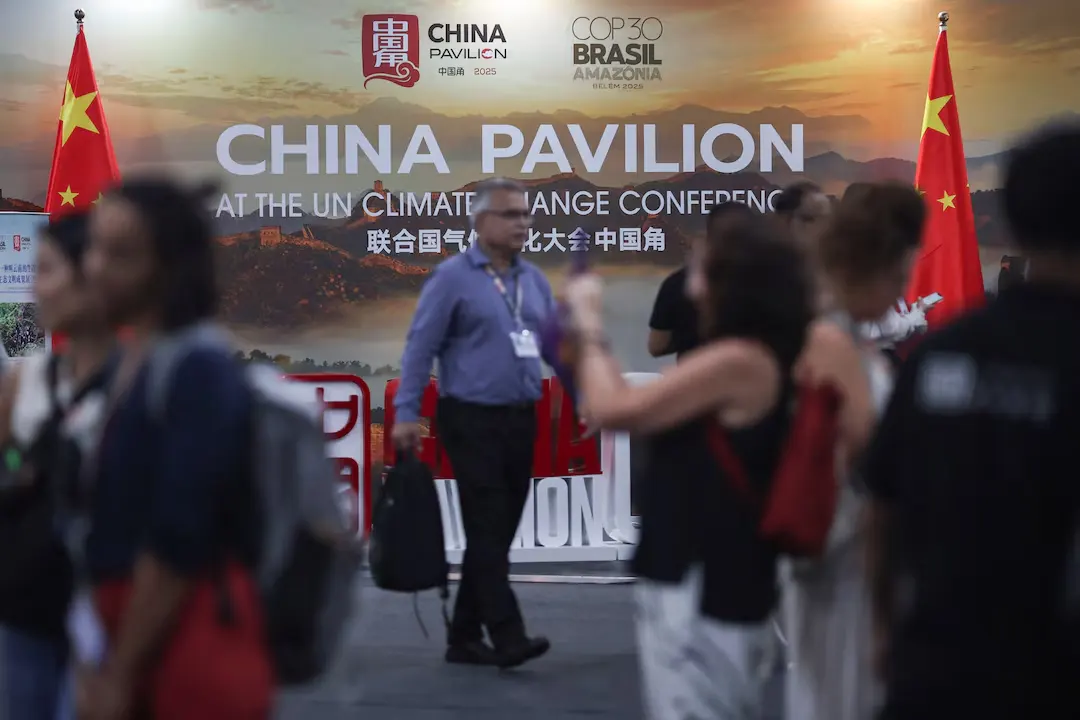
At COP30 in Belém, Brazil, China is taking centre stage in global climate diplomacy — a shift driven by the absence of a formal high-level U.S. delegation. For the first time in three decades, the U.S. did not send a top government team, creating space that Beijing is now filling.
In the sprawling COP30 venue, the Chinese pavilion sits front and centre. Executives from major Chinese clean-energy firms presented their visions for a decarbonised future. Diplomats, meanwhile, worked behind the scenes to steer negotiations and set agendas. The roles that the U.S. traditionally held now lie with China.
What China Is Doing at the Summit
China’s efforts include:
- Showcasing renewable-energy giants and electric-vehicle firms to global delegates.
- Hosting high-profile events in English to broaden reach across developed and developing nations.
- Engaging in diplomatic talks with developing-country coalitions to gain their trust and leadership support.
One source at the summit said: “Water flows to where there is space, and diplomacy often does the same.” China’s dominance in clean energy and EV manufacturing is increasingly translating into diplomatic influence.
However, observers note that China’s emissions targets remain less ambitious than some peers. Critics argue that leadership in manufacturing and presentation must still be backed by deeper policy action.
Why the U.S. Absence Matters
The U.S. has long been a driving force at climate summits, spearheading consensus and encouraging global cooperation. This year, under the U.S. administration, it chose not to send a major delegation. A government spokesperson stated a decision to protect U.S. interests rather than commit to “vague climate goals”.
With the U.S. stepping back, China is ready to fill the gap. Emerging-economy diplomats say China is already acting as a regent of the global climate regime — not just through speeches, but via tangible manufacturing and investment capacity.
Implications for Global Climate Politics
The reshuffling of leadership at COP30 sends several messages:
- China may now lead in green-tech supply chains and influence climate finance.
- Developing countries may align more closely with China’s vision of climate and development policy.
- The U.S., however powerful, risks losing symbolic and practical influence simply by staying on the sidelines.
For developing nations, China’s presence offers an alternative: access to infrastructure, clean-energy investment and diplomatic ties. Yet some analysts caution that unless China boosts its own targets and transparency, its leadership may be regarded as transactional.
In short, COP30 is shaping up as a landmark moment — not just for policy, but for who leads climate efforts globally. China’s ascendance signals a shift from traditional power structures. Meanwhile, the U.S. absence raises the question of how enduring influence is built — and whether it comes through presence or performance.

0 Comments