
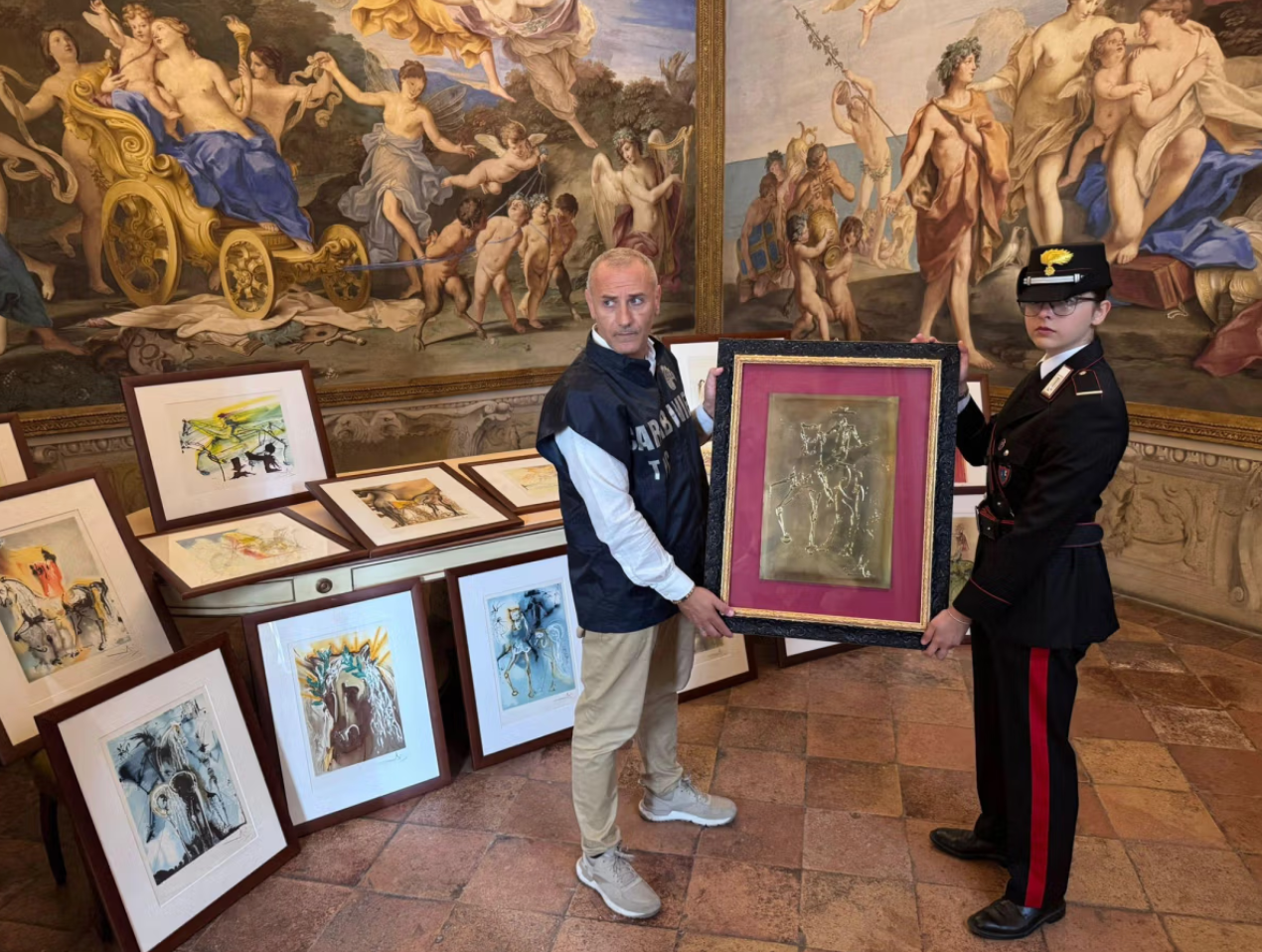
Italian authorities have seized 21 suspected counterfeit artworks attributed to Salvador Dalí from a major exhibition in Parma, raising serious concerns over art forgery and provenance.
The exhibition, titled “Dalí, Between Art and Myth”, opened on September 27 at Palazzo Tarasconi, showcasing 80 pieces including drawings, engravings, and tapestries. The seizure came after an order by a Rome court, based on an investigation by Italy’s Art Crime Squad (Carabinieri TPC) and input from experts at the Gala-Salvador Dalí Foundation in Spain.
Commander Diego Polio of the Carabinieri TPC in Rome said suspicions first arose during a routine check in January. “Only lithographs, posters, and drawings were being displayed, along with a few statues — but no major works. That raised red flags,” Polio told The Guardian.
The seizure includes 18 lithographs and 3 drawings, all reportedly loaned by two Italian collectors. Experts from the Dalí Foundation had previously expressed doubts about several works, citing questionable provenance and lack of consultation by the exhibition organizers.
The show was organized by Navigare, a firm based in Palermo, and had earlier run at Rome’s Historical Museum of the Italian Army Infantry from January to July, under the management of Italy’s defense ministry.
In a statement, the Dalí Foundation said they were “perplexed” by the exhibition’s content and had raised suspicions about some pieces as early as March. The foundation also noted that it had not been contacted during the planning of the exhibition.
Stefano Opilio, a public prosecutor involved in the case, confirmed that the artworks are now being examined by Italy’s Ministry of Culture. If confirmed fake, they could be permanently confiscated, and those responsible may face prosecution for art forgery or knowingly distributing counterfeit works.
“It remains to be seen whether the works were directly forged by the lenders or acquired unknowingly,” Opilio added.
Neither Palazzo Tarasconi nor Navigare responded to requests for comment.

0 Comments