
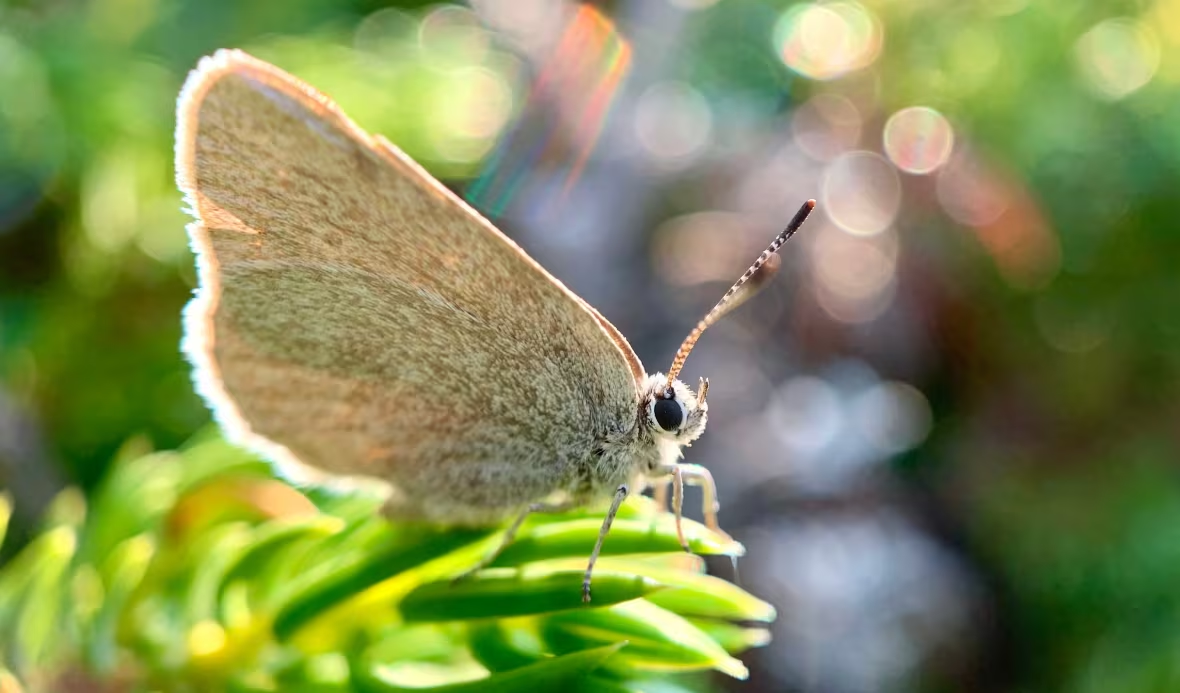
Tucked away in Waterton Lakes National Park, little greyish brown butterflies — long thought to be just another population of the half-moon hairstreak butterflies — are now being recognized as their own species known as Satyrium curiosolus, or the curiously isolated hairstreak.
The pollinator lives exclusively across approximately 300 hectares of the prairie-grassland landscape of the Blakiston Fan, the park’s largest alluvial fan — flat areas where flowing mountain streams have deposited sediment.
And its territory is located more than 450 kilometres away from any of its relative populations in British Columbia or Montana, according to the Wilder Institute/Calgary Zoo, a partner in the study.
Using genomic tools, the researchers assembled the entire DNA sequence of the individual insects collected from Blakiston Fan.
The resulting sets of genomes — along with ecological evidence — were used to determine the curiously isolated hairstreak was both genetically and ecologically removed from its closest relatives up to 40,000 years ago.
James Glasier, a conservation population ecologist and co-author of the study, said that when the Wilder Institute and Parks Canada began looking at this butterfly population, they didn’t go into it expecting to discover a new species.
“When we kind of went through those five years doing all the research, we found out that it has a lot more unique traits than we thought,” he said. “And so it’s great. It makes it an endemic, unique species to Alberta and Canada.”

0 Comments