
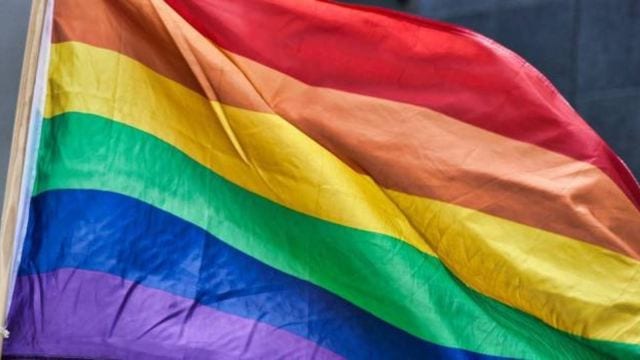
March 29, 2025 – Utah has officially become the first state in the United States to prohibit the display of LGBTQ+ pride flags and other unsanctioned flags in government buildings and public schools. The new law, which takes effect on May 7, mandates that only a limited number of approved flags can be displayed on state and local government properties. These include the U.S. flag, the Utah state flag, military flags, and a few others sanctioned by state lawmakers. Any violation of this law will result in a $500 daily fine for non-compliance.
Governor Allows Bill to Pass Without Signature
Republican Governor Spencer Cox announced late Thursday that he had allowed the bill to become law without his signature, expressing reservations about the policy but acknowledging that the Republican-controlled Legislature had the power to override any potential veto. Governor Cox said he was concerned about the implications of the law but opted not to challenge it, as a veto would likely have been overturned given the Republican supermajority in the Legislature.
“I have deep concerns about this legislation and its potential impact on free expression and inclusivity,” Cox stated. “However, after careful consideration, I chose not to veto it, understanding that the Legislature would likely override that decision, leading to a prolonged and divisive political battle.”
Scope of the New Law
The law restricts state and local government buildings, including schools, from displaying any flags other than those explicitly approved by the state. The approved list includes:
- The United States flag
- The Utah state flag
- Flags honoring branches of the U.S. military
- A small number of other flags sanctioned by state lawmakers
Political flags, including those supporting specific candidates or political movements, such as Donald Trump’s “Make America Great Again” flags, are also explicitly prohibited under the new law. This ban extends to flags representing any social or political causes, including LGBTQ+ pride flags, Black Lives Matter banners, and other advocacy symbols.
Conflict with Salt Lake City’s Pride Celebrations
The new law has already sparked tensions between the state and Salt Lake City, where the local government traditionally honors Pride Month by displaying LGBTQ+ pride flags on government buildings. In protest of the legislation, Salt Lake City officials have illuminated the Salt Lake City and County Building with rainbow lights each night since the bill reached Governor Cox’s desk.
City officials expressed their discontent with the new law and are currently reviewing its legal implications. Salt Lake City Mayor Erin Mendenhall stated that the city would explore ways to continue showing support for the LGBTQ+ community while complying with the new restrictions.
“We stand firmly with our LGBTQ+ community and will continue to find ways to celebrate and honor diversity and inclusion,” Mendenhall said. “Our legal team is reviewing the language of this law to understand how it impacts our commitment to inclusivity and how we can continue to express that commitment in the future.”
Potential Legal Challenges
Legal experts have indicated that the law may face constitutional challenges, particularly regarding freedom of speech and expression under the First Amendment. Critics argue that prohibiting the display of certain flags in government buildings, while allowing others, creates a potential violation of constitutional protections.
“The selective prohibition of flags raises serious First Amendment concerns,” said David Schultz, a constitutional law expert. “By limiting which messages can be expressed through flags, the state is potentially engaging in viewpoint discrimination, which courts have repeatedly ruled unconstitutional.”
Civil rights groups, including the American Civil Liberties Union (ACLU), have expressed opposition to the law and are considering legal action to challenge its implementation. Advocacy groups have warned that the ban could create a chilling effect, discouraging schools and government agencies from promoting diversity and inclusion initiatives.
Impact on Schools and Educational Institutions
The law’s impact will be felt most acutely in public schools, where LGBTQ+ pride flags and other symbols of inclusivity have been used to create safe and welcoming environments for marginalized students. Many educators and school administrators have voiced concerns that removing these symbols could send a negative message to LGBTQ+ students and their families.
“Symbols matter,” said Emily Wright, a middle school teacher in Salt Lake City. “When students see a pride flag in their school, it tells them that they are accepted and valued. Taking that away sends a very different message, one that could have lasting consequences on their sense of belonging.”
Political and Social Backlash
The law has triggered widespread criticism from advocacy organizations, civil rights groups, and members of the LGBTQ+ community. Opponents argue that the ban undermines the principles of inclusivity and diversity and signals a step backward in the fight for equal rights.
“This law is a direct attack on the LGBTQ+ community and an attempt to erase visibility and acceptance,” said Sam Martinez, director of Utah Pride Center. “We will not be silent in the face of such discrimination. Our community has fought too hard and for too long to let this setback go unchallenged.”
Protests and demonstrations are expected across Utah in the coming weeks as activists mobilize to voice their opposition to the law. Community leaders have pledged to organize rallies, petition drives, and public education campaigns to raise awareness about the impact of the legislation and advocate for its repeal.
Future Outlook: Uncertainty and Division
As the law prepares to take effect on May 7, uncertainty looms over how it will be enforced and whether legal challenges will succeed in overturning it. The ongoing conflict between the state government and local municipalities, particularly Salt Lake City, is likely to escalate as both sides grapple with the implications of the law.
For now, Utah’s decision to ban LGBTQ+ pride flags and other unsanctioned symbols in government buildings and schools has set the stage for a broader national conversation about the boundaries of free expression, inclusivity, and the role of government in shaping public discourse. The coming months will determine whether this controversial law stands or if the courts will ultimately intervene to protect the principles of equality and free speech.

0 Comments