
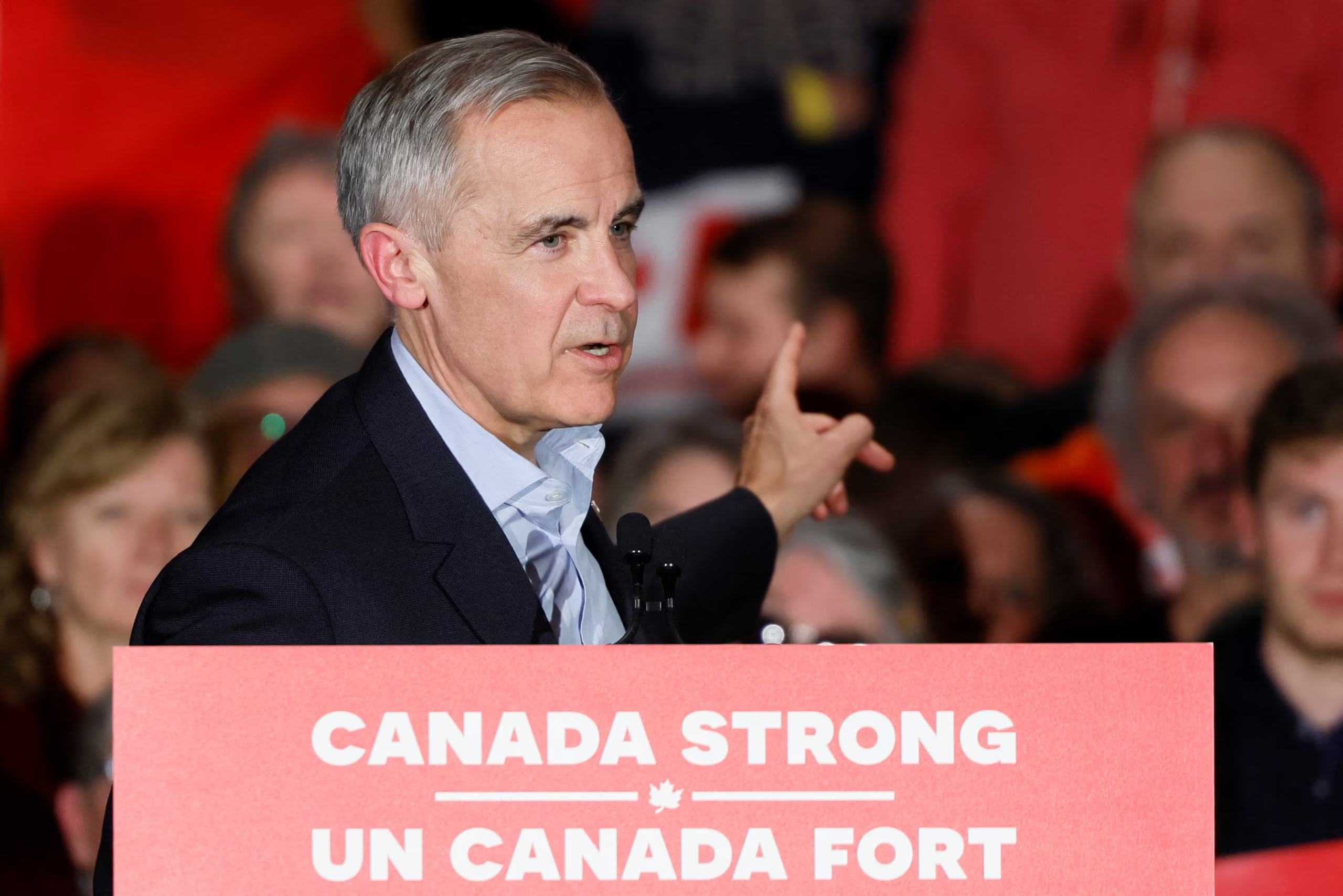
Washington/Ottawa: U.S. President Donald Trump announced that he had an “extremely productive” conversation with Canadian Prime Minister Mark Carney on Friday, marking the first official call between the two leaders amid escalating trade tensions. The call comes as Canada considers its response to Trump’s latest tariffs targeting the country’s auto sector, set to take effect next week, all while the nation is in the middle of a high-stakes federal election.
Trump Praises Call, Signals Future Cooperation
Trump posted on his Truth Social account shortly after the call, describing it as “extremely productive” and indicating that both leaders found common ground on several issues.
“It was an extremely productive call, we agree on many things, and will be meeting immediately after Canada’s upcoming election to work on elements of Politics, Business, and all other factors, that will end up being great for both the United States of America and Canada,” Trump wrote.
Trump’s remarks hinted at a willingness to reset relations between the two countries after a period of heightened tensions. Notably, he referred to Carney as “Prime Minister,” a significant shift from his previous comments about former Prime Minister Justin Trudeau, whom he had frequently referred to as the “governor” of a hypothetical 51st U.S. state.
Carney Yet to Comment on Call
Prime Minister Carney’s office did not immediately provide a readout of the call or comment on the conversation. However, sources close to the Prime Minister’s Office (PMO) indicated that Carney approached the call with a firm stance, seeking to ensure that any future negotiations with the United States would respect Canada’s sovereignty and protect the interests of Canadian industries.
Carney had previously made it clear that he would engage with Trump only when the U.S. president demonstrated respect for Canada’s sovereignty. “The interests of both countries are best served by cooperation and mutual respect,” Carney said on Thursday, reiterating his intention to emphasize these principles during any discussions with Trump.
Tariff Concerns Loom Over Canada-U.S. Relations
The call came at a critical juncture as Canada prepares its response to Trump’s latest trade measures. The U.S. administration announced last week that it would impose 25 percent tariffs on Canadian auto imports, a move that has sent shockwaves through Canada’s automotive sector, which is a cornerstone of the country’s economy.
The tariffs are set to take effect on April 3, and Canadian officials have been exploring a range of retaliatory measures to protect domestic industries and safeguard Canadian jobs. The Prime Minister’s Office has indicated that all options, including retaliatory tariffs and legal action through the World Trade Organization (WTO), are under consideration.
Political Implications in Canada’s Federal Election
The timing of the tariffs and the Trump-Carney call could have significant implications for Canada’s federal election. With polling day just weeks away, the ongoing trade dispute has become a central issue in the campaign, with all major political parties promising to defend Canada’s interests against U.S. pressure.
Carney’s handling of the situation is being closely watched, as his response to the Trump tariffs and his ability to manage relations with Washington could influence voter perceptions of his leadership.
Opposition Leaders Weigh In
Conservative Leader Pierre Poilievre, who has been vocal about strengthening ties with the United States while ensuring Canadian sovereignty, criticized Carney’s approach, suggesting that the Prime Minister should have been more proactive in addressing the trade dispute before it escalated.
“Mark Carney needs to stand up for Canadian workers and businesses. We cannot allow the United States to dictate terms that hurt our economy,” Poilievre said at a campaign event in British Columbia.
NDP Leader Jagmeet Singh, meanwhile, called for “strong, immediate action” to protect Canadian jobs and industries. Singh reiterated his support for imposing retaliatory tariffs on U.S. goods and urged Carney to “draw a line in the sand” in negotiations with Trump.
Trump’s Political Motives Scrutinized
Political analysts have suggested that Trump’s outreach to Carney and his positive remarks could be part of a broader strategy to influence Canada’s election and secure a more favorable relationship with Ottawa after the vote. Trump’s actions have been viewed as an effort to build rapport with Carney in anticipation of future negotiations, particularly as the U.S. seeks to strengthen its economic position amid growing competition with China.
Next Steps: High-Stakes Meeting After Canada’s Election
Trump indicated that he and Carney would meet “immediately after Canada’s upcoming election” to discuss a range of issues, including trade, security, and economic cooperation. While details of the meeting have yet to be confirmed, both sides are expected to enter the talks with a desire to ease tensions and seek a resolution to the ongoing trade conflict.
Canada’s Response Expected Soon
In the meantime, Canada’s response to the impending U.S. tariffs is expected to be announced within days. Carney’s government is weighing a range of measures designed to protect the Canadian economy while maintaining a firm stance in defending national interests.
As tensions between the two nations simmer, the outcome of the upcoming federal election could play a decisive role in shaping the future of Canada-U.S. relations.

0 Comments